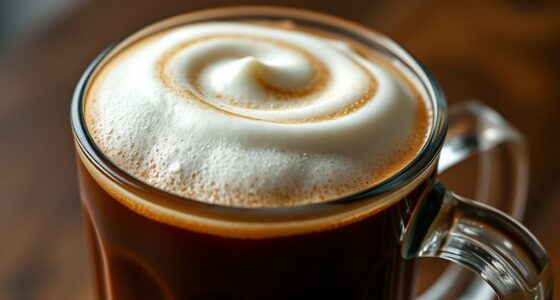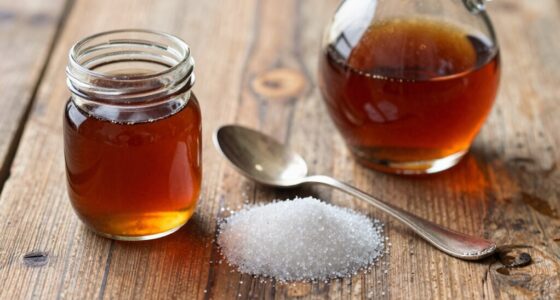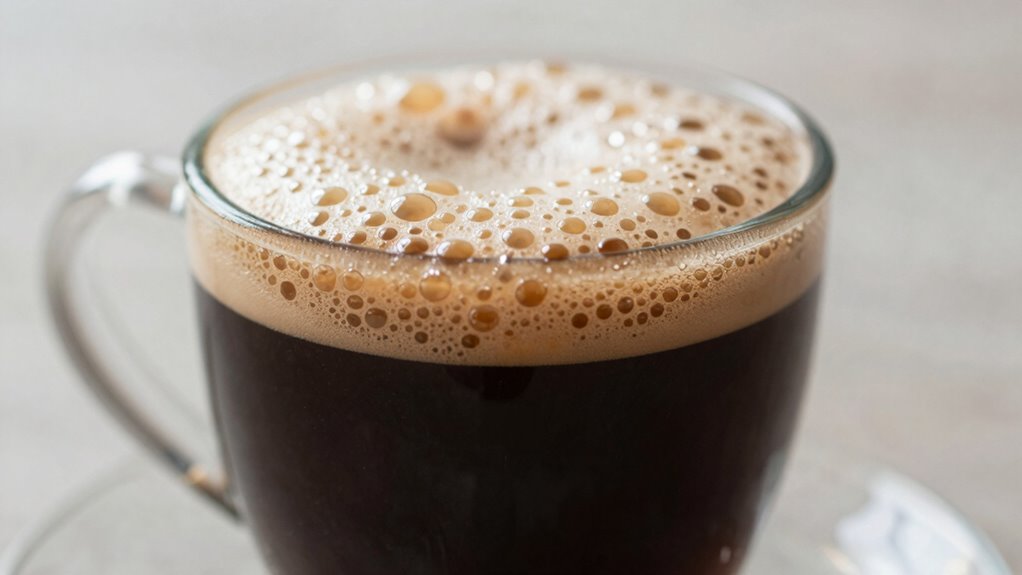

To prevent your espresso from tasting sharp in carbonated coffee drinks, focus on balancing acidity and bitterness. Use smoother brewing methods like cold brew or opt for medium roast beans, which are less harsh. Incorporate flavors like vanilla, caramel, or milk to mellow the sharpness. Adjust sweetness to complement the carbonation and choose ingredients that mask intense notes. For more tips on creating a mellow, well-rounded drink, explore further options that enhance your beverage’s harmony and flavor depth.
Key Takeaways
- Use cold brew or medium roast coffee to naturally reduce acidity and sharpness.
- Incorporate flavorings like vanilla, caramel, or chocolate to mellow and balance the coffee’s sharp notes.
- Add milk, cream, or flavored syrups to soften the intensity and create a smoother taste profile.
- Adjust carbonation levels to prevent excessive amplification of acidity and bitterness.
- Experiment with brewing techniques and ingredient substitutions to achieve a velvety, balanced flavor.
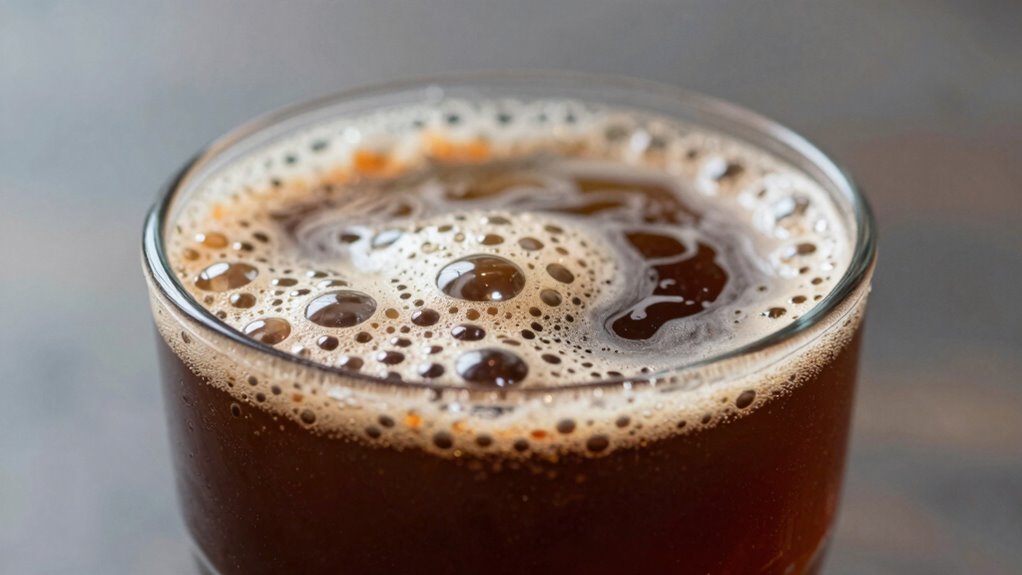
Carbonated coffee drinks are gaining popularity as an invigorating twist on traditional coffee, combining the rich flavors of espresso or brewed coffee with fizzy, bubbly carbonation. If you’re exploring ways to perfect these drinks, one key aspect is preventing the espresso from tasting “sharp” or overly bitter. The good news is, with some simple adjustments, you can enhance the flavor and enjoy a smoother, more balanced beverage.
Flavor enhancement is essential when working with carbonated coffee. The carbonation can sometimes amplify the natural acidity of the coffee, making it seem more bitter or tangy. To counter this, consider incorporating ingredients that mellow or complement the coffee’s profile. For example, adding a touch of vanilla syrup, a splash of cream, or even a dash of caramel can round out the flavors and provide a richer, more inviting taste. These additions help balance the acidity and mask any harshness from the carbonation, leading to a more harmonious sip.
Enhance carbonation drinks with vanilla, cream, or caramel for a smoother, more balanced coffee flavor.
Ingredient substitutions are another effective strategy. Instead of using straight espresso, you might try brewing your coffee with a slightly lower temperature or opting for a medium roast that’s naturally less bitter. Cold brew coffee is also a fantastic alternative because it tends to be smoother and less acidic, making it ideal for carbonated drinks. If you prefer a dairy-based option, substitute milk or half-and-half for water or non-dairy milk, which can further soften the sharpness. Additionally, experimenting with flavored syrups—such as chocolate, hazelnut, or cinnamon—can add depth and complexity, helping to mask any overly intense flavors caused by carbonation.
Furthermore, choosing a coffee with a higher contrast ratio can help mitigate the perception of sharpness, as this enhances the depth and richness of the flavor profile. Remember, carbonation can intensify certain flavor notes, so adjusting your ingredients accordingly is essential. Don’t be afraid to tweak the sweetness level or try different coffee beans to find your perfect balance. The goal is to create a beverage that’s lively and invigorating without sacrificing the smoothness of the coffee. By thoughtfully selecting your ingredients and making strategic substitutions, you can transform a potentially sharp-tasting carbonated coffee into a velvety, enjoyable experience.
Ultimately, the secret lies in balancing the acidity and bitterness with flavor-enhancing ingredients and smart substitutions. This way, you get to enjoy the effervescent sensation alongside a well-rounded, flavorful coffee. Whether you’re experimenting with homemade recipes or ordering at a specialty shop, these tips will help you keep your espresso from tasting “sharp,” ensuring every sip is smooth, satisfying, and delightfully enjoyable.

SHARDOR Conical Burr Espresso Coffee Grinder Electric with Precision Timer 2.0, Touchscreen Adjustable Burr Mill with 51 Precise Settings for Home Use, Anti-static, Stainless Steel
Premium 40 Millimeter Stainless Steel Conical Burr: Designed to minimize grinding heat and protect the essential oils in...
As an affiliate, we earn on qualifying purchases.
Frequently Asked Questions
Can I Carbonate Cold Brew Coffee Instead of Espresso?
Yes, you can carbonate cold brew coffee instead of espresso. Cold brew has better stability and fewer sharp notes, making it ideal for carbonation. To preserve flavor, ensure your cold brew is fresh and stored properly before carbonating. Use a suitable carbonation method, like a soda siphon or keg system, to maintain the smooth, rich flavor. This way, you get a invigorating, bubbly drink without losing the coffee’s natural depth.
What Types of Sweeteners Work Best With Carbonated Coffee?
You’ll want to choose sweeteners that are compatible with carbonation to avoid unwanted reactions. Options like simple syrup, honey, or agave work well because they dissolve easily and enhance flavor without altering the drink’s texture. Stevia or erythritol can also be used for a lower-calorie option, but test their suitability first. These sweeteners boost flavor and ensure your carbonated coffee remains smooth and enjoyable.
How Long Should I Let the Coffee Sit After Carbonation?
You should let the coffee sit for about 1 to 2 minutes after carbonation to achieve ideal freshness and flavor balance. This short carbonation timing allows the bubbles to integrate smoothly without overpowering the espresso’s natural taste. During this time, the coffee remains fresh, and the carbonation settles slightly, reducing sharpness. Keep an eye on the bubbles and taste periodically to find your perfect balance.
Is There a Way to Prevent Bubbles From Overpowering the Flavor?
Think of it like taming a wild horse—you need patience and the right tools. To prevent bubbles from overpowering the flavor, focus on foam stability by gently pouring and avoiding vigorous agitation. This keeps the foam from masking the espresso’s rich taste. Using a stabilizer or adjusting carbonation levels can also help. By controlling the bubble formation, you’ll maintain the coffee’s depth without sacrificing its nuanced flavor.
Can You Carbonate Decaffeinated Coffee Without Losing Taste?
You can carbonate decaffeinated coffee without losing taste by focusing on flavor preservation during decaf brewing first. Use gentle extraction methods to maintain the coffee’s original flavor profile. When carbonating, do so at lower pressures and cold temperatures to minimize flavor loss. This approach helps keep the subtle nuances intact, ensuring your decaf coffee remains rich and flavorful even after carbonation.

Coffee Grinder, Viesimple Gen 4, Single Dose Burr Coffee Grinders with Magnetic Dosing Cup, Electric Coffee Bean Grinder with Anti-Static Design, Espresso Grinder Compact & Quiet for Home Use Black
THE DO-IT-ALL GRINDER:The electric coffee grinder is a powerful all-purpose coffee grinder featuring 5-blade of 48 mm conical...
As an affiliate, we earn on qualifying purchases.
Conclusion
Now that you know how to tame that sharp edge in your carbonated coffee drinks, you can enjoy the smoothness of a perfectly balanced sip. It’s like turning a jagged mountain into a gentle hill—both are beautiful, but one feels calmer. With these simple tricks, you’ll transform your bubbly brew from a startling surprise into a delightful experience. So, embrace the science and savor the harmony of your expertly crafted espresso—sharpness no longer has to dominate your drink.
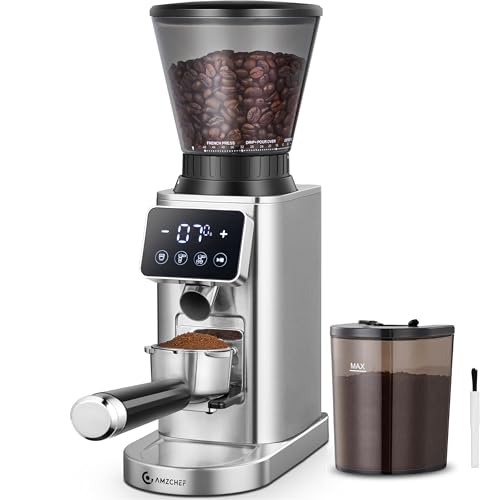
AMZCHEF Coffee Grinder, Burr Coffee Bean Grinder for Home Use with 48 Precise Grind Settings, Detachable Funnel Stand for Espresso, LED Control Panel, Anti-static Design, Silver
DESIGN FOR ESPRESSO:We provide portafilter holder ,Portafilter holder pad and photophobic coffee ground container. It is compatible with...
As an affiliate, we earn on qualifying purchases.

Neretva Espresso Grinder, 2 in 1 Professional Coffee Bean Grinder Stainless Steel Suit 51~58mm Portafilter Burr Coffee Grinder 30 Precise Setting&Anti-Static for Espresso/French Press/Drip/Moka-Silver
PROFESSIONAL CONICAL BURR COFFEE GRINDER- WIth new upgraded 3.0 conical burr grinding technoloy, the coffee grinder ensures that...
As an affiliate, we earn on qualifying purchases.