
To setup your coffee bar safely, position appliances near outlets to reduce cords and make certain the total wattage stays within circuit limits, especially for high-wattage devices like espresso machines. Use grounded outlets with GFCIs in moisture-prone areas and avoid daisy-chaining extension cords. Securing cords and avoiding overloads protect you from hazards. Paying attention to outlet placement, wattage capacity, and safety measures helps keep your workspace efficient and safe—learn more to perfect your setup.
Key Takeaways
- Position high-wattage coffee equipment near grounded outlets to minimize extension cord use and ensure safety.
- Calculate total wattage of all devices to prevent circuit overloads and ensure capacity adequacy.
- Install GFCI outlets in moisture-prone areas for enhanced electrical safety and shock prevention.
- Use dedicated outlets for large appliances like espresso machines to avoid tripping circuits.
- Keep cords organized, secured, and away from foot traffic to reduce tripping hazards and maintain safety.
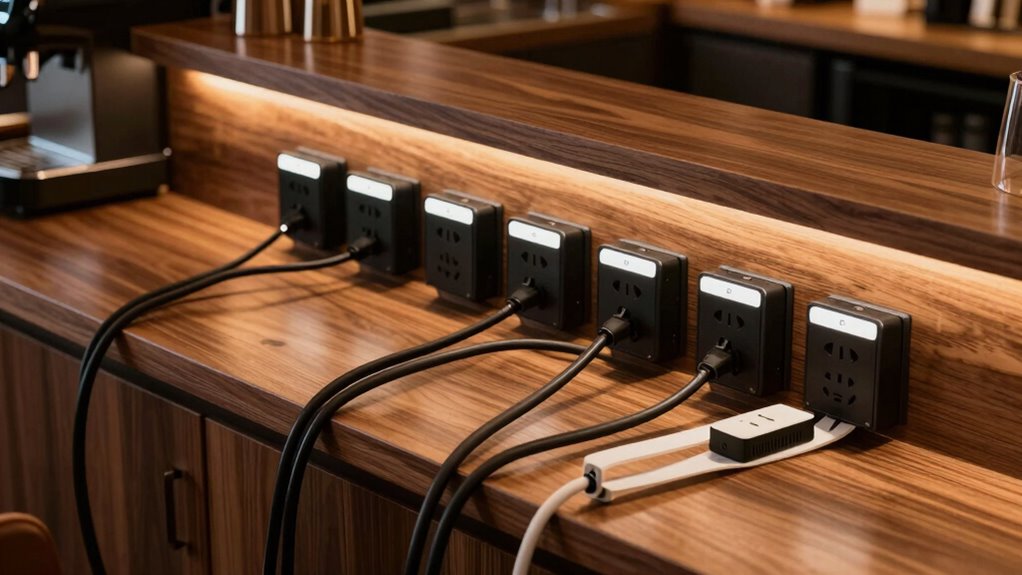
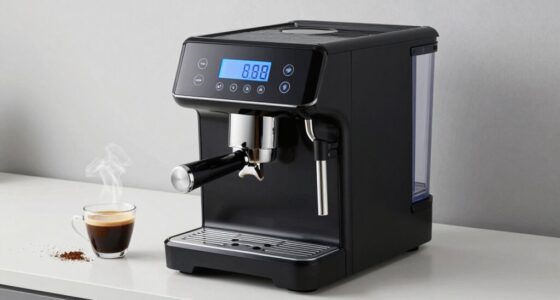
Setting up a coffee bar requires careful power planning to guarantee all your equipment runs smoothly. One of the most essential aspects is ensuring proper appliance placement, which directly impacts both functionality and safety. When arranging your coffee machine, grinder, blender, or other electrical devices, think about how they’ll connect to outlets without creating clutter or hazards. Position heavy appliances close to existing outlets to minimize the need for extension cords, which can be dangerous if overloaded or tripped over. Keep in mind that appliances generating heat or moisture shouldn’t be placed near outlets that aren’t protected or grounded properly, as this could lead to electrical shorts or fires.
Next, consider safety guidelines when planning your power setup. Each appliance has a specific wattage, and exceeding the circuit’s capacity can cause interruptions or electrical fires. Check the wattage rating of each device and ensure your circuit can handle the combined load. For example, a commercial-grade espresso machine might draw 1500 watts, while a grinder and blender could add another 300-500 watts. Add these numbers together and confirm that your circuit’s maximum wattage capacity isn’t surpassed. If you’re unsure, consult an electrician to assess your wiring and possibly install dedicated outlets for high-wattage equipment. This prevents overloads and ensures consistent performance without tripping circuit breakers.
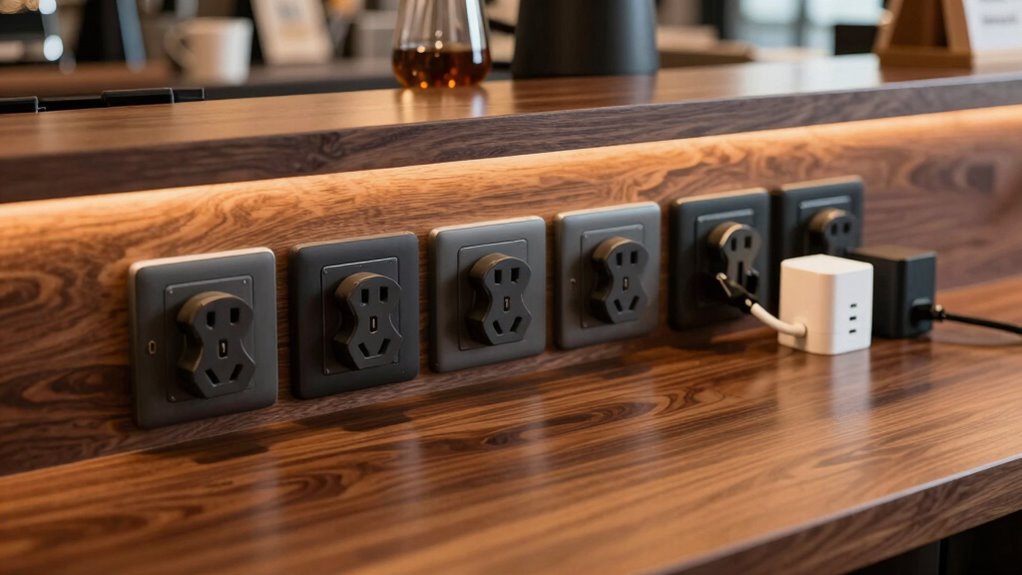
Safety guidelines also include using outlets equipped with Ground Fault Circuit Interrupters (GFCIs), especially in areas exposed to water or moisture. GFCIs protect you from electrical shocks by shutting off power when a ground fault is detected. Position outlets so they’re easily accessible for regular inspection and maintenance, and avoid daisy-chaining extension cords or power strips. Instead, opt for properly installed, wall-mounted outlets that meet electrical codes. Keep cords tidy, secured, and away from foot traffic to prevent tripping hazards. Use surge protectors where necessary to shield your equipment from power surges, which can cause damage or reduce lifespan.
Additionally, planning your power layout thoughtfully can help prevent overloading circuits and ensure safety during peak usage times. Remember that appliance placement isn’t just about convenience; it’s a safety measure. Properly located outlets reduce the risk of accidental unplugging, electrical faults, or damage to cords and plugs. Regularly inspect your wiring and connections for signs of wear or damage, and never force a plug into an outlet if it doesn’t fit properly. Adhering to these safety guidelines and thoughtfully planning your appliance placement ensures your coffee bar operates efficiently and safely, giving you peace of mind and a seamless brewing experience.
Frequently Asked Questions
What Are Common Code Requirements for Coffee Bar Outlets?
You should follow common code requirements for coffee bar outlets by guaranteeing proper outlet placement guidelines, such as spacing outlets every 4 feet along the counter. Make sure circuit breaker sizing matches the outlet load, typically 15 or 20 amps, to prevent overloads. Always install GFCI outlets in wet areas and keep outlets away from water sources, adhering to safety standards to ensure a safe, functional coffee bar setup.
How Do I Calculate Total Wattage Needed?
Ever wonder how to determine your coffee bar’s power needs? Simply add up the power consumption of each appliance, usually listed in watts, to find the total wattage. Make sure your outlets have enough capacity to handle this total without overload. Check the wattage ratings of your outlets and appliances, and leave some margin for safety. This way, you guarantee smooth operation and prevent electrical issues.
Are GFCI Outlets Necessary for Coffee Bars?
Yes, GFCI outlets are necessary for coffee bars, especially near countertop outlets where coffee machines are placed. They protect against electrical shocks by shutting off power if a ground fault occurs, ensuring safety. Proper placement of GFCI outlets near your coffee machine helps prevent hazards, and it complies with electrical codes. Make sure your coffee machine placement aligns with these outlets for safe, convenient use.
How Should Outlets Be Spaced Around the Coffee Bar?
You should space outlets around the coffee bar every 4 to 6 feet to guarantee easy access and meet electrical code requirements. Consider outlet placement along the backsplash and countertop edges, avoiding gaps that could inconvenience users. Keep spacing considerations in mind for convenience and safety, making sure outlets are accessible without cords stretching across work areas. Proper outlet placement helps prevent overloads and keeps your coffee station efficient and safe.
What Safety Precautions Prevent Overloading Circuits?
You prevent circuit overloads by installing safety devices like circuit breakers or fuses that trip when current exceeds safe limits. Regularly check outlet wattage and avoid plugging in too many high-wattage appliances at once. Keep outlets spaced properly to prevent accidental overloads. These precautions make certain your coffee bar remains safe, protecting both your equipment and staff from potential electrical hazards, and keep the flow of your busy day uninterrupted.
Conclusion
So, next time you set up your coffee bar, remember that the real brew isn’t just in your coffee but in your power plan. Who knew that outlets, wattage, and safety could be the secret ingredients to a perfect caffeine station? Ironically, neglecting these basics might leave you more awake than your coffee—shocking, isn’t it? So, plan wisely, stay safe, and enjoy your caffeinated haven without sparks flying—literally.