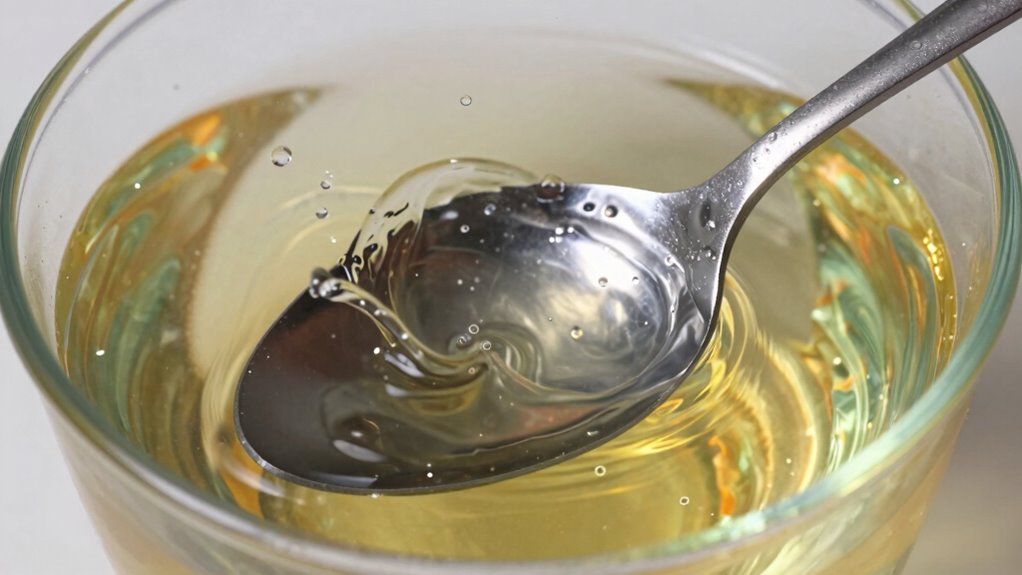

When choosing between stirring, swirling, or pulsing pour, each method affects your brew differently. Stirring guarantees even distribution and quick flavor extraction, ideal for achieving a smooth, balanced cup. Swirling promotes gentle contact between water and grounds, enhancing nuanced aromas without turbulence. Pulsing pour gives precise control, intensifying flavors while preventing over-extraction. Understanding these techniques helps you perfect your beverage, and exploring each further reveals how to maximize flavor control at every step.
Key Takeaways
- Stirring ensures thorough mixing and even flavor extraction by quickly dissolving ingredients and distributing grounds or leaves uniformly.
- Swirling gently promotes better water contact with coffee grounds or tea leaves, enhancing aroma and flavor nuances without turbulence.
- Pulsing pour involves adding water in controlled bursts, allowing precise extraction and preventing over-extraction or bitterness.
- Each agitation technique influences flavor profile, smoothness, and temperature, helping customize the brewing process for desired results.
- Choosing between stir, swirl, or pulse depends on the beverage type and desired flavor complexity, balancing extraction and clarity.

Have you ever felt restless or frustrated without knowing exactly why? It might be because you’re missing out on the subtle art of agitation during brewing. Understanding how to stir, swirl, or pulse pour can dramatically influence your coffee or tea experience. These techniques are more than simple motions—they’re tools to optimize brewing techniques and maximize flavor extraction. When you carefully choose how to agitate your brew, you uncover deeper, richer flavors that can elevate your daily ritual.
Mastering stirring, swirling, and pulsing enhances your brew’s flavor and transforms your daily ritual.
Stirring is the most straightforward method. It involves using a spoon or stirrer to mix the ingredients thoroughly. When you stir, you evenly distribute the coffee grounds or tea leaves, ensuring consistent contact with water. This promotes uniform extraction, which means you’re extracting the full range of flavors without overdoing it. Stirring also helps dissolve any added ingredients, like sugar or milk, more quickly. Proper stirring can prevent uneven brewing and bitterness, giving you a smoother, more balanced cup. Keep in mind, the speed and vigor of your stir matter. Gentle stirring might be enough for delicate teas, while a more vigorous approach can be beneficial for hearty coffee blends.
Swirling is a slightly more refined technique. It involves rotating the vessel gently, allowing the liquid to move in circular motions. This method is especially popular when you’re preparing pour-over or French press brews. Swirling encourages better contact between water and the grounds or leaves without disturbing the sediment or creating turbulence. It’s a subtle yet effective way to enhance flavor extraction, especially when you want a nuanced profile. When you swirl, you’re fundamentally encouraging the water to reach all parts of the brew evenly, pulling out complex aromatic compounds. This technique can also help cool down hot liquids evenly, preventing burns and ensuring you’re ready to enjoy your beverage without haste.
Pulsing pour is a more dynamic approach. Instead of pouring steadily, you add water in short, controlled bursts. This method is often used during the pour-over process, where precise control over the brewing process matters. Pulsing allows you to manipulate the flow rate, controlling how quickly or slowly water interacts with the grounds. This technique can intensify flavor extraction, revealing more intricate notes and nuances. It also helps prevent over-extraction, which can lead to bitterness. When you pulse pour, you have a greater degree of control over how your brew develops, making it ideal for experimenting with different profiles and achieving your perfect cup.

1Pound Electric Coffee Roaster for Home Use, Automatic Roasting And Easy Operation, With A Smoke Filter(Suitable for light roasting), 2 Chimney Tube, And Chaff Collector.
【Versatile Design】 Combines automatic, assisted, and manual modes for advanced coffee roasting programs, suitable for different user needs...
As an affiliate, we earn on qualifying purchases.
Frequently Asked Questions
How Does Agitation Impact Coffee Extraction Quality?
Agitation improves coffee extraction by evenly distributing water, which helps dissolve flavors more effectively. When you stir or pulse pour, you break up coffee bean density clumps and promote consistent extraction. Water temperature effects are also enhanced, guaranteeing ideal heat transfer. Proper agitation prevents under-extraction or over-extraction, resulting in a balanced, flavorful cup. So, actively agitating your brew helps maximize flavor and ensures a richer, more satisfying coffee experience.
Which Agitation Method Is Best for Espresso Shots?
You should use swirling methods for espresso shots, as they promote even extraction without over-agitating the espresso. Stirring techniques can be too aggressive, risking over-extraction and bitterness, while gentle swirling helps distribute water uniformly. Pulse pouring is less common for espresso but can help control flow and extraction. Focus on subtle swirling methods to optimize flavor, balance, and consistency in your espresso shots.
Can Agitation Techniques Vary for Different Brewing Devices?
Yes, agitation techniques can vary for different brewing devices. You might use gentle stirring for pour-over, swirling for French presses, or pulsing for espresso machines to guarantee brewing consistency. Adjusting your agitation method helps optimize extraction and flavor. Remember, proper equipment maintenance is key to consistent results—clean equipment prevents clogging and ensures your chosen agitation works effectively, giving you better control over your brew every time.
Does Agitation Influence the Flavor Profile of Brewed Coffee?
Yes, agitation influences your coffee’s flavor profile by promoting even extraction. When you stir, swirl, or pulse pour, you help distribute water more evenly through your coffee grounds, especially if your grind size isn’t perfectly consistent. Additionally, maintaining water temperature control guarantees proper extraction. Proper agitation prevents under or over-extraction, resulting in a balanced, richer flavor. So, gentle agitation makes a noticeable difference in your brewed coffee’s taste.
Are There Risks of Over-Agitation in Coffee Brewing?
Yes, over-agitation can be risky because it may lead to over-extraction, making your coffee bitter. If your grind size is too fine or your brewing temperature is too high, vigorous stirring or pulsing can intensify extraction unevenly. To avoid this, keep agitation gentle and controlled, especially with delicate grinds or hotter temperatures, ensuring a balanced, flavorful brew without overdoing it.

Fresh Roast SR800 Coffee Roaster – Roast Coffee at Home – Variable Heat and Fan Control – Digital Display – Roasts 6–8 oz (170–226g) Per Batch – Easy to Use – Fast Roast Time
Fresh and flavorfull coffee guaranteed - Why roast coffee at home? Commercially roasted whole bean coffee starts to...
As an affiliate, we earn on qualifying purchases.
Conclusion
So, next time you’re tempted to stir or swirl, remember—your choice can totally change the game. Ironically, while you might think a simple pulse will do the trick, it could stir up more trouble than you bargained for. Turns out, mastering agitation isn’t just about mixing; it’s about knowing exactly what each move does. So go ahead, experiment—just don’t be surprised if your perfect pour ends up a little less perfect than you expected.
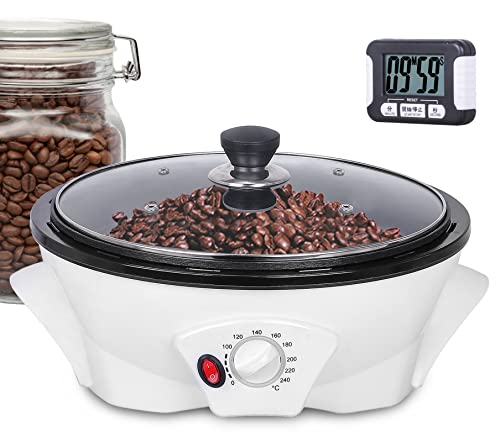
JIAWANSHUN Coffee Roaster Upgraded Electric Coffee Bean Roaster 1.1lb Coffee Roaster for Home Use,0-240℃ Temperature Adjust&Timer 110-120V
HOME COFFEE BEAN ROASTER:100-240 ℃ adjustable temperature control system with timer, it can not only bake coffee beans...
As an affiliate, we earn on qualifying purchases.
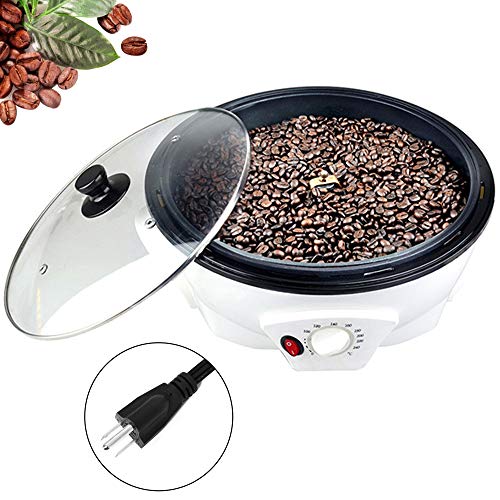
LUEUR Electric Coffee Roasters For Home Use,Coffee Bean Roaster Machine Coffee Bean Roaster For Stovetop, Countertop, Commercial Coffee Bean Roasting Machine 110V
【Premium Quality】Operating at 110V and 800W, this electric coffee bean roaster features a non-stick chassis for easy cleaning....
As an affiliate, we earn on qualifying purchases.