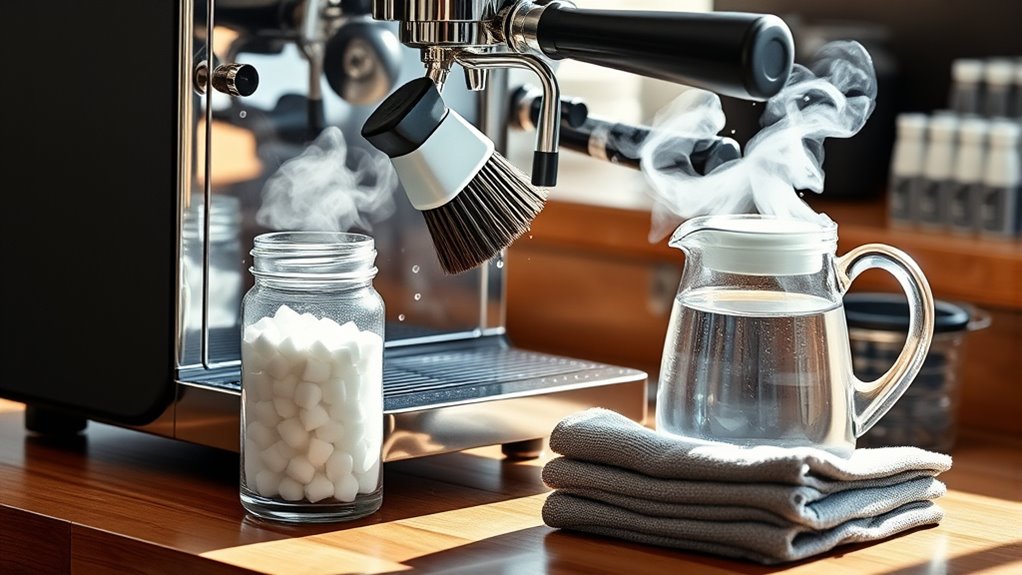

To keep your coffee equipment in top shape, establish a regular cleaning schedule. Daily, rinse removable parts like filters and drip trays, and wipe down the exterior. Weekly, deep clean brew baskets and inspect for mold or residue. Monthly, perform descaling and clean internal water reservoirs, and check seals and hoses. Keep a record of maintenance tasks to stay organized. If you follow these steps, you’ll guarantee consistent flavor and reliable performance—discover more tips to perfect your routine.
Key Takeaways
- Establish a daily cleaning routine for removable parts like filters and drip trays to prevent residue buildup.
- Schedule weekly deep cleaning of brew baskets, exterior surfaces, and checking for mold or residues.
- Perform descaling every 1-3 months using manufacturer-approved solutions or vinegar-water mix to prevent mineral deposits.
- Regularly clean internal water reservoirs and inspect seals, hoses, and filters for optimal performance.
- Keep detailed records of cleaning and descaling activities to ensure consistency and facilitate troubleshooting.
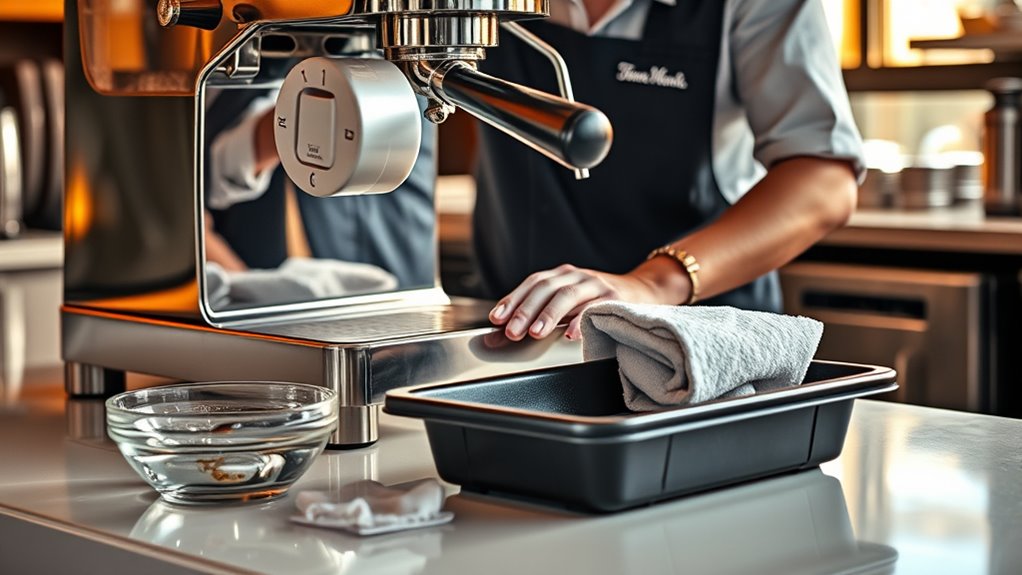
Keeping your coffee equipment clean is crucial for brewing great-tasting coffee and ensuring its longevity. Regular maintenance not only preserves the flavor but also prevents breakdowns that can disrupt your daily routine. One of the most important aspects of cleaning is adhering to proper descaling procedures. Over time, mineral deposits from water, especially in hard water areas, build up inside your machines. This scaling can clog the system, impair functionality, and diminish coffee quality. To keep your equipment running smoothly, you should incorporate descaling procedures into your routine. This involves using a descaling solution recommended by the manufacturer or a mixture of vinegar and water, running it through the machine, and thoroughly rinsing afterward. Following a consistent descaling schedule—every one to three months—can prevent mineral buildup and extend your equipment’s lifespan. Additionally, using appropriate cleaning solutions can enhance the effectiveness of your maintenance routine.
Creating a maintenance checklist is a practical way to stay organized and ensure all cleaning tasks are performed regularly. Your checklist should include daily, weekly, and monthly tasks. Daily routines might involve rinsing and wiping down removable parts, such as filters and drip trays, to prevent residue buildup. Weekly tasks could include deep cleaning the brew basket, wiping down the exterior, and checking for any signs of mold or residue. Monthly maintenance should focus on descaling procedures, cleaning internal components like water reservoirs, and inspecting seals and hoses for wear. By sticking to this checklist, you reduce the risk of overlooking critical maintenance tasks that could compromise your machine’s performance.
In addition to descaling, routine cleaning of all removable parts is essential. Use warm, soapy water to clean filters, baskets, and carafes, ensuring no coffee oils or residues remain that can affect flavor. Regularly check and replace water filters if your equipment has them, as clogged filters can impair water flow and extraction. Also, examine the machine’s exterior for dust or dirt, and wipe it down with a damp cloth to keep everything looking and functioning well. Remember, consistent cleaning not only guarantees better coffee but also minimizes breakdowns and costly repairs.
Finally, keep a record of your cleaning schedule and procedures. Document when you’ve performed descaling, replaced filters, or cleaned specific parts. This practice helps you stay on track and provides a reference if issues arise. Properly maintaining your coffee equipment requires diligence, but with a clear schedule, adherence to descaling procedures, and a thorough maintenance checklist, you’ll enjoy consistently excellent coffee and extend your machine’s life.

Neretva Espresso Grinder, 2 in 1 Professional Coffee Bean Grinder Stainless Steel Suit 51~58mm Portafilter Burr Coffee Grinder 30 Precise Setting&Anti-Static for Espresso/French Press/Drip/Moka-Silver
PROFESSIONAL CONICAL BURR COFFEE GRINDER- WIth new upgraded 3.0 conical burr grinding technoloy, the coffee grinder ensures that...
As an affiliate, we earn on qualifying purchases.
Frequently Asked Questions
How Often Should I Replace My Coffee Machine Filters?
You should replace your coffee machine filters every 2 to 4 weeks to guarantee ideal filter replacement and maintain your equipment lifespan. Regular filter changes prevent buildup and clogs, which can strain your machine and reduce its efficiency. Keep an eye on the manufacturer’s recommendations, as some filters may need more frequent replacements depending on usage. Consistent filter replacement helps your coffee taste better and extends your equipment’s longevity.
Can I Use Vinegar to Descale All Types of Coffee Equipment?
Yes, you can use vinegar to descale most coffee equipment, but you should consider vinegar safety and descaling alternatives first. Vinegar is effective and affordable, but it might damage certain machines or leave a strong odor. Always check your manufacturer’s guidelines. If vinegar isn’t suitable, opt for commercial descaling solutions or citric acid, which are safer for your equipment and still effectively remove mineral buildup.
What Cleaning Products Are Safe for My Espresso Machine?
You should use safe cleaning products that are specifically designed for espresso machines, avoiding harsh chemicals. Look for eco-friendly products labeled as safe for coffee equipment to protect your machine and the environment. Always check the manufacturer’s recommendations and opt for natural, biodegradable cleaners when possible. Regularly cleaning with these safe options helps maintain your espresso machine’s performance, ensuring each shot tastes fresh and pure.
How Do I Remove Mineral Build-Up From My Coffee Maker?
Struggling with mineral deposits that block your coffee maker’s performance? Start by running a mixture of equal parts water and white vinegar through your machine. This dissolves stubborn mineral build-up and restores peak flow. Remember, regular filter maintenance prevents future buildup. After the vinegar cycle, run plain water to rinse thoroughly. With consistent care, you’ll keep your coffee maker brewing perfectly and prevent mineral deposits from sneaking back in.
Is It Necessary to Sanitize Coffee Equipment After Each Use?
Yes, you should sanitize your coffee equipment regularly, ideally after each use or at least daily, depending on your cleaning frequency. Sanitation importance can’t be overstated because it prevents bacteria buildup and guarantees your coffee tastes fresh. By maintaining a routine of cleaning and sanitizing, you keep your equipment in prime condition, reduce health risks, and enjoy better-tasting coffee every time.

Fresh Roast SR800 Coffee Roaster – Roast Coffee at Home – Variable Heat and Fan Control – Digital Display – Roasts 6–8 oz (170–226g) Per Batch – Easy to Use – Fast Roast Time
Fresh and flavorfull coffee guaranteed - Why roast coffee at home? Commercially roasted whole bean coffee starts to...
As an affiliate, we earn on qualifying purchases.
Conclusion
Now, I know cleaning your coffee equipment might seem like a chore, but think of it as investing in better flavor and longer-lasting machines. Skipping this step could lead to costly repairs or stale-tasting brews. Remember, taking just a few minutes regularly keeps your coffee fresh and your equipment in top shape. So, embrace the routine—your taste buds and wallet will thank you for it. After all, a great cup starts with a clean machine.
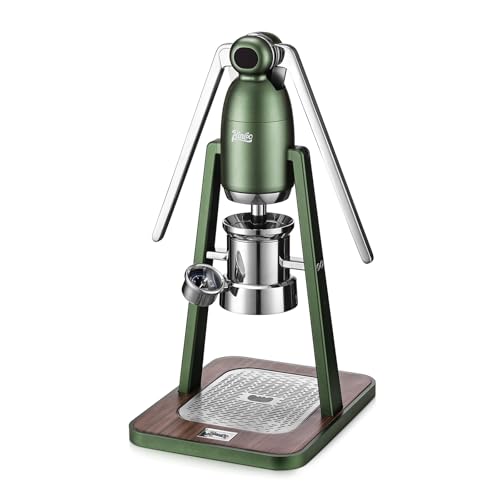
Bincoo Manual Espresso Maker Set - Hand Press Espresso Machine – 12Bar Pressure Profiling, Dual-Lever Manual Coffee Maker with Pre-Infusion, Portable for Custom Espresso Shots, Stainless Steel
Precision 3-12Bar Pressure Control: The industrial dual-lever system with micro-adjustable pressure springs and pressure gauge lets you professionally...
As an affiliate, we earn on qualifying purchases.

Coffee Grinder, Viesimple Gen 4, Single Dose Burr Coffee Grinders with Magnetic Dosing Cup, Electric Coffee Bean Grinder with Anti-Static Design, Espresso Grinder Compact & Quiet for Home Use Black
THE DO-IT-ALL GRINDER:The electric coffee grinder is a powerful all-purpose coffee grinder featuring 5-blade of 48 mm conical...
As an affiliate, we earn on qualifying purchases.