
If you value rich, nuanced flavors and consistent grind quality, ceramic burrs are the better choice because they produce a more uniform grind and resist corrosion, which supports better taste. However, if durability and long-term use are your priority, steel burrs are more robust and withstand rough handling better, making them ideal for frequent or commercial use. To discover how these differences can influence your coffee experience, keep exploring the details behind each option.
Key Takeaways
- Ceramic burrs provide a more uniform grind, enhancing flavor nuances and overall taste quality.
- Steel burrs are more durable and withstand frequent use, making them ideal for long-term, high-volume brewing.
- Ceramic burrs maintain sharpness longer, supporting consistent flavor extraction over time.
- Steel burrs require regular cleaning to prevent rust but are less prone to damage from impact.
- The choice depends on prioritizing superior flavor (ceramic) versus longevity and durability (steel).
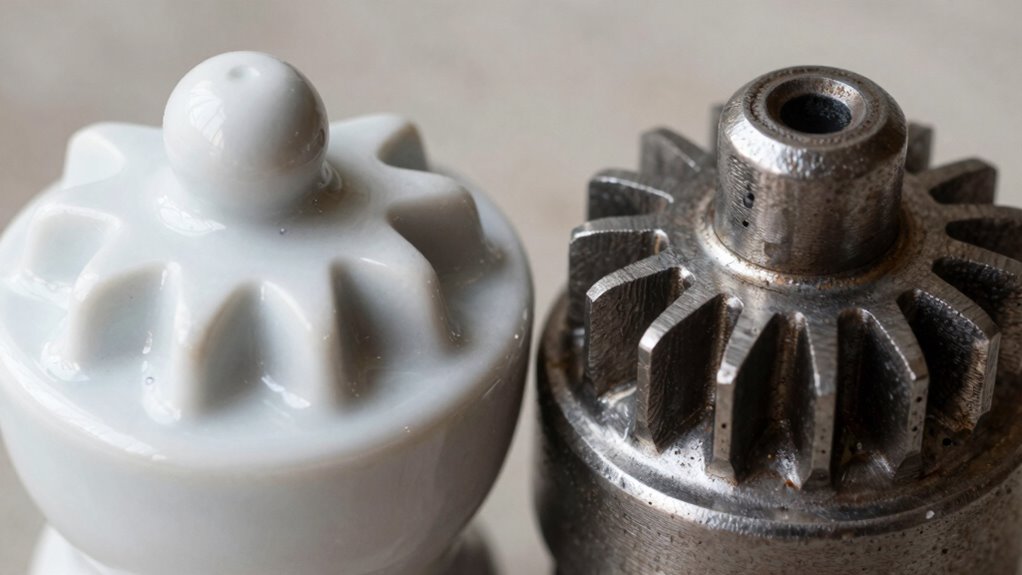
When choosing a bean-to-cup machine, understanding the differences between ceramic and steel burrs is essential, as it directly impacts your coffee’s flavor and consistency. The type of burr you select influences grind consistency, which determines how evenly your coffee grounds are processed. Ceramic burrs typically produce a more uniform grind because they’re less prone to dulling over time. This consistency helps you achieve a balanced extraction, resulting in richer, more nuanced flavors. Additionally, ceramic burrs are known for their ability to maintain sharpness longer, which contributes to their precise grinding capabilities. Steel burrs, on the other hand, can sometimes produce a slightly less uniform grind initially, but they excel at maintaining sharpness over long periods, especially with frequent use. This durability means you can often rely on steel burrs for consistent performance over years, provided you keep up with proper maintenance.
Ceramic burrs offer uniform grinding and rich flavors, while steel burrs excel in durability and long-term performance.
Speaking of maintenance, ceramic and steel burrs have different requirements. Ceramic burrs are generally easier to clean because they’re resistant to corrosion and don’t tarnish or rust. They tend to stay in good shape with minimal upkeep, which makes them appealing if you prefer low-maintenance equipment. However, ceramic burrs are more brittle; dropping or mishandling them can cause chipping or cracking, leading to the need for replacement. Steel burrs are more robust and can withstand rougher handling, but they do require more attention to cleaning. Steel burrs are susceptible to rust if not cleaned regularly and kept dry, so you’ll want to dedicate time to their maintenance to prevent buildup and ensure longevity.
In terms of grind consistency, ceramic burrs tend to excel in producing a precise, uniform grind right from the start, making them ideal if you’re particular about flavor nuances. Steel burrs may need a bit more effort in calibration over time to maintain that consistency, but they compensate with durability. If you’re someone who uses your machine daily or for commercial purposes, steel burrs might be a better investment because of their resilience. Conversely, if you’re a home barista who values ease of maintenance and consistent flavor, ceramic burrs could suit your needs better.
Ultimately, your choice hinges on balancing grind consistency and maintenance needs. Ceramic burrs deliver excellent flavor potential with minimal fuss, but they’re more delicate. Steel burrs provide long-term durability and are easier to handle physically, but they demand more regular cleaning to keep performance at its best. Consider how often you’ll use your machine, your handling habits, and your flavor preferences to determine which type aligns best with your coffee routine. Recognizing the contrast ratio in your grinder’s performance can also influence the overall taste and clarity of your coffee.
Frequently Asked Questions
Which Burr Material Is More Eco-Friendly to Produce?
You’ll find ceramic burrs more eco-friendly to produce because they involve less energy during manufacturing, promoting sustainable manufacturing practices. Ceramic materials are often sourced from natural, abundant resources, reducing environmental impact. Steel burrs, on the other hand, require intensive mining and energy-consuming processes. By choosing ceramic, you support eco-friendly production methods, helping to lower your overall carbon footprint while enjoying a durable, sustainable option for your coffee machine.
Do Ceramic Burrs Require More Frequent Sharpening Than Steel?
Ceramic burrs generally require less frequent burr sharpening than steel because they boast superior wear resistance. Imagine the sharp edge of ceramic staying crisp longer, slicing through beans smoothly without dulling quickly. Steel burrs, on the other hand, tend to wear down faster, needing more regular sharpening to maintain performance. So, if you want a low-maintenance, durable option, ceramic burrs keep their cut sharp and your coffee consistent longer.
How Does Burr Material Affect Machine Maintenance Costs?
Choosing ceramic or steel burrs impacts your maintenance costs by affecting how often you need to replace burrs and how frequently you perform maintenance. Ceramic burrs tend to last longer but may require more careful handling, potentially increasing burr replacement costs over time. Steel burrs wear out faster, leading to more frequent replacement, but maintenance frequency might be lower. Consider your usage to balance maintenance costs and durability.
Are Ceramic Burrs Better for Specific Coffee Bean Types?
Yes, ceramic burrs are better for soft coffee beans, as they handle bean hardness gently and maintain their sharpness longer. This guarantees ideal flavor extraction for delicate beans, preserving nuanced flavors. However, for harder beans, steel burrs are more durable and resistant to chipping. Consider your bean types carefully; soft beans benefit from ceramic burrs, improving taste, while steel burrs suit tougher beans and reduce maintenance costs.
Can Burr Material Influence the Noise Level During Grinding?
Yes, burr material can influence noise levels during grinding. Ceramic burrs tend to produce less noise because they’re quieter and absorb vibrations better, aiding in noise reduction. Steel burrs, while more durable, often generate more noise due to their harder surface and increased vibrations. Both materials can impact grinding consistency, but ceramic’s smoother grind may help in reducing overall noise, giving you a quieter brewing experience.
Conclusion
Choosing between ceramic and steel burrs ultimately depends on your priorities. If you value durability and consistent performance, steel might be your best bet, as it’s known to last longer under heavy use. However, ceramic burrs offer a slightly sharper grind, which can enhance flavor. Remarkably, a recent study found ceramic burrs retain their sharpness up to 10 times longer than steel, but they’re more prone to chipping. Weigh these factors to find your perfect match.