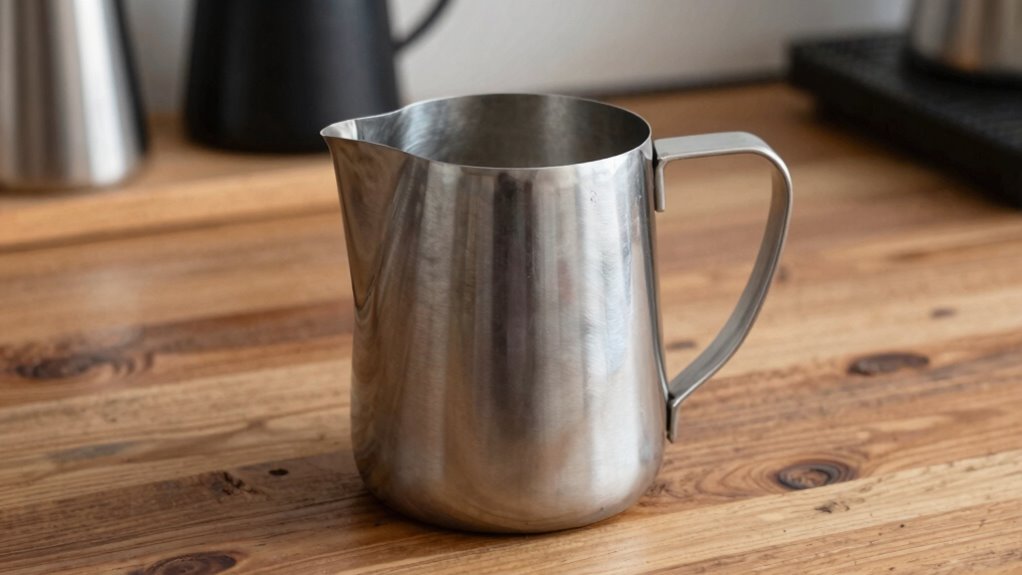

Choosing the right milk pitcher size for your home espresso setup is key to making great drinks. Larger pitchers might hold more milk, but they’re harder to control, which can affect temperature, microfoam, and latte art. Smaller pitchers (12-20 oz) give you better control and help develop your skills. Bigger isn’t always better—finding the right size improves flavor, texture, and technique. Keep going to discover how to select the perfect pitcher for your skill level and preferences.

Get coffee and tea gear delivered free — and shop member deals
- Fast, free delivery on millions of items
- Access to Prime Big Deal Days deals on October 6–7
- Prime Video, Amazon Music and more included
Key Takeaways
- Choose a smaller pitcher (12-20 oz) for better control, microfoam quality, and precise temperature management.
- Larger pitchers (24 oz+) are harder to handle, risk overheating milk, and can dilute drink flavor.
- Match pitcher size to your skill level and typical drink sizes to prevent overfilling and waste.
- Smaller pitchers help develop consistent frothing and pouring techniques, improving overall latte art and flavor.
- Upgrading to larger pitchers should come after mastering small ones to ensure control and quality.
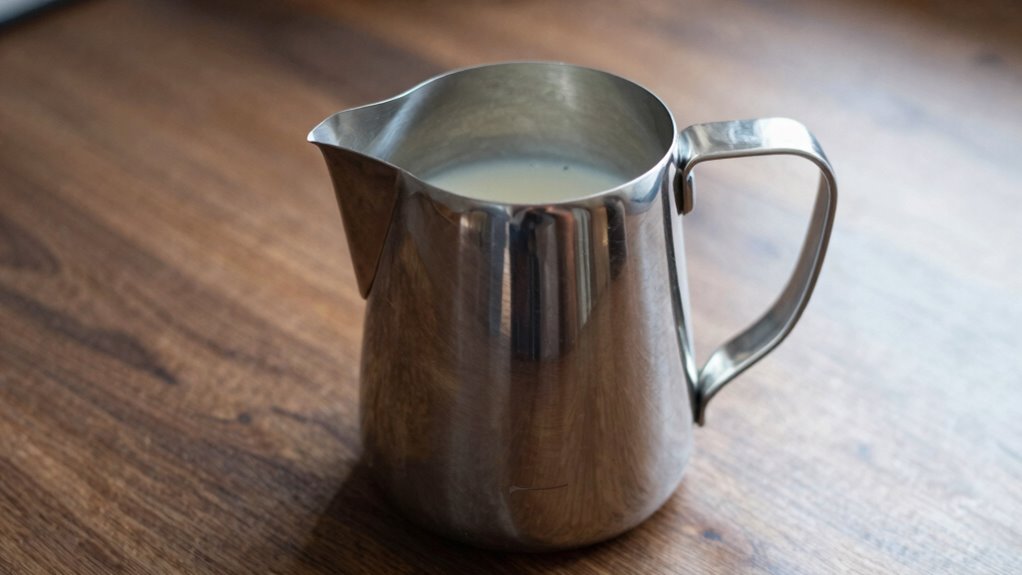
Have you ever wondered what size milk pitcher is best for your home espresso setup? Choosing the right size isn’t just about having more milk; it directly influences your coffee flavor and your milk frothing techniques. A pitcher that’s too large can make it harder to control the milk’s temperature and texture, which impacts the overall taste of your espresso drink. Conversely, a pitcher that’s too small might limit your ability to create latte art or froth enough milk for larger cups. The key is finding a size that complements your skill level, your typical drink size, and the type of beverages you enjoy making.
Choosing the right milk pitcher size enhances control, flavor, and your ability to create beautiful latte art.
When you opt for a smaller pitcher, usually around 12 to 20 ounces, you gain better control over the milk frothing process. Smaller pitchers heat up quickly and allow you to focus on creating smooth, velvety microfoam, which is essential for enhancing your coffee flavor. They also make it easier to develop your milk frothing techniques, giving you the precision needed to master pouring and pouring control. This size is ideal if you usually prepare single or double shots and prefer drinks like cappuccinos or flat whites. It encourages a more disciplined pouring technique, helping you develop consistency and confidence as you learn to texture your milk correctly.
On the other hand, larger pitchers—say 24 ounces or more—are tempting because they seem to offer more versatility. However, they can be tricky to handle, especially if you’re still honing your milk frothing techniques. Larger pitchers tend to hold more milk, which can make it difficult to maintain the right temperature and achieve that perfect microfoam. If the milk gets too hot or the froth isn’t well-integrated, it can negatively affect your coffee flavor, resulting in a drink that’s overly hot or has a less creamy texture. Plus, larger pitchers can lead to overfilling your espresso cup, which might dilute the flavor or make your drink less balanced. Being aware of biodiversity principles that emphasize sustainable choices can help you select equipment that minimizes waste and energy use, aligning your coffee habits with environmentally conscious practices. Additionally, choosing a size that matches your frotted milk skills and routines can prevent unnecessary waste and rework. Selecting a size that is appropriate for your skill level can also help you avoid waste and enhance your overall coffee experience.
Ultimately, bigger isn’t always better when it comes to milk pitcher size. Your choice should be guided by your experience, the types of drinks you want to make, and your ability to control the frothing process. A smaller pitcher can help you refine your milk frothing techniques and preserve the coffee flavor by ensuring the milk is textured and heated properly. Developing frothed milk skills with a smaller pitcher can lead to better overall drinks, and you can always upgrade once you’re comfortable with your skills. Additionally, choosing appropriately sized equipment can support sustainable practices by reducing waste and conserving energy, which is an important consideration for environmentally conscious home baristas. The right size makes all the difference in turning your home espresso setup into a professional-quality experience.
As an affiliate, we earn on qualifying purchases.
Frequently Asked Questions
How Do I Choose the Right Milk Pitcher Size for My Skill Level?
You choose the right milk pitcher size by considering your skill level and comfort with latte art. If you’re new, start with a smaller pitcher, around 12-16 ounces, for better control and a comfortable pitcher grip. As you improve, you can try larger sizes. Smaller pitchers help you develop precision with latte art, while larger ones might make controlling the flow more challenging, especially for beginners.
Can a Larger Pitcher Improve Milk Foam Quality?
A larger pitcher isn’t a magic wand for better milk foam. Instead, it can lead to challenges in controlling milk temperature and foam consistency, causing your microfoam to become unruly like a wild stallion. The extra space makes it harder to perfect the swirl, risking over- or under-heating your milk. Stick to a size that matches your skill, and you’ll craft silky, consistent foam without fighting the pitcher.
Is It Better to Have Multiple Pitcher Sizes or One Versatile Size?
It’s better to have multiple pitcher sizes for versatile milk frothing and to match different drink needs. This allows you to create better foam and control your technique, improving milk frothing quality. Plus, pitcher aesthetics matter—choosing sleek, appropriately sized pitchers enhances your setup’s look and feel. Having a variety guarantees you’re prepared for anything, whether you’re frothing for a single shot or a larger latte.
How Does Pitcher Material Affect Milk Steaming?
Think of pitcher material as the armor of a knight—your choice influences milk steaming. Stainless steel offers superior temperature control, keeping milk at the right warmth, and is easy to clean, much like a well-polished armor. Glass pitchers may crack under heat but are transparent, letting you monitor milk texture. Silicone pitchers are flexible but less durable. Your choice impacts how smoothly you can steam milk and keep your tools spotless.
What Size Pitcher Is Ideal for Making Multiple Drinks at Once?
You should choose a pitcher around 20 to 24 ounces for making multiple drinks at once. This size gives you enough room to create a smooth cream texture without spilling, while still maintaining good control over your pour. A pitcher with a comfortable grip helps you steady your hand, especially during simultaneous pours. Avoid overly large pitchers, as they can be harder to maneuver and may compromise milk texture.
Conclusion
So, next time you’re tempted to buy that giant milk pitcher, remember: bigger isn’t always better. Imagine filling a bathtub with milk just to steam a tiny espresso shot—talk about overkill! Choose a size that fits your daily needs, not your dreams of barista grandeur. After all, a manageable pitcher makes for a happier, less splattered coffee adventure. Keep it simple, keep it smart, and leave the milk mountains for the milk mountains.
Fall Picks
fall essentials
As an affiliate, we earn on qualifying purchases.