
Choosing the right milk pitcher shape can make a big difference in creating beautiful latte art. A pitcher with a narrow spout offers better control and precision, making it easier to pour delicate patterns. The overall body shape also matters; tall and slender pitchers help you start and stop pours smoothly, giving you more accuracy. The material influences how steady your steaming and pouring feel. Keep exploring to discover the tiny details that can elevate your latte art skills even more.
Key Takeaways
- Narrow spouts allow for precise flow control, making detailed latte art easier.
- The shape of the pitcher’s body influences ease of starting and stopping pours for intricate designs.
- Curved or tapered spouts help in creating fine lines and complex patterns with better accuracy.
- A comfortable grip combined with the right shape enhances control during delicate pouring maneuvers.
- Material and weight distribution in the shape affect stability, impacting microfoam handling and precision.
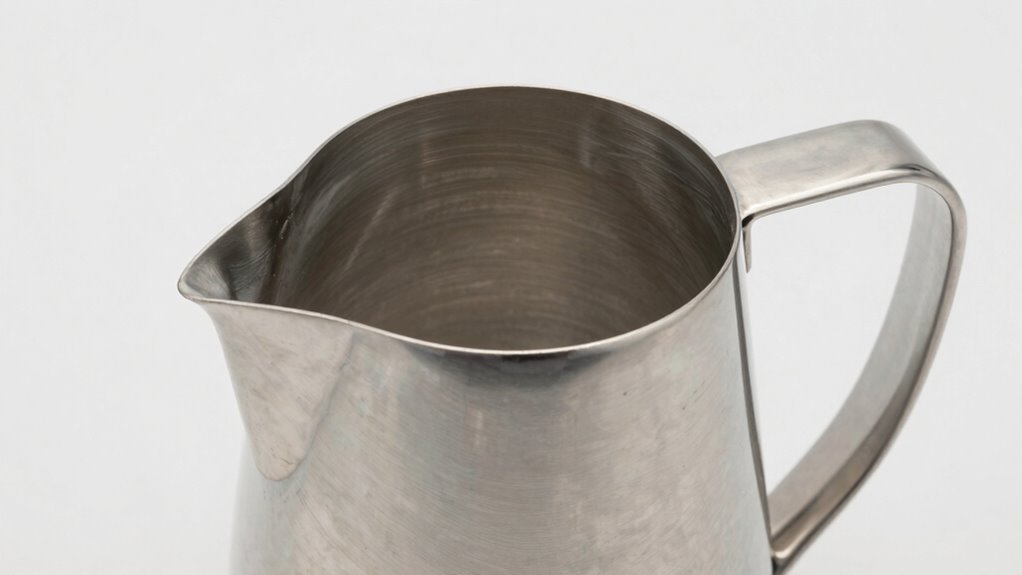
Have you ever wondered how the shape of a milk pitcher influences your ability to create beautiful latte art? It’s a small detail that can make a big difference. The shape impacts your pouring techniques, which are essential for controlling the flow and precision needed for intricate designs. When you choose the right pitcher, you’ll find it easier to manipulate the milk and craft those perfect hearts, rosettas, or tulips. The goal is to have a pitcher that feels natural in your hand and allows smooth, controlled pours.
One important aspect is the pitcher’s spout shape. A narrow, well-designed spout helps you direct the milk flow with greater accuracy. It’s easier to create fine lines or detailed patterns when you can control the pour from the tip. Conversely, a wider spout might make it more challenging to produce delicate designs, as the milk flow can be less precise. The overall shape of the pitcher body also matters. Tall and slender pitchers tend to give you better control over the flow rate, making it easier to start and stop pouring at the right moments. Shorter, wider pitchers might be more forgiving for beginners but can limit the finesse needed for complex patterns.
A narrow spout offers precise control, making intricate latte art easier with better flow management.
In addition to shape, pitcher material options play an essential role. Metal pitchers, especially stainless steel, are popular because they heat evenly and maintain temperature longer, which helps keep the milk at an ideal steaming temperature. This consistency is key for creating shiny, smooth microfoam. Plastic pitchers are lightweight and affordable, but they might not withstand high temperatures as well, and their surface can sometimes interfere with the flow control. Glass pitchers are aesthetically pleasing and allow you to see the milk’s texture, but they can be fragile and may not conduct heat as effectively as metal ones. When selecting a pitcher, consider how the material feels in your hand and how it influences your pouring techniques. A comfortable grip and good heat retention can help you develop confidence in your pouring and achieve more consistent results. Additionally, appropriate pitcher shape can greatly enhance your ability to perform precise pours with ease.
Ultimately, the shape and material options of a milk pitcher aren’t just about aesthetics—they directly influence how you perform your pouring techniques. Finding a pitcher that fits comfortably in your hand, offers precise control of the spout, and suits your preferred steaming process will elevate your latte art game. It’s a small investment that can considerably improve your ability to craft beautiful, professional-looking designs every time you pour.

GROSCHE White Milano Stovetop Espresso Maker, 6 cup
⭐ [Moka Espresso Coffee] Stovetop espresso maker, Moka pot, & manual coffee percolator machine. Available in 3 cups,...
As an affiliate, we earn on qualifying purchases.
Frequently Asked Questions
What Is the Ideal Temperature for Steaming Milk?
You should aim for an ideal temperature of around 140-150°F when steaming milk. Using proper temperature control methods, like a thermometer or automatic milk frothing techniques, helps you avoid overheating or underheating. Keeping the milk within this range ensures it’s creamy and perfect for latte art. Practice monitoring temperature closely; this small detail considerably improves your milk frothing techniques and results in beautifully textured milk for your drinks.
How Do Different Milk Types Affect Latte Art?
Different milk types dramatically influence your latte art, as milk frothing techniques must adapt to their unique composition differences. For example, whole milk creates rich, creamy foam, ideal for smooth, detailed designs, while skim milk froths faster with lighter bubbles, making quick, bold patterns easier. You’ll need to tweak your approach based on each milk’s properties, revealing more precise, consistent latte art with every cup.
Can Pitcher Shape Influence Pouring Speed?
Yes, pitcher shape influences pouring speed. A wider pitcher diameter allows for a smoother, faster pour, which is essential for controlled latte art. Your pouring technique also matters; a steady, consistent flow helps create clean designs. When you choose a pitcher with the right shape, it’ll be easier to manage pouring speed, giving you better control over your latte art. Practice with different shapes to find what works best for your style.
Are There Beginner-Friendly Pitcher Shapes for Novices?
Yes, as a beginner, you’ll find frosted pitchers with ergonomic handles very user-friendly. These pitchers offer a comfortable grip and better control, making pouring easier. The frosted surface helps with grip, preventing slips, while the ergonomic handle reduces hand fatigue. Start with these shapes, as they’re designed to help you develop your latte art skills without added frustration, giving you confidence to improve your pouring technique.
How Should I Clean and Maintain My Milk Pitcher?
You should clean your milk pitcher after each use to prevent milk residue buildup. Use warm water and a mild detergent suitable for the pitcher material, whether stainless steel or ceramic. Be sure to scrub gently to avoid damaging the surface. Regularly check and maintain the pitcher capacity to ensure it’s appropriate for your milk steaming needs. Proper cleaning and maintenance uphold your pitcher in top shape, making your latte art easier and more enjoyable.

Imusa USA Aluminum Stovetop 6-cup Espresso Maker (B120-43V), Silver
Note: 1)Too coarse a grind, too little coffee, or insufficiently tamping the grounds before brewing can all lead...
As an affiliate, we earn on qualifying purchases.
Conclusion
Choosing the right milk pitcher shape is like finding the perfect brush for a painting—you’ll notice how it makes your latte art flow more smoothly and confidently. When you pick a pitcher that fits your style and technique, every pour becomes easier and more enjoyable. So, don’t underestimate this tiny detail; it’s the key to revealing your latte art potential. Once you find your ideal shape, creating beautiful designs will feel as natural as breathing.

Primula Classic Stovetop Espresso and Coffee Maker, Moka Pot for Italian and Cuban Café Brewing, Greca Coffee Maker, Cafeteras, 6 Espresso Cups, Silver
CRAFT COFFEE AT HOME: Produces six demitasse/espresso servings of rich, smooth espresso coffee in minutes. Craft your own...
As an affiliate, we earn on qualifying purchases.

Breville Barista Express Espresso Machine BES870XL, Brushed Stainless Steel
The Breville Barista Express delivers third wave specialty coffee at home using the 4 keys formula and is...
As an affiliate, we earn on qualifying purchases.