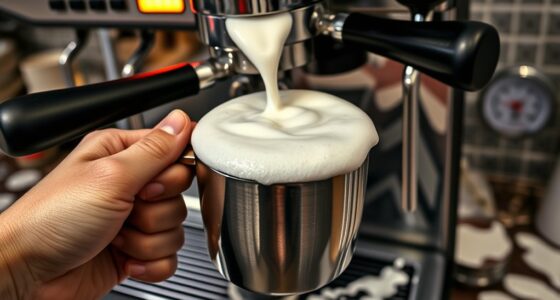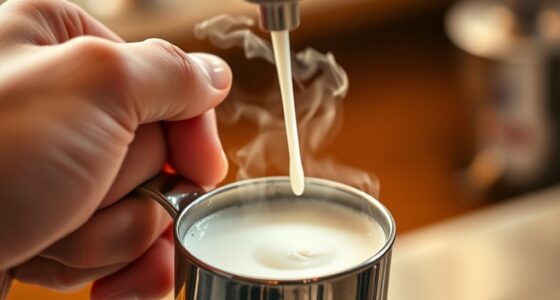

Cappuccino and latte are both espresso drinks, but they differ in texture, size, and flavor. A cappuccino has a balanced mix of espresso, steamed milk, and thick, frothy foam, creating a bold taste with a velvety texture. A latte has more steamed milk, a lighter foam, and a milder flavor, offering a creamier, larger drink. To discover how these differences impact your experience, keep exploring further details.

Get coffee and tea gear delivered free with Prime
- Fast, free delivery on millions of items
- Prime Video, Amazon Music and more included
- Member-only deals all year
Key Takeaways
- Cappuccino has equal parts espresso, steamed milk, and thick foam, while latte has more steamed milk and lighter foam.
- Served in smaller cups (140-160ml for cappuccino) versus larger mugs (220-250ml for latte).
- Cappuccino offers a velvety, airy foam with a stronger coffee flavor; latte is creamier with a milder taste.
- Foam in cappuccino is thick and fluffy, contrasting with the smooth, integrated foam in latte.
- The preparation techniques differ, emphasizing foam texture and pouring methods for each drink.
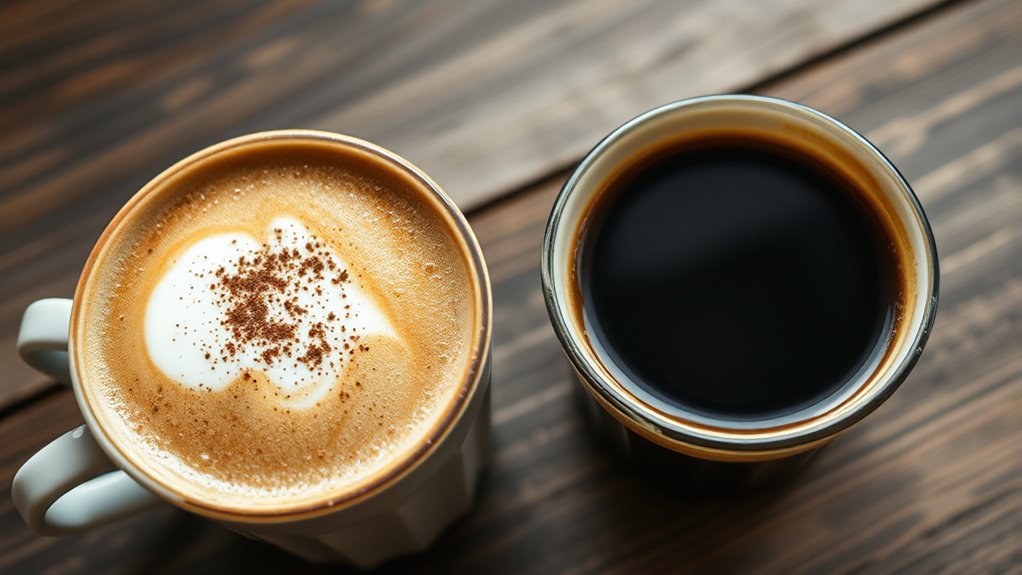
When choosing between a cappuccino and a latte, understanding their key differences can enhance your coffee experience. Both are espresso-based drinks, but their distinct compositions and presentation make each unique.
Choosing between a cappuccino and a latte depends on your flavor preference and texture enjoyment.
A cappuccino features a balanced mix of espresso, steamed milk, and thick, frothy foam, creating a smaller, layered drink. Typically served in cups around 140-160ml, the cappuccino emphasizes the texture and flavor of the foam, which is thick, fluffy, and airy. The foam’s texture is a defining feature, providing a velvety mouthfeel and visually appealing layers that are often showcased in a coffee shop.
The milk-to-foam ratio in a cappuccino is roughly equal, ensuring that each sip contains a harmonious blend of rich espresso, smooth steamed milk, and airy foam.
In contrast, a latte contains more steamed milk and only a thin layer of foam, making it larger and creamier. Usually served in mugs between 220-250ml, the latte offers a milder, more mellow flavor with a velvety texture due due to the higher milk content.
The foam in a latte is lighter and more integrated into the drink rather than sitting as a thick cap on top. This creates a smoother, more uniform consistency, perfect if you prefer a milder coffee experience.
The milk ratio in a latte is higher, which dilutes the espresso slightly but enhances the drink’s overall creaminess. The difference in drink size also influences how you might enjoy each—small for a quick, intense caffeine hit, larger for a more sustained, soothing experience.
When you visit a coffee shop, you’ll notice that espresso-based drinks like cappuccinos and lattes are crafted with different techniques to achieve their signature foam textures and milk ratios. Baristas often emphasize the importance of steamed milk for smoothness and foam for presentation and mouthfeel.
If you prefer a drink with a pronounced coffee flavor, a cappuccino’s smaller size and thicker foam will suit you better. If you lean toward a milder, creamier beverage, then a latte’s larger volume and lighter foam make it the ideal choice.
Understanding these differences guarantees you pick the right drink for your mood and taste preferences, allowing you to truly appreciate the art behind each espresso-based drink.
Additionally, expert baristas often recommend trying both to discover which suits your palate best and enhances your overall coffee experience.
As an affiliate, we earn on qualifying purchases.
Frequently Asked Questions
How Is a Cappuccino Different From a Latte?
When you compare a cappuccino to a latte, you’ll notice the differences in size, texture, and flavor.
A cappuccino has equal parts espresso, steamed milk, and foam, making it frothy and strong in taste, usually served smaller.
In contrast, a latte contains more steamed milk with a lighter foam, resulting in a creamier, milder flavor and a larger drink.
The visual layers also set them apart.
Is a Latte a Cappuccino Without Foam?
You might think a latte without foam is just a cappuccino without the froth, but it’s not quite right. Without the thick, velvety foam, a latte loses its signature texture and appearance.
Instead, it becomes a milk-forward espresso drink, lacking the frothy top that defines a cappuccino. So, removing foam doesn’t turn a latte into a cappuccino; it just changes its presentation and texture.
What Makes a Cappuccino Unique?
A cappuccino is unique because it combines equal parts espresso, steamed milk, and thick, velvety foam, creating distinct layers and a balanced flavor.
Its smaller size emphasizes a stronger coffee taste, and the airy foam adds a light, fluffy texture.
You often see artistic latte art on top, making it not just a drink but a visual experience.
This perfect harmony of elements sets it apart from other coffee beverages.
Is a Wet Cappuccino Just a Latte?
You might think a wet cappuccino is just a latte, but there’s a subtle difference. A wet cappuccino has more steamed milk and less foam, making it creamier and closer in texture to a latte.
However, it still typically comes in a smaller cup and has a slightly thicker milk layer. So, while similar, a wet cappuccino maintains some distinct qualities that set it apart from a classic latte.
Conclusion
Now that you know the key differences between a cappuccino and a latte, you can confidently choose your favorite based on your taste and texture preferences. Whether you prefer the frothy, bold experience of a cappuccino or the smooth, milky richness of a latte, both drinks offer unique delights. So go ahead, try both and discover which one truly satisfies your coffee cravings every time. Your perfect cup is just a sip away.
Halloween Picks
halloween
As an affiliate, we earn on qualifying purchases.