To calibrate your grinder so “Click 10” means something, start by choosing your target setting and grinding a small batch of coffee. Use a sieve or grind size chart to compare the grounds and note the result. Adjust your grinder slightly, then repeat until the grind size matches your desired standard consistently. Regularly verify and fine-tune your settings to keep “Click 10” reliable—keep going to discover how to maintain long-term precision.
Key Takeaways
- Measure the grind size produced at “Click 10” using a sieve or grind size chart.
- Adjust the grinder in small increments until the ground matches your target size consistently.
- Document the current setting and corresponding grind size for future reference.
- Regularly recheck and fine-tune calibration to account for burr wear and environmental factors.
- Maintain the grinder by cleaning burrs and components to ensure consistent, predictable results.
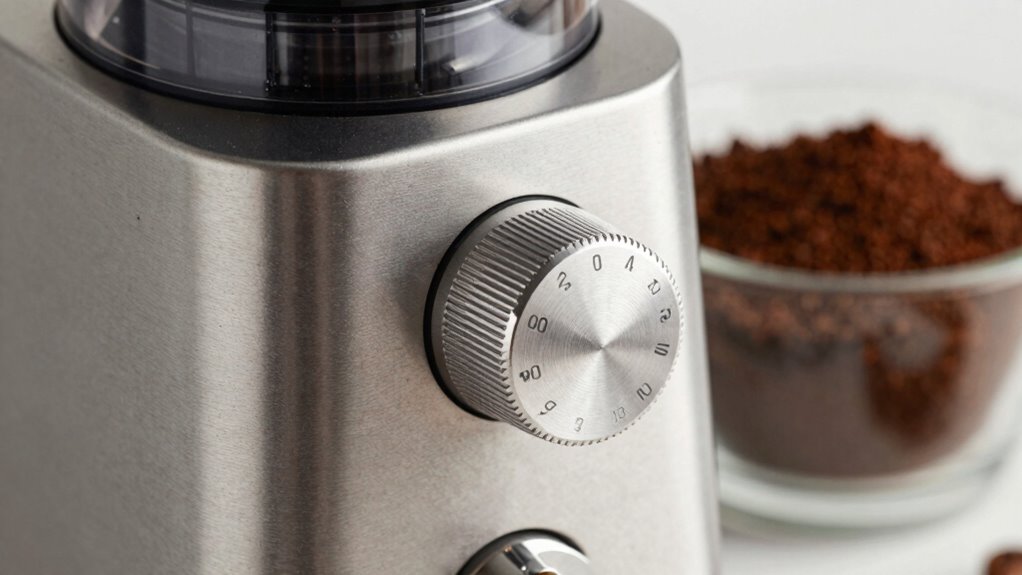
Calibrating your grinder is essential to achieving the perfect brew, as inconsistent grind size can considerably affect flavor and extraction. When your grinder isn’t properly calibrated, even small variations can lead to over-extraction or under-extraction, resulting in sour, bitter, or flat-tasting coffee. To prevent this, you need to focus on regular grinder maintenance and establishing grind consistency. Proper maintenance ensures your grinder’s parts function smoothly, reducing the chances of uneven grind sizes and mechanical hiccups. A clean grinder produces more uniform grounds, which is crucial for consistent extraction and flavor.
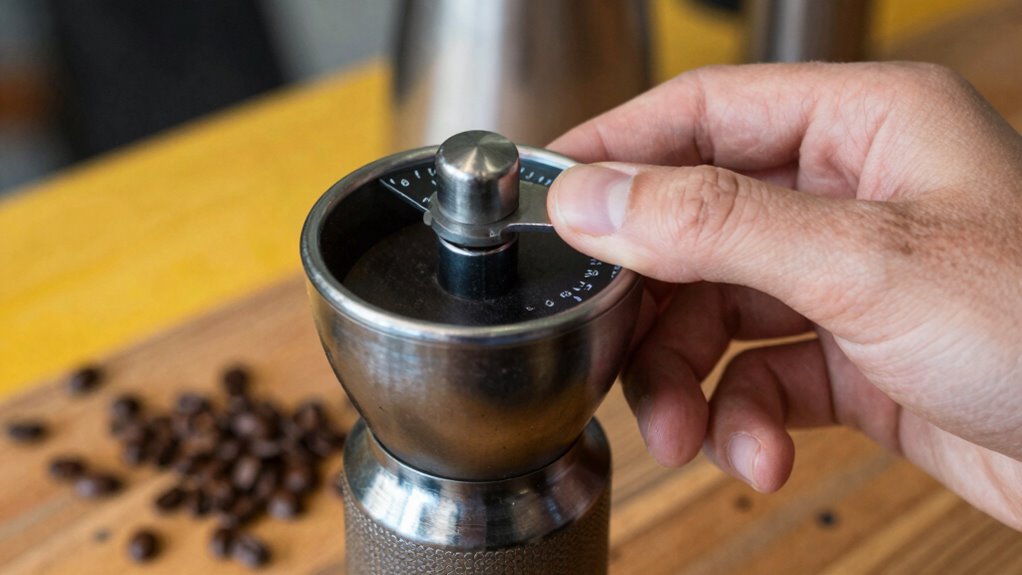
To calibrate effectively, start by understanding your grinder’s settings. Many grinders have numbered or labeled grind size adjustments, but these are often rough estimates rather than precise measurements. Simply relying on “clicks” or numbers like “Click 10” might not mean the same thing every time or across different machines. That’s why calibrating your grinder to a specific, measurable standard is so important. You want to make sure that when you set your grinder to “Click 10,” it actually produces the grind size you expect, whether for espresso, French press, or pour-over brewing. Regularly checking your calibration can help detect grind size inconsistencies before they impact your coffee.
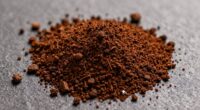
The key is to create a baseline. Begin by grinding a small amount of coffee at your target setting—say, “Click 10.” Collect the grounds and analyze their size. Use a sieve or a grind size chart to compare the grounds against a standard. If the grounds are too fine or too coarse, adjust your grinder in small increments. Keep notes of where you start and how much you change the setting each time. This process helps establish a reliable correlation between the click number and the actual grind size, making your “Click 10” more meaningful.
Regular grinder maintenance is vital during this process. Dust and old coffee grounds can clog or dull the burrs, which impacts grind consistency. Clean your grinder regularly following manufacturer instructions—disassemble burrs if necessary, and use proper brushes or compressed air. This keeps the burrs sharp and free of debris, ensuring uniform grounds. When your grinder is well-maintained, you’ll notice more consistent results, making calibration more predictable and your coffee more delicious.
Once you’ve calibrated your grinder, always revisit and fine-tune it periodically. Changes in humidity, burr wear, or even temperature can shift your grind size over time. By maintaining your grinder and regularly checking your calibration, you ensure that “Click 10” continues to produce the precise grind you need. Over time, this consistency will improve your brewing process, giving you better flavor, better extraction, and a more enjoyable coffee experience.

SHARDOR Professional 64mm Burr Coffee Grinder with 100 Grind Settings and All-Metal Chamber, Coffee Bean Grinder with Adjustable Electronic Timer and LED Display, Anti-Static,Black
64mm Flat Burr: Achieves uniform grinding with minimal heat generation, enhancing the flavor profile for a superior taste...
As an affiliate, we earn on qualifying purchases.
Frequently Asked Questions
How Often Should I Recalibrate My Grinder?
You should recalibrate your grinder every few months or whenever you notice inconsistencies in brewing. Regular grinder maintenance guarantees your grind size stays accurate, helping you achieve consistent extraction and flavor. If you switch beans or change brewing methods, recalibrate sooner to maintain brewing consistency. Keep an eye on how your coffee tastes and adjust calibration as needed, so your espresso or coffee remains flavorful and balanced every time.
What Tools Do I Need for Calibration?
Think of calibration accuracy like tuning a guitar; you need the right tools to get the perfect sound. For grinder maintenance, you’ll need a small hex wrench, a digital caliper, and possibly a scale for precise measurements. These tools help you fine-tune your grinder’s settings accurately, ensuring consistent results. Keep them handy, and you’ll maintain calibration precision, turning every brew into a harmonious experience.
Can Calibration Improve My Coffee’s Flavor?
Yes, calibration can greatly improve your coffee’s flavor by enhancing grinder consistency. When you calibrate your grinder, you guarantee a uniform grind size, which leads to better extraction and richer flavors. Consistent grinding reduces over-extraction or under-extraction, making your coffee taste balanced and full-bodied. Regular calibration helps you fine-tune your grinder, so each brew delivers ideal flavor, elevating your overall coffee experience.
Is Calibration Necessary for All Types of Grinders?
Calibration isn’t necessary for all grinders, but it can greatly improve your coffee experience. Regular grinder maintenance, including calibration benefits, ensures consistent grind size and ideal extraction. If your grinder is old or you notice uneven brewing, calibration helps you fine-tune settings for better flavor. Even newer models can benefit from calibration, so investing some time now can make a noticeable difference in your coffee quality and overall brewing process.
How Do I Know if My Grinder Is Properly Calibrated?
Did you know that inconsistent grind size can reduce coffee flavor by up to 30%? To tell if your grinder is properly calibrated, check its consistency and grind size accuracy. Run a test brew, then compare the grounds to your desired size. If the results vary or don’t match your settings, your grinder needs recalibration to guarantee uniformity and maximum flavor extraction every time.

MOKKOM Professional 64mm Flat Burr Coffee Grinder with 100 Grind Settings, All-Metal Stainless Steel Body, Coffee Bean Grinder with Adjustable Electronic Timer, Anti-Static, LED Display
[64mm Stainless Steel Flat Burrs] As a professional coffee grinder, this machine uses 64mm stainless steel flat burrs...
As an affiliate, we earn on qualifying purchases.
Conclusion
Now that you’ve calibrated your grinder, you’re armed with precision that turns a simple “click 10” into a reliable measure. Remember, practice makes perfect, and with a little patience, you’ll master the art of consistent grinding. Think of it like tuning a fine instrument—once you get it just right, everything will sing in harmony. Keep honing your skills, and soon, your brew will be as flawless as a well-choreographed dance.
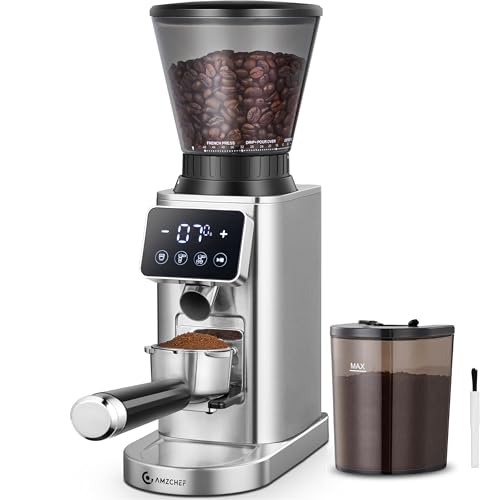
AMZCHEF Coffee Grinder, Coffee Bean Grinder for Home Use with Precise Grinding, LED Control Panel, Detachable Funnel Stand, Anti-static Design, 48 Grind Settings, Silver
DESIGN FOR ESPRESSO:We provide portafilter holder ,Portafilter holder pad and photophobic coffee ground container. It is compatible with...
As an affiliate, we earn on qualifying purchases.

COOL KNIGHT Rechargeable Conical Burr Coffee Grinder, 60 Grind Settings & 5–98 Level Timer, Espresso Grinder with Bellows Hopper and Portafilter Holder, Easy to Clean
ENJOY FRESH COFFEE ANYTIME, ANYWHERE — This electric coffee grinder features a built-in 2600 mAh rechargeable lithium battery...
As an affiliate, we earn on qualifying purchases.