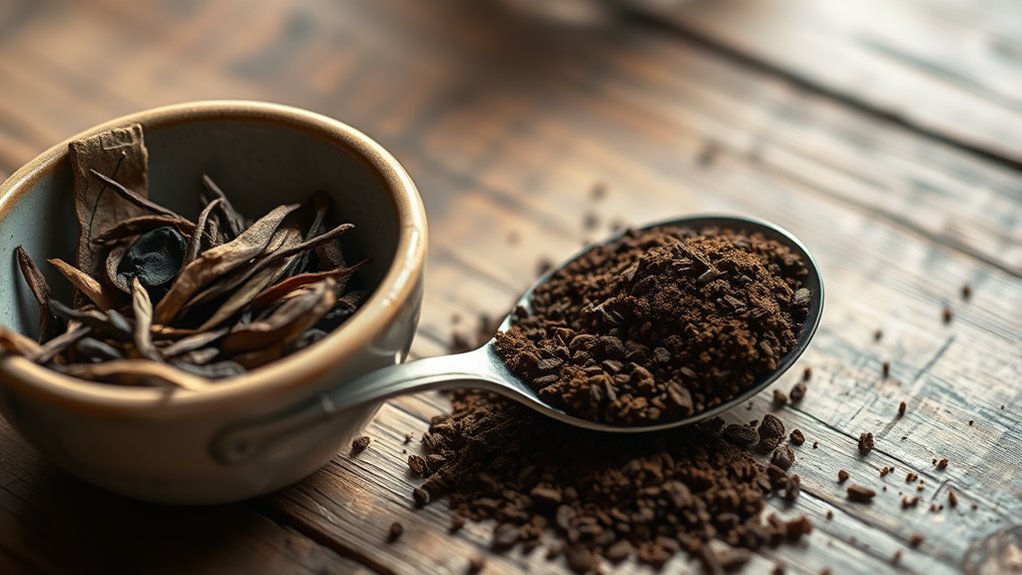

To brew without a scale, use standard measuring spoons to guarantee consistency. Typically, a level tablespoon holds about 5 to 7 grams of coffee or grains. For coffee, two level tablespoons per six ounces of water create a strong brew, and adjusting slightly can customize your flavor. Keep measurements level for accuracy and repeatability. If you want to refine your technique further, there’s more helpful advice to explore just ahead.

Get coffee and tea gear delivered free with Prime
- Fast, free delivery on millions of items
- Prime Video, Amazon Music and more included
- Member-only deals all year
Key Takeaways
- Use level tablespoons, typically 5-7 grams for coffee, for consistent, accurate measurements.
- Measure grains or malt with spoons to maintain flavor profiles in brewing.
- Apply a fixed ratio of spoonfuls to water for reproducible strength and taste.
- Keep measurements level for precision and adjust based on taste preferences.
- Record spoon-to-water ratios to ensure consistency in future brews without a scale.
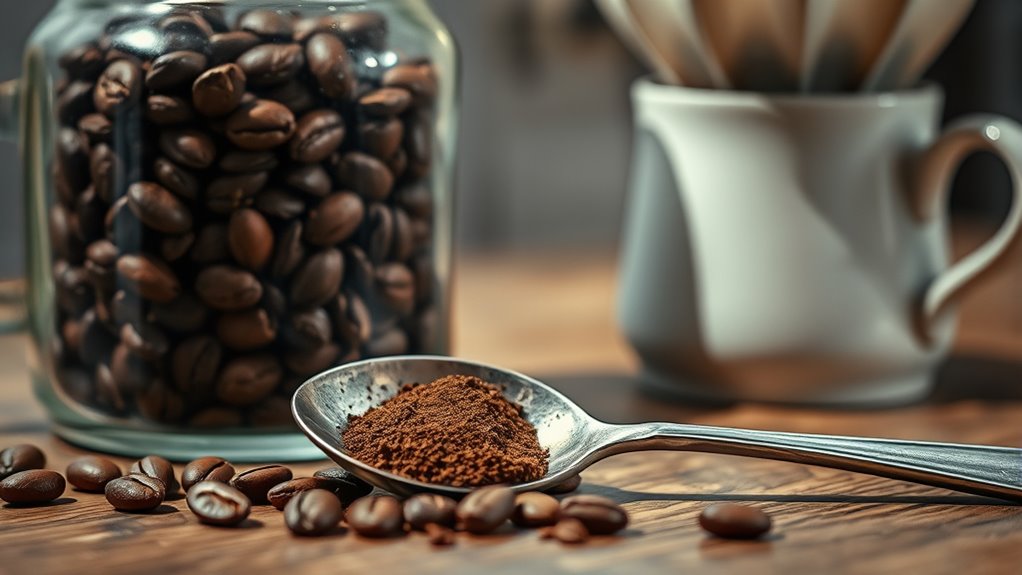
Brewing coffee or beer without a scale might seem intimidating, but it’s entirely doable with some simple techniques. When you don’t have a digital scale, measuring by spoons can help you achieve a consistent coffee flavor and maintain good brewing techniques. The key is understanding how much coffee or grains fit into a spoon and how to use those measurements effectively.
Start by recognizing that a standard heaping tablespoon generally holds about 5 to 7 grams of coffee. While this may vary slightly depending on grind size and coffee type, it provides a reliable starting point. For a strong, flavorful brew, use about two tablespoons per six ounces of water. If you prefer a milder taste, reduce the amount slightly. The trick is to keep your spoon measurements consistent each time you brew, which helps you replicate your preferred coffee flavor.
When measuring coffee with spoons, focus on the level of the spoon rather than heaping scoops. Level spoons ensure you’re using a precise amount, minimizing variability in flavor. Once you get a feel for how much fits into a level spoon, you can easily adjust your recipe based on your taste preferences. For brewing techniques, consider pre-wetting the coffee grounds with a small amount of hot water before pouring in the rest. This “bloom” releases carbon dioxide and enhances flavor extraction, making your coffee richer and more aromatic. Accurate measurement is essential for consistent results and better control over your brew.
If you’re brewing with a French press or pour-over, use the spoon measurements to control your coffee-to-water ratio. For example, two level tablespoons per six ounces of water is a good rule of thumb. Keep a mental note or write down your preferred ratio so you can quickly replicate it without a scale. When brewing beer, the same principle applies—measure grains or malt with measuring spoons to get a consistent flavor profile, especially if you’re experimenting with small batches or homebrewing.
Products Worth Considering

Breville Smart Grinder Pro Conical Burr Coffee Grinder, Black Truffle

Le Creuset Toughened Nonstick PRO 10-Inch Fry Pan

Vitamix 64 oz Low-Profile Blender Container with SELF-DETECT, BPA-Free
As an affiliate, we earn on qualifying purchases.
Frequently Asked Questions
Can Spoon Measurements Replace a Digital Scale Accurately?
Spoon measurements can replace a digital scale for brewing, but they may lack volume accuracy compared to precise weighing. You might find slight variations, especially with different ingredient densities. However, if you focus on consistent spoon filling, your user experience improves, making it a practical solution. For best results, use standardized measuring spoons and practice to minimize discrepancies, ensuring your brew remains balanced and flavorful.
How Do I Convert Spoon Measurements for Different Coffee Beans?
Think of coffee beans like different characters in a story—each with its own density. To convert spoon measurements for varying beans, start by understanding their density differences, as denser beans weigh more. Use consistent measurement techniques, like leveling spoons, to maintain measurement consistency. By adjusting your spoon amounts based on bean density, you guarantee your coffee’s flavor remains balanced, no matter the bean variety.
Are There Specific Spoons Recommended for Precise Measurements?
Yes, there are specific spoons recommended for precise measurements. Look for standardized measuring spoons with precise calibration to guarantee accuracy. These spoons are designed to provide consistent measurements, reducing variability in your brew. When selecting spoons, choose ones made of stainless steel or durable plastic with clear markings. This way, you can confidently measure your coffee without a scale, ensuring a consistent and flavorful cup every time.
How Do Humidity and Temperature Affect Spoon-Based Measurements?
Humidity impact and temperature influence can affect spoon-based measurements by causing the ingredients to absorb moisture or expand, leading to inaccuracies. High humidity may make powders or grains clump, making it hard to scoop precise amounts. Warmer temperatures can cause ingredients to expand slightly, altering volume. To get consistent results, measure quickly in stable conditions and use dry, level spoons. Adjust your measurements if you notice environmental changes.
Can Spoon Measurements Be Standardized Across Different Brands?
Spoon measurements can face standardization challenges due to brand variability, as different brands may have slight differences in scoop sizes and shapes. To improve consistency, you should use a set of standardized measuring spoons or weigh ingredients when possible. While it’s difficult to achieve perfect standardization across all brands, practicing consistency with the same brand and type of spoon helps you maintain reliable measurements in your brewing process.
Conclusion
Just like the alchemist turning simple ingredients into gold, you can master brewing without a scale. With trusty spoon measurements, you hold the secret to perfect coffee or tea, turning everyday moments into a ritual of precision and joy. Remember, even the greatest baristas started with a simple scoop. So, embrace your inner artisan—your perfect brew awaits, just like the legendary craftsman, turning humble tools into magic. Cheers to brewing without limits!