To protect your gear, make certain your water filters and softeners are properly installed and maintained. Follow manufacturer instructions, place units near your main water supply, and check all connections for leaks. Regularly replace filters and salt, and inspect your system for corrosion or damage. Consistent upkeep extends the life of your equipment, keeps water clean, and prevents costly repairs. Keep your system well-maintained, and you’ll enjoy better water quality and appliance longevity. Learn more to optimize your setup.
Key Takeaways
- Proper installation near main water supply prevents leaks and ensures optimal system performance.
- Regular maintenance, including filter changes and salt replenishment, extends equipment lifespan.
- Periodic system inspections identify leaks or damage early, avoiding costly repairs.
- Using manufacturer-recommended parts and high-quality media maintains filtration efficiency.
- Consistent upkeep safeguards plumbing and appliances from mineral buildup and water impurities.
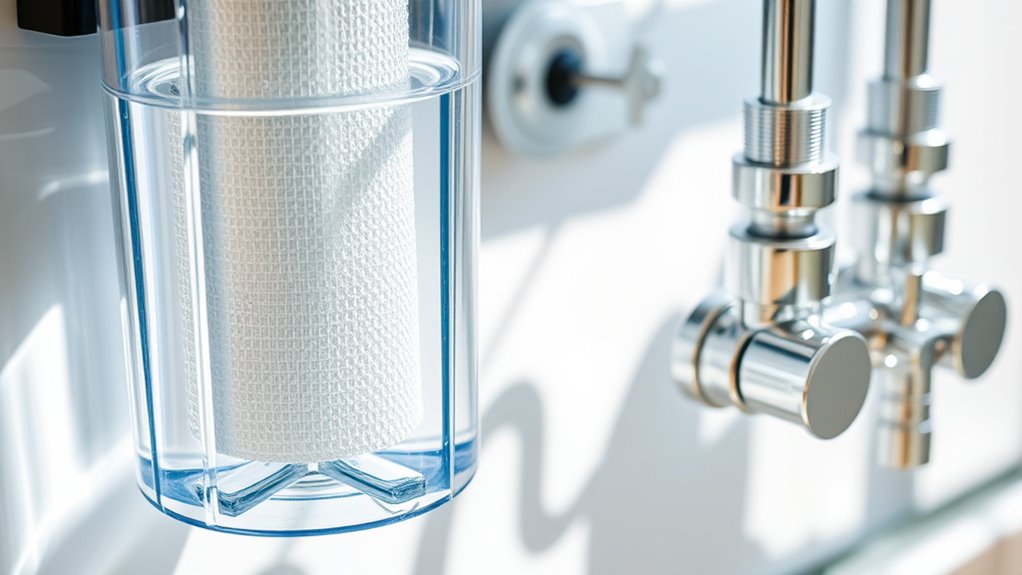
Clean, safe drinking water is essential for your health and home, but tap water can contain impurities, minerals, and hard water deposits that affect taste and appliance longevity. To guarantee your water remains pure and your appliances stay protected, understanding proper installation and maintenance of water filters and softeners is key. When installing a water filter or softener, start by carefully reading the manufacturer’s instructions. Proper installation tips include positioning the unit correctly—usually near the main water supply or at points of use—so you can efficiently filter water before it reaches your faucets or appliances. Make sure to secure all connections tightly to prevent leaks, and verify the flow direction marked on the unit. Installing a filter or softener too far downstream can reduce its effectiveness, so planning the placement is fundamental.
Proper installation ensures water filters and softeners function effectively and last longer.
Once installed, committing to a regular maintenance schedule is essential to keep the system working efficiently. Most filters need replacing every three to six months, depending on your water usage and quality. Regularly check for signs of clogging or reduced water flow, which can indicate that it’s time for a change. For water softeners, maintenance involves replenishing salt supplies and cleaning the resin bed periodically. Following the manufacturer’s recommended schedule for these tasks prevents buildup of minerals and ensures the system functions efficiently. Neglecting maintenance can lead to reduced lifespan of your equipment, increased energy consumption, and compromised water quality.
Additionally, keeping a log of maintenance activities helps you stay on track and avoid costly surprises. Many systems have indicator lights or alarms to notify you when maintenance is due; pay attention to these signals. It’s also wise to periodically inspect the entire system for leaks, corrosion, or damage. Using high-quality replacement filters and salt is essential—cheaper alternatives may seem tempting but can undermine your system’s effectiveness and durability. Moreover, understanding the different types of water filtration media available can help you choose the best option for your specific water quality needs.
Proper installation and diligent maintenance schedules not only prolong the lifespan of your water filtration and softening systems but also ensure that every drop you drink and use at home is clean and safe. Taking the time to set up your equipment correctly and sticking to a routine for upkeep saves you money in the long run and preserves your appliances. Remember, a well-maintained filter or softener is your best defense against impurities, mineral buildup, and hard water deposits, ultimately protecting your health and your home’s plumbing infrastructure.
Frequently Asked Questions
How Often Should I Replace My Water Filter or Softener?
You should replace your water filter or softener based on the maintenance schedule recommended by the manufacturer, typically every 6 to 12 months. Keep an eye on replacement indicators, such as reduced water flow or a change in water taste, which signal it’s time for a change. Regular maintenance guarantees your system works efficiently and protects your gear from mineral buildup and damage, so don’t ignore these signs.
Can Water Filters Remove All Types of Contaminants?
Did you know that over 90% of water filters can’t remove all contaminant types? While filters are effective against sediments, chlorine, and certain bacteria, they have limitations. Many can’t eliminate viruses, heavy metals, or chemical pollutants. Always check your filter’s specifications, as relying solely on it might leave you exposed to some harmful contaminants. Regular maintenance and choosing the right filter help guarantee cleaner, safer water.
What’s the Difference Between a Water Filter and a Water Softener?
A water filter uses filtration mechanisms to remove contaminants like sediment, chlorine, and bacteria, improving water quality. A water softener, on the other hand, employs softening processes to reduce mineral buildup, mainly calcium and magnesium, that cause hard water. While filters focus on purification, softeners target mineral content. Both protect your gear, but they serve different purposes—filters clean water, softeners prevent scale buildup.
Are Water Softeners Effective in Hard Water Areas?
A watched pot never boils, and when it comes to water softeners, they’re quite effective in hard water areas. While regional considerations like water hardness levels influence their performance, they generally do a good job reducing mineral buildup. Effectiveness concerns are minimal if you choose the right system for your area’s hardness. So, yes, a water softener can markedly improve your water quality and protect your appliances.
Do Filters and Softeners Require Professional Installation?
You can do DIY installation of filters and softeners, but it depends on your skill level and the product’s complexity. Many units come with detailed instructions, making it manageable for handy homeowners. Keep in mind, some manufacturers’ warranty considerations might require professional installation for full coverage. If you’re unsure, hiring a pro guarantees proper setup, protects your warranty, and guarantees your system functions effectively.
Conclusion
Think twice before dismissing water filters and softeners—they truly protect your gear. Some believe hard water doesn’t cause real damage, but mineral buildup can clog your equipment and reduce its lifespan. Installing a quality filter or softener not only improves water quality but also keeps your gear running smoothly. It’s a small investment that can save you big repairs down the line. Don’t let myths hold you back—trust in the proven benefits of water treatment.