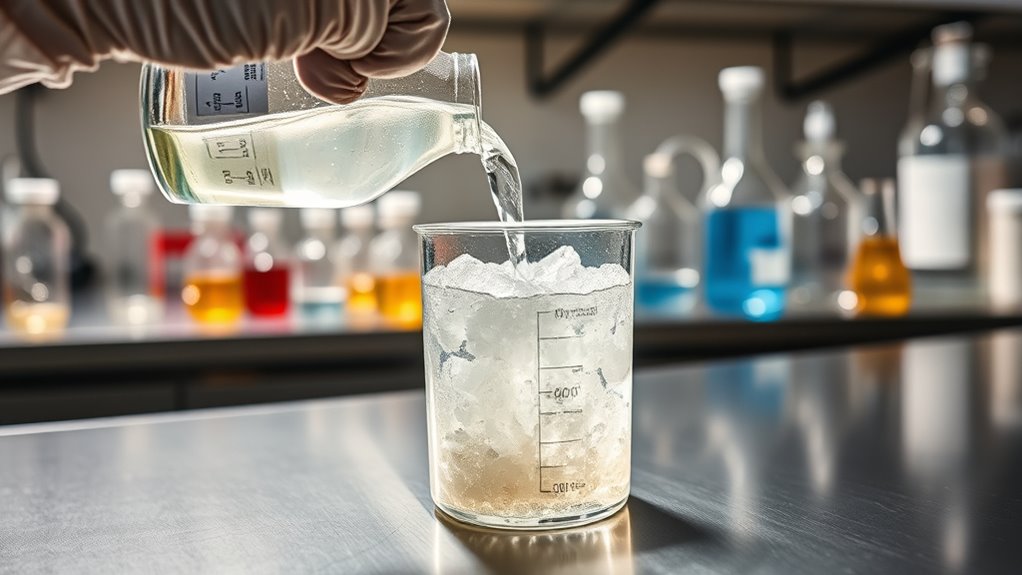

To safely descale your appliances, choose appropriate solutions like white vinegar, citric acid, or commercial descalers, following manufacturer instructions carefully. Wear gloves and eye protection, work in well-ventilated areas, and avoid mixing chemicals to prevent dangerous reactions. Proper dilution and contact time are key to avoiding damage. By understanding the chemistry behind mineral deposits and applying best safety practices, you can extend your equipment’s life and stay safe—more tips on this process are just ahead.
Key Takeaways
- Use appropriate descaling agents like vinegar, citric acid, or commercial solutions, following manufacturer instructions and recommended dilutions.
- Wear protective gloves and eye protection, and work in well-ventilated areas to ensure safety during descaling procedures.
- Avoid mixing acids or chemicals unless specified, to prevent dangerous reactions and equipment damage.
- Maintain proper contact times to effectively remove mineral deposits without harming appliance components.
- Improve water quality with softeners or filters to reduce mineral buildup and minimize the need for frequent descaling.
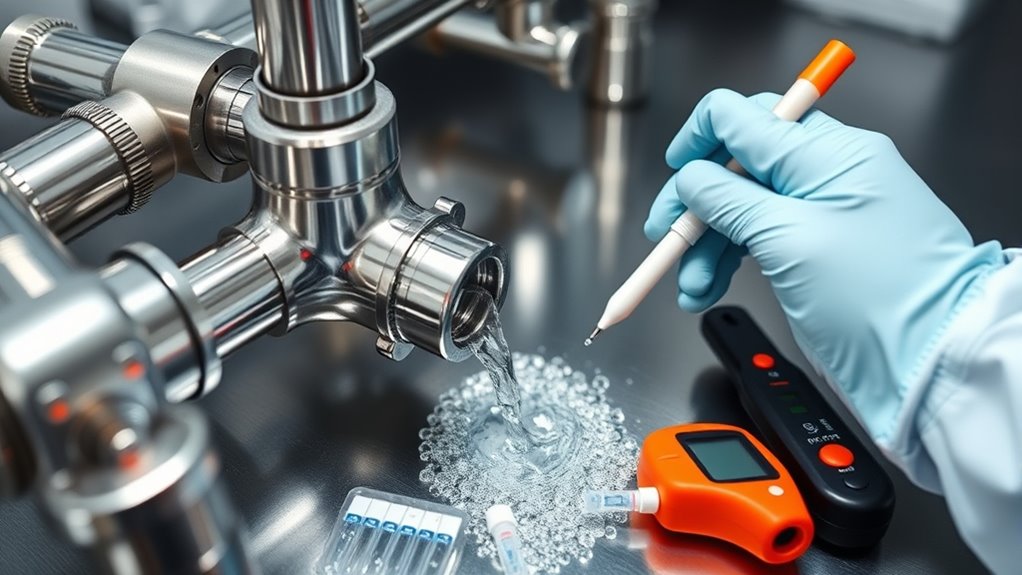
Descaling is essential for maintaining the efficiency and longevity of your appliances, especially those that handle water, like coffee makers and boilers. When water is heated repeatedly, minerals such as calcium and magnesium can build up over time, forming scale deposits. These deposits not only impair performance but also shorten the lifespan of your equipment. To combat this, regular descaling is necessary, and understanding the chemistry behind it helps *guarantee* you do it safely and effectively. Proper scale prevention starts with choosing the right descaling agents and applying them correctly, so you avoid damage or safety hazards.
Regular descaling ensures appliance efficiency and longevity by preventing mineral buildup and damage.
One key aspect of safe descaling is selecting the appropriate chemical agents. Common options include commercial descaling solutions, white vinegar, or citric acid. Commercial products are formulated to dissolve mineral deposits efficiently while minimizing corrosion risks, but you must follow the manufacturer’s instructions carefully. Vinegar and citric acid are natural, affordable alternatives, but they require proper dilution to prevent damage to internal parts. Using the wrong concentration or leaving acids in your appliance for too long can cause rubber seals or metal components to deteriorate, so always adhere to recommended contact times.
Chemical safety is critical during the descaling process. Always wear gloves and eye protection to prevent irritation from acids or other chemicals. Work in a well-ventilated area to avoid inhaling fumes, especially when using concentrated solutions. Keep chemicals away from children and pets, and never mix different descaling agents unless specified by the manufacturer. Mixing acids with other chemicals can produce dangerous fumes or reactions, risking personal injury or appliance damage. Proper disposal of used solutions is equally important—do not pour concentrated acids down the drain; dilute them thoroughly before disposal or follow local waste regulations.
Additionally, understanding water quality is vital because minerals in untreated water can accelerate scale buildup and complicate descaling efforts. Installing water softeners or using filtered water can *substantially* decrease mineral content in your water supply. Regularly flushing your appliances with mild descaling solutions helps prevent heavy buildup, making future cleaning safer and easier. Maintaining a routine can save you time and money while extending the life of your equipment. Remember, effective descaling isn’t just about removing existing scale but also about implementing practices that minimize mineral accumulation in the first place.
descaling solutions for coffee maker
As an affiliate, we earn on qualifying purchases.
As an affiliate, we earn on qualifying purchases.
Frequently Asked Questions
How Often Should Descaling Be Performed to Ensure Safety?
You should descale regularly, typically every 1 to 3 months, depending on your water hardness and scale accumulation. Hard water with high mineral content causes faster buildup, so more frequent descaling is necessary to maintain safety and efficiency. Monitor your equipment for signs of scale, like reduced performance or strange noises, and descale promptly. Consistent maintenance prevents potential damage, ensuring your system operates smoothly and safely.
Are There Alternative Natural Descaling Agents?
Yes, there are natural alternatives and eco-friendly options you can use for descaling. Vinegar and lemon juice are popular choices because they effectively dissolve mineral buildup without harsh chemicals. You might also consider baking soda or citric acid, which are gentle and environmentally safe. These natural alternatives work well, are easy to find, and help you maintain equipment safely while reducing your ecological footprint.
Can Descaling Solutions Be Reused Safely?
You can reuse descaling solutions, but only if you follow strict safety precautions. About 60% of users underestimate the risks involved in chemical reactions from reused solutions, which can lead to corrosion or health hazards. Always check for signs of contamination or degradation before reusing. Proper disposal and thorough cleaning are essential to prevent chemical buildup. Ensuring safety precautions helps maintain the solution’s effectiveness and minimizes risks to your equipment and health.
What Are the Signs of Improper Descaling?
You’ll notice signs of improper descaling if you see persistent scale buildup or uneven deposits on equipment surfaces. Additionally, corrosion or pitting might develop, indicating the process wasn’t effective or was too aggressive. You may also observe strange noises, leaks, or reduced efficiency. These signs suggest that the descaling wasn’t thorough or caused damage, so it’s vital to follow proper procedures to prevent equipment corrosion and guarantee ideal performance.
How to Dispose of Descaling Chemicals Responsibly?
You should always follow local regulations for chemical disposal to minimize environmental impact. Neutralize descaling chemicals if required, and never pour them down drains or into water sources. Use designated hazardous waste containers and coordinate with authorized disposal facilities. Proper chemical disposal reduces pollution, protects ecosystems, and keeps your workplace compliant. Always read the chemical labels and safety data sheets for specific disposal instructions to guarantee responsible handling.
water softener for home use
As an affiliate, we earn on qualifying purchases.
As an affiliate, we earn on qualifying purchases.
Conclusion
By understanding the chemistry behind descaling and following best practices, you guarantee your equipment stays in top shape. Regular maintenance can prevent bigger problems down the line, saving you time and money. Remember, a stitch in time saves nine—address scale buildup early before it becomes a major headache. Stay proactive, stick to proven methods, and you’ll keep your systems running smoothly and efficiently for the long haul.
citric acid descaler
As an affiliate, we earn on qualifying purchases.
As an affiliate, we earn on qualifying purchases.
appliance descaling kit
As an affiliate, we earn on qualifying purchases.
As an affiliate, we earn on qualifying purchases.