Roast dates in specialty coffee shops show how fresh the beans are, which impacts their flavor and aroma. A recent roast date usually means better taste and more vibrant qualities. It also helps you decide the best time to enjoy your coffee for maximum freshness. Packaging with valves and proper storage can keep that flavor intact longer. Knowing what roast dates signal helps you choose better beans. Keep exploring to discover more ways to enjoy your coffee at its best.

Get coffee and tea gear delivered free — and shop member deals
- Fast, free delivery on millions of items
- Access to Prime Big Deal Days deals on October 6–7
- Prime Video, Amazon Music and more included
Key Takeaways
- Recent roast dates indicate the coffee’s freshness and optimal flavor window.
- Visible roast dates help customers assess the quality and compare different batches.
- Freshly roasted beans generally offer better aroma, flavor, and overall coffee experience.
- Proper storage enhances the benefits of recent roast dates, maintaining coffee quality longer.
- Roast dates signal how quickly the coffee should be consumed for peak freshness.
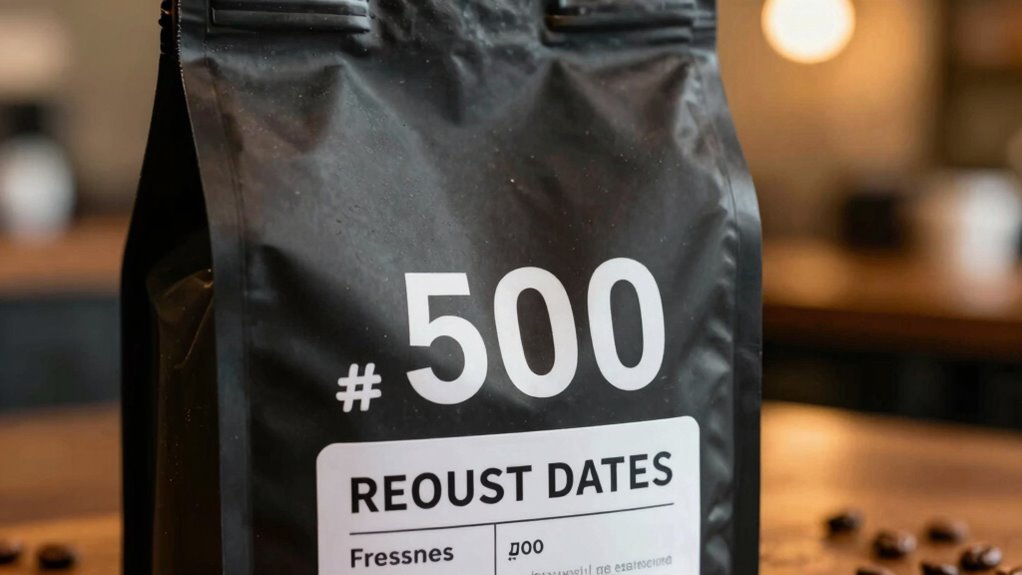
Understanding roast dates is essential if you want to enjoy the freshest specialty coffee. When you see a roast date on your bag, it’s more than just a number; it signals how recently the beans were roasted, which directly affects the flavor and quality you experience. Freshness plays a critical role in specialty coffee, and knowing what the roast date indicates helps you make smarter choices. Coffee begins to lose its best flavor after roasting, so consuming it within a certain window ensures you enjoy its full potential.
Packaging freshness is key here. Coffee bags designed for freshness typically have one-way valves that allow gases to escape without letting air in. This helps preserve the beans’ aroma and flavor over time. If you buy coffee with a recent roast date, you’re more likely to encounter a package that maintains its freshness longer. Conversely, older roast dates might mean the beans have been exposed to oxygen longer, leading to staleness. When you consider the packaging freshness, you’re essentially evaluating how well the coffee has been protected from the elements that cause flavor degradation. Additionally, roast date visibility is an important factor to consider when evaluating the overall quality of the coffee. Being aware of storage impact is also crucial because even the freshest beans can lose their vibrancy if stored improperly. Proper storage conditions can significantly extend the freshness window, making storage techniques an essential part of coffee appreciation.
Storage impact is another essential aspect to keep in mind. Even the freshest beans can lose their vibrancy if stored improperly. Coffee should be kept in an airtight container, away from light, heat, and moisture. If you buy coffee that’s been sitting on a shelf for a while or stored in a warm place, the roast date’s significance diminishes because the beans may have already started to stale. Proper storage can extend the window of enjoyment, but it doesn’t replace the importance of buying coffee with a recent roast date. The combination of a fresh roast date and good storage practices ensures you get the best flavor, aroma, and overall experience from your coffee. Maintaining awareness of beyond the roast date and storage practices helps you optimize your coffee experience.
As an affiliate, we earn on qualifying purchases.
Frequently Asked Questions
How Do Roast Dates Affect Coffee Flavor?
Roast dates directly impact your coffee’s flavor development and freshness. When you notice a recent roast date, you know the coffee is fresher, offering brighter, more vibrant flavors. Older roasts tend to develop muted or stale tastes. Think of roast dates as freshness indicators—they help you select coffee at its peak, ensuring you enjoy the complex aromas and flavors that true specialty coffee offers at their best.
Can I Drink Coffee Past Its Roast Date Safely?
Yes, you can drink coffee past its roast date safely, but be aware that flavor degradation may have occurred. Over time, the coffee’s freshness diminishes, affecting its aroma and taste. While shelf stability allows for some flexibility, the quality declines after the roast date. For the best flavor experience, consume coffee within a few weeks of roasting, but it’s generally safe to enjoy beyond that if it’s stored properly.
Do Different Beans Have Different Ideal Freshness Windows?
Think of beans like fine wine; each variety has its own aging curve. Some beans, like Ethiopian Yirgacheffe, hit their peak freshness within 2-3 weeks, while others, like robusto, can stay vibrant for up to a month. Different beans indeed have unique freshness milestones, so understanding their bean aging process helps you enjoy maximum flavor. Always check specific recommendations for each type to guarantee you’re drinking coffee at its best.
How Do I Interpret Roast Date Labels Accurately?
To interpret roast date labels accurately, focus on roast date clarity—look for clear, consistent labeling indicating when the beans were roasted. This helps you track freshness and optimize flavor preservation. Generally, fresher beans offer brighter, more vibrant flavors, so aim to buy within a few weeks of the roast date. Always check the date before purchasing, and remember that coffee’s flavor profile evolves over time, impacting your tasting experience.
Are Roast Dates More Important Than Packaging Dates?
You might find it surprising that 60% of coffee flavor loss occurs within the first week after roasting. Roast dates are generally more significant than packaging dates because fresh packaging guarantees essential flavor. Proper storage techniques, like keeping coffee airtight and away from light, also preserve freshness. So, prioritize roast dates for flavor quality, but don’t forget that packaging freshness and storage methods play vital roles in maintaining that delicious taste.
Conclusion
Remember, those roast dates are like gentle whispers of freshness, hinting at the coffee’s journey to your cup. While they don’t tell the full story, they invite you to enjoy each sip with a bit more appreciation for the craft behind it. Embrace the subtle clues, and let your palate be the guide. After all, every cup has its own story—waiting quietly to be savored whenever you’re ready.
Halloween Picks
halloween
As an affiliate, we earn on qualifying purchases.