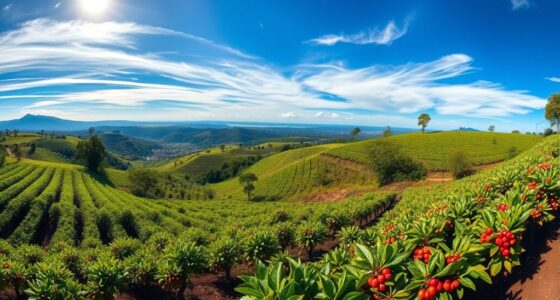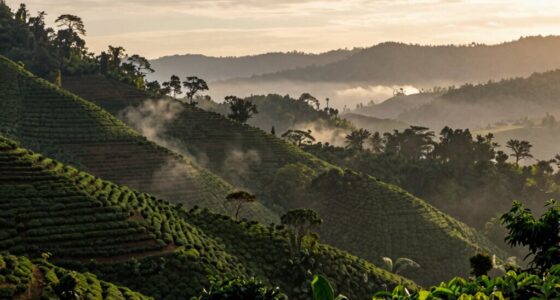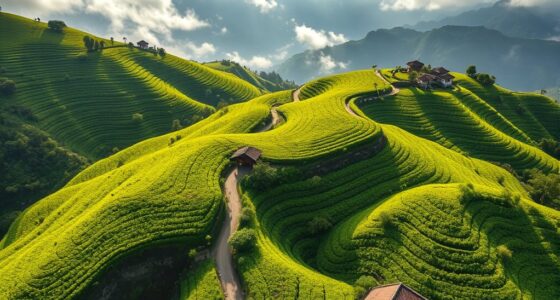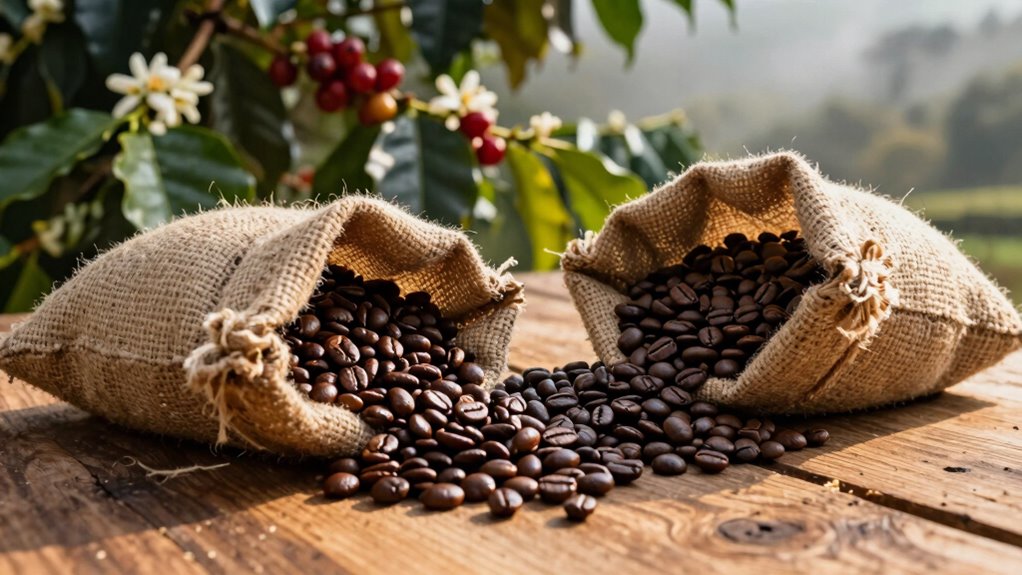

Nepal’s small-scale coffee farms produce unique beans that reflect the country’s diverse microclimates and rich soil. Farmers tend their plants with care, using traditional methods passed down through generations, ensuring high quality and authentic flavors. These practices support sustainability and local communities, appealing to eco-conscious consumers. By choosing Nepal coffee, you’re supporting ethical production and resilient ecosystems. If you’re curious to know more about this fascinating coffee story, you’ll find plenty to discover ahead.

Get coffee and tea gear delivered free with Prime
- Fast, free delivery on millions of items
- Prime Video, Amazon Music and more included
- Member-only deals all year
Key Takeaways
- Nepal coffee is produced mainly by small-scale farmers using traditional methods, ensuring unique flavors and high-quality beans.
- Small farms contribute to sustainable practices, biodiversity, and land health, reflecting eco-friendly cultivation.
- The region’s diverse microclimates and soil conditions create distinctive flavor profiles appreciated worldwide.
- Ethical production practices support fair wages, community development, and environmentally responsible farming.
- Growing global interest in Nepal coffee highlights its authentic, land-connected qualities and sustainable, ethical appeal.

Nepal Coffee is gaining recognition worldwide for its unique flavors and high-quality beans. As you explore this emerging coffee scene, you’ll find that much of Nepal’s success hinges on how coffee cultivation is carried out across its rugged terrains. Local farmers often practice small-scale coffee cultivation, tending to their plants with care and dedication. These small farms, scattered across high-altitude regions, produce beans that are distinct in flavor, offering a taste that reflects Nepal’s diverse microclimates and soil conditions. Unlike large commercial plantations, these small-scale growers focus on quality over quantity, ensuring that each batch of coffee is carefully harvested and processed. This approach not only preserves traditional methods but also enhances the beans’ unique characteristics, making Nepalese coffee stand out on the global stage. Additionally, fostering biodiversity in coffee farming helps maintain a resilient and healthy ecosystem, which is vital for sustainable production. Incorporating traditional techniques alongside modern methods allows farmers to optimize both quality and sustainability. This commitment to sustainability not only benefits the environment but also improves the flavor profile of the coffee. When you taste Nepalese coffee, you’re experiencing the result of a farming philosophy that values long-term health of the land, ensuring that future generations can continue to grow high-quality beans. Sustainable farming practices also support local communities by promoting fair wages and better working conditions, making this coffee journey more than just about flavor—it’s about ethical production. Furthermore, these practices foster community resilience, encouraging local economies to thrive through sustainable growth. By integrating environmentally friendly practices, farmers can further reduce their ecological footprint while maintaining high standards of quality. As you explore more deeply into Nepal’s coffee culture, you’ll notice that the emphasis on small-scale, sustainable farming creates a sense of authenticity and connection to the land. Farmers often employ traditional methods passed down through generations, blending these with modern techniques to optimize quality. This combination results in beans that are not only rich in flavor but also ethically produced, appealing to conscious consumers worldwide. You can appreciate each sip knowing it’s the product of passionate farmers who prioritize environmental health and social responsibility. The growing interest in Nepal coffee reflects a global shift toward supporting sustainable agriculture, and as a coffee lover, you get to be part of this movement by choosing beans that champion small-scale, eco-friendly practices.
Nepal single origin coffee beans
As an affiliate, we earn on qualifying purchases.
As an affiliate, we earn on qualifying purchases.
Frequently Asked Questions
What Are Nepal’s Primary Coffee Growing Regions?
You’ll find Nepal’s primary coffee growing regions mainly in the hills of eastern and central Nepal, such as the regions around Ilam, Jhapa, and Dhankuta. In these areas, coffee cultivation thrives thanks to favorable altitude and climate. Local farmers use traditional agricultural practices, blending them with modern techniques to improve yield and quality. These regions offer unique, high-altitude coffee, drawing curiosity from coffee lovers worldwide.
How Does Nepalese Coffee Differ in Flavor From Others?
You’ll notice that Nepalese coffee has a unique flavor profile, with bright acidity and complex taste nuances. Its high-altitude growing conditions contribute to a lighter, more delicate cup compared to other regions. The flavor often features fruity and floral notes, with a hint of spice. This distinct taste makes Nepalese coffee stand out, offering an invigorating experience that’s both smooth and vibrant, perfect for those seeking something different from traditional coffee profiles.
What Are the Challenges Faced by Nepal’s Small-Scale Coffee Farmers?
Like a fragile seed struggling in tough soil, your small-scale coffee farm faces hurdles. You grapple with limited market access, which stifles growth and recognition. Sustainable farming practices challenge you with resource constraints and unpredictable weather, risking quality and yield. Despite these obstacles, your dedication nurtures unique flavors, symbolizing resilience. Overcoming these challenges means breaking barriers, connecting with broader markets, and cultivating not just coffee but hope for a thriving future.
Is Nepal Coffee Available Internationally?
Yes, Nepal coffee is available internationally. You can find it in specialty stores and online platforms, though export regulations sometimes limit its reach. Nepal’s coffee farmers focus on sustainability initiatives, which help maintain quality and eco-friendliness. These efforts, combined with international demand, are gradually expanding Nepal’s presence in global markets. So, if you’re curious, you might discover Nepal coffee in your local specialty coffee shop or online.
How Is Nepal’s Coffee Industry Developing for Future Growth?
Nepal’s coffee industry is growing steadily, focusing on sustainable practices that protect the environment and improve quality. You’ll see increased coffee tourism, inviting visitors to experience coffee farms firsthand, which boosts local economies and awareness. This development encourages small-scale farmers to innovate and expand, ensuring future growth. As these efforts continue, Nepal’s coffee industry is poised to become a notable player in the global specialty coffee market.
Conclusion
As you sip Nepal coffee, remember it’s like discovering a hidden gem in a bustling market—you might stumble upon its rich, complex flavors unexpectedly. With only a few hectares cultivated, this tiny industry holds a world of potential, much like a seed waiting to bloom. Just as a single bean can spark a new beginning, Nepal’s small-scale coffee scene invites your curiosity and support, promising a future as vibrant and unique as its mountainous landscape.
Halloween Picks
halloween
As an affiliate, we earn on qualifying purchases.