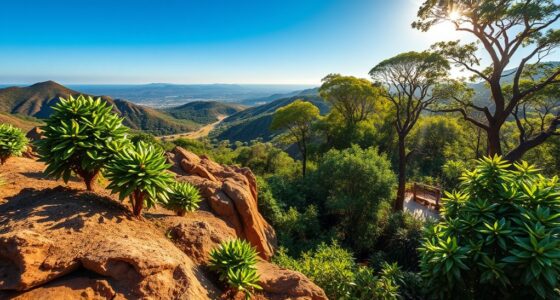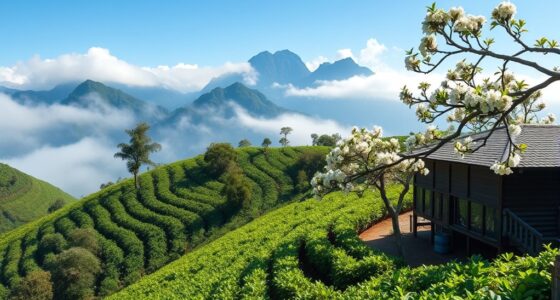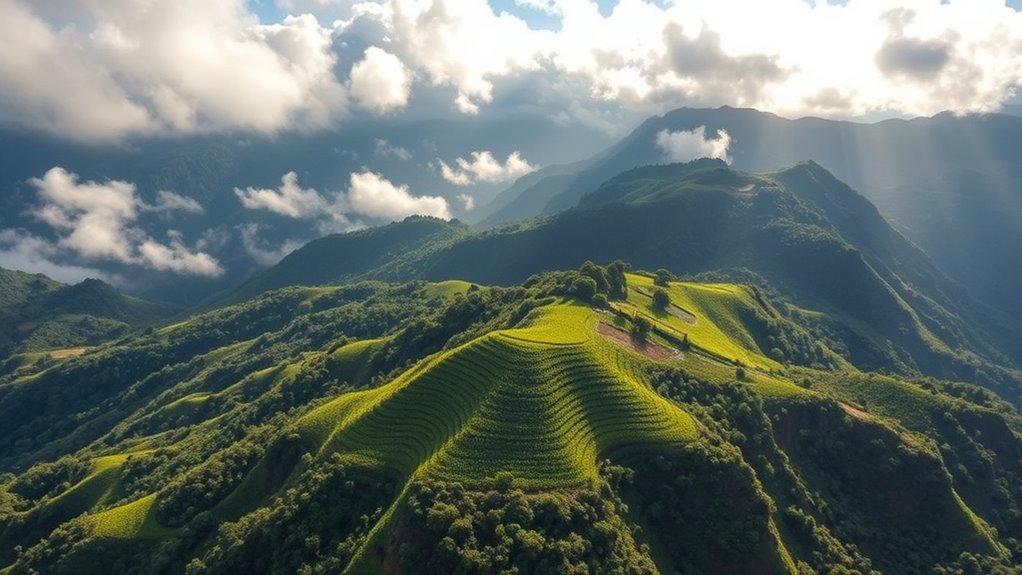

In Honduras’s Santa Bárbara region, you’ll find a landscape shaped by diverse microclimates that impact local agriculture, culture, and biodiversity. The mountain slopes host coffee plantations benefiting from cool mornings and warm afternoons, creating rich, nuanced flavors. Indigenous communities preserve traditional crafts and customs amid scenic spots. The microclimates support lush flora and fauna, making it a hub for eco-tourism and cultural experiences. Exploring further reveals how these unique conditions define Santa Bárbara’s vibrant profiles.
Key Takeaways
- Santa Bárbara’s mountainous terrain creates diverse microclimates that influence local agriculture and biodiversity.
- Varying elevations result in unique weather patterns, fostering specialized coffee cultivation and rich flavors.
- Microclimates support indigenous communities practicing traditional crafts and sustainable farming methods.
- The region’s microclimates sustain diverse flora and fauna, making it a hub for eco-tourism and nature exploration.
- Climate variations shape Santa Bárbara’s cultural identity, regional economy, and appeal as an eco-cultural destination.
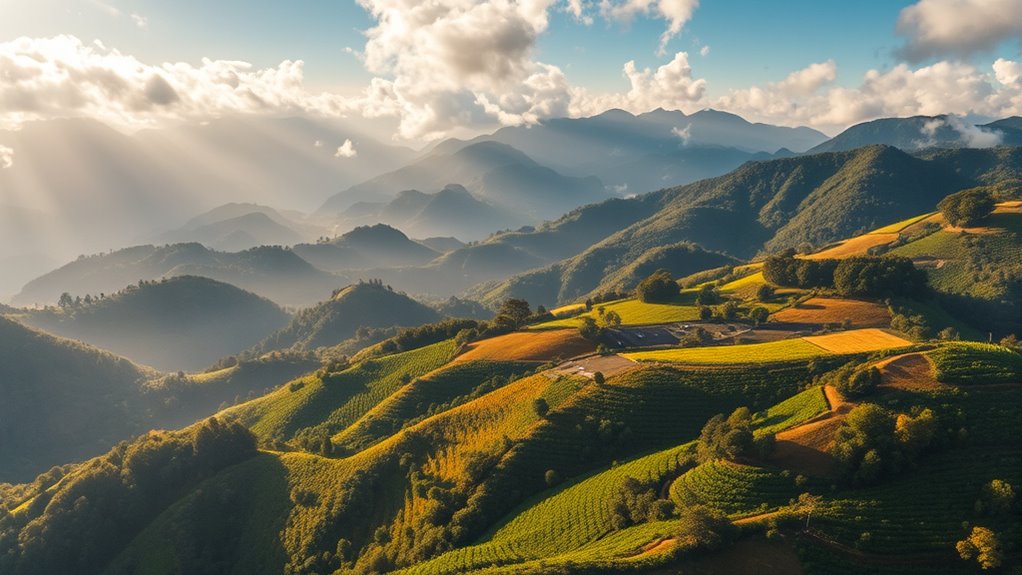
Santa Bárbara, a vibrant town nestled in Honduras’s lush mountains, invites visitors to explore its rich culture and scenic beauty. As you wander through this charming area, you’ll discover a landscape shaped by its unique microclimates, which contribute to the region’s diverse profiles. One of the most enthralling features here is the extensive coffee plantations that thrive on the mountain slopes. These plantations benefit from the cool mornings and warm afternoons created by the town’s varied elevations. The microclimates allow coffee farmers to produce high-quality beans with distinctive flavors, making Santa Bárbara a notable hub for premium coffee. When you visit the local coffee farms, you’ll see how the climate influences every step of the process, from cultivation to harvest, and how the beans develop their nuanced profiles. The lush surroundings and the combination of sun, shade, and moisture give the coffee a rich aroma and complex taste, which you can savor straight from the source.
Alongside the coffee culture, Santa Bárbara is also home to indigenous communities that have preserved their traditions and way of life. These communities, often situated in remote and scenic parts of the mountains, thrive in the microclimates that sustain their agriculture and daily routines. You’ll find opportunities to engage with local artisans and learn about indigenous crafts, such as weaving and pottery, which carry centuries of cultural history. Their connection to the land is evident in the way they cultivate crops like beans, maize, and cacao, all of which flourish under the region’s diverse microclimates. Visiting these communities provides an authentic glimpse into their vibrant traditions, music, and cuisine, offering a deeper understanding of how their environment shapes their identity.
The interplay between the microclimates and the indigenous populations creates a region rich in biodiversity and cultural heritage. The varying weather patterns support a range of flora and fauna, making Santa Bárbara a haven for nature enthusiasts. You can explore scenic trails that wind through coffee plantations and indigenous villages, enjoying panoramic views and learning about sustainable farming practices that protect the environment. The town’s microclimates not only define its agricultural profiles but also foster a community deeply rooted in tradition and harmony with nature. As you experience Santa Bárbara, you’ll see how its climate, culture, and landscapes intertwine, making it a truly unique destination in Honduras.
Top picks for "hondura santa rbara"
Open Amazon search results for this keyword.
As an affiliate, we earn on qualifying purchases.
Frequently Asked Questions
What Are the Main Economic Activities in Santa Bárbara?
In Santa Bárbara, your main economic activities include agricultural diversification, where farmers grow coffee, vegetables, and fruits, boosting local income. You’ll also find artisans creating unique local handicrafts that support the economy. These activities help sustain the community and preserve cultural traditions. By participating in both agriculture and handicraft production, you help promote economic stability and showcase Santa Bárbara’s rich, diverse local resources.
How Does Tourism Impact Santa Bárbara’s Local Communities?
You might think tourism’s a blessing, but it often threatens Santa Bárbara’s charm. It can erode cultural preservation and harm environmental sustainability if not managed properly. While tourism brings economic benefits, it risks overdevelopment, disrupting local traditions and damaging natural landscapes. You should recognize that responsible tourism can support communities, but only if it respects local culture and environment, ensuring Santa Bárbara’s beauty endures for future generations.
Are There Any Endangered Species Native to Santa Bárbara?
You should know that Santa Bárbara is home to several endangered species, including native flora like orchids and trees, which face threats from deforestation and habitat loss. These species are essential to the region’s biodiversity and ecosystem health. Protecting endangered species is imperative, so conservation efforts focus on preserving their natural habitats and raising awareness among locals and visitors alike to guarantee these native species survive for future generations.
What Traditional Festivals Are Celebrated in Santa Bárbara?
Like a vibrant tapestry, Santa Bárbara’s traditional festivals weave together lively dances and local crafts. You’ll experience colorful celebrations featuring traditional dances that symbolize community unity and cultural heritage. These festivals honor saints and seasonal changes, with artisans showcasing intricate local crafts. Participating in these events, you connect deeply with the region’s rich history and vibrant spirit, celebrating Santa Bárbara’s unique cultural identity through lively, meaningful festivities.
How Accessible Are the Microclimates for Agricultural Research?
You’ll find that microclimate accessibility in Santa Bárbara is quite good, making it suitable for agricultural research. The varied microclimates allow you to explore different crop adaptations and environmental impacts efficiently. This high research feasibility means you can conduct experiments across diverse conditions without extensive logistical challenges. Overall, Santa Bárbara offers a practical and valuable setting for agricultural studies, helping you develop tailored farming solutions for the region.
Conclusion
As you explore Honduras Santa Bárbara, you’ll notice how the microclimates mirror its diverse profiles—like a vibrant tapestry woven by coincidence. One moment, you stand in lush, cool valleys; the next, you’re atop sun-drenched hills. These unexpected shifts create a harmonious landscape, reminding you that nature’s intricate dance is often shaped by chance. Embrace the surprises, and you’ll see how beautifully coincidence shapes this remarkable region’s unique character.