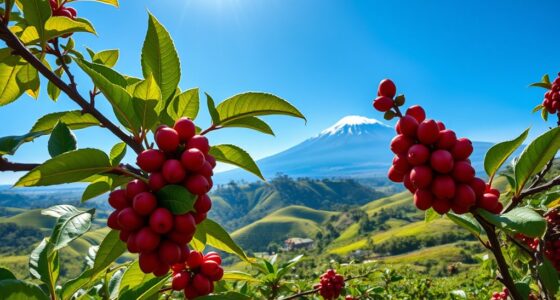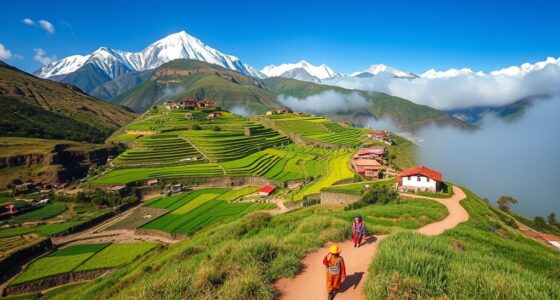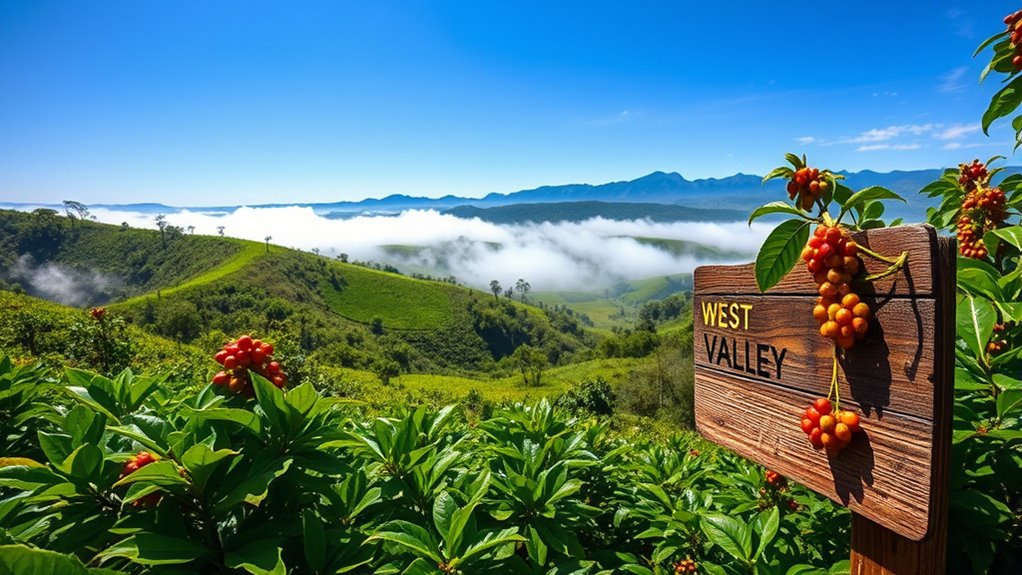

Discover the rich flavors of Costa Rican coffee from Tarrazú and West Valley, regions famous for their high-altitude farms and microclimates that develop complex, vibrant beans. These areas emphasize sustainable practices like shade-grown cultivation and organic fertilizers, ensuring eco-friendly and high-quality harvests. Expect bright, clean, and balanced profiles that showcase regional characteristics. Want to explore how these factors influence each cup? Keep going to uncover the full story behind Costa Rican coffee’s excellence.
Key Takeaways
- Tarrazú and West Valley are renowned Costa Rican coffee regions known for high-altitude, microclimate-driven bean development.
- These regions produce single origin coffees with distinct flavor profiles, emphasizing brightness, clarity, and balance.
- Sustainable farming practices like shade-grown cultivation and organic methods enhance coffee quality and environmental health.
- The regions’ cool nights and abundant sunshine promote slow maturation, enriching flavor complexity.
- Coffee from Tarrazú and West Valley supports traceability, authenticity, and eco-conscious production methods.
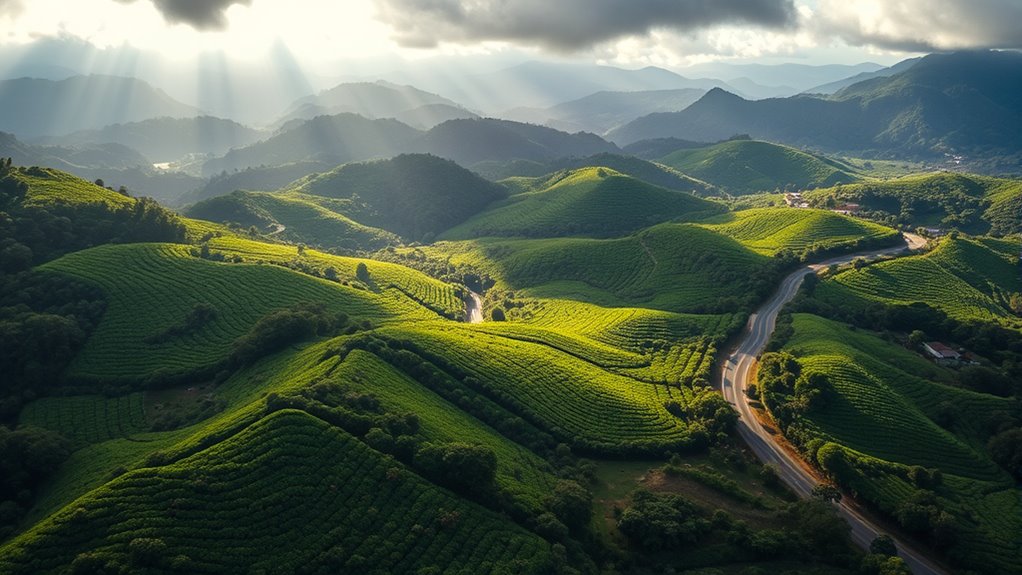
Are you curious about what makes Costa Rican coffee world-renowned? One key factor is the focus on single origin beans, which means the coffee comes from a specific region, ensuring unique flavors and high quality. When you explore the coffee from Tarrazú and the West Valley, you’ll notice how this emphasis on origin plays a essential role in delivering a distinctive taste experience. These regions prioritize sustainable farming practices, which not only protect the environment but also enhance the quality of the beans. Farmers in these areas often employ methods like shade-grown cultivation and organic fertilizers, reducing their ecological footprint while producing premium coffee.
The journey of Costa Rican coffee begins with the careful selection of the land and the commitment to sustainable farming. This approach supports local communities and maintains the health of the ecosystem. As you savor a cup of Tarrazú coffee, you’re tasting the fruits of this dedication—bright, clean, and balanced flavors that reflect the careful cultivation process. The high-altitude climates of Tarrazú and the West Valley contribute to the beans’ complex profiles, allowing the beans to develop their full potential. The cool nights and abundant sunshine help create a slow maturation process, which intensifies the flavor nuances.
When visiting these regions, you’ll see firsthand how farmers work closely with nature to produce exceptional coffee. They often use environmentally friendly practices such as water conservation and composting, ensuring that their farms remain sustainable for generations to come. This commitment to sustainable farming not only preserves the land but also results in beans that are pure and vibrant, free from synthetic chemicals. The focus on single origin beans means that each harvest is unique to its specific microclimate, allowing you to appreciate the regional characteristics in every sip. Additionally, the adoption of renewable energy solutions by farms helps further reduce their carbon footprint and promotes environmental sustainability.
Top picks for "costa rica coffee"
Open Amazon search results for this keyword.
As an affiliate, we earn on qualifying purchases.
Frequently Asked Questions
What Are the Best Times to Visit Tarrazú for Coffee Tours?
You should visit Tarrazú during the dry season, from December to April, when the weather is ideal for coffee tours. This period coincides with seasonal harvests, giving you a firsthand look at coffee picking and processing. Also, plan your trip around the coffee festival dates, usually held in January or February, to experience local celebrations and tastings. Visiting then guarantees you enjoy the best coffee experience in Tarrazú.
How Do Climate Changes Affect Coffee Quality in West Valley?
Climate variability can profoundly impact coffee flavor in West Valley, making it more challenging to maintain consistent quality. You might worry about unpredictable weather disrupting harvests, but adaptive farming techniques help mitigate these effects. As temperatures rise or rainfall patterns shift, the unique qualities of West Valley coffee may change, requiring farmers to adjust their processes. Ultimately, understanding climate changes allows you to appreciate the evolving flavors and resilience of Costa Rican coffee.
Are There Eco-Friendly Coffee Farms in These Regions?
You’ll find several eco-friendly coffee farms in these regions that prioritize sustainable farming practices. Many of these farms hold eco certifications, demonstrating their commitment to environmental preservation and social responsibility. By supporting such farms, you help promote sustainable farming methods that reduce environmental impact, conserve water, and protect biodiversity. Look for labels like Rainforest Alliance or Fair Trade, which indicate the farm’s dedication to eco-friendly practices and ethical standards.
Can Travelers Participate in Coffee Harvesting Activities?
Imagine immersing yourself in the rich world of coffee through authentic experiences. You can participate in coffee harvesting activities by joining local coffee tours, where you’ll enjoy hands-on coffee harvesting experiences. These tours often welcome travelers enthusiastic to learn about the process firsthand. Engaging in coffee harvesting activities offers a deeper appreciation of each cup, making your journey truly memorable and connecting you with Costa Rica’s vibrant coffee culture.
What Are Local Coffee Customs and Tasting Etiquette?
When you participate in coffee tasting, remember to sip slowly and appreciate the aroma and flavor. Use traditional brewing methods like pour-over or French press to truly experience the coffee’s depth. It’s polite to cleanse your palate between tastings and avoid adding sugar or milk initially, allowing you to savor the coffee’s natural notes. Respect local customs by asking questions and showing appreciation for the craftsmanship behind each cup.
Conclusion
Now that you’ve explored Tarrazú and West Valley, you’re ready to savor Costa Rica’s rich coffee heritage. Each sip tells a story of lush mountains and dedicated farmers, inviting you to taste the passion poured into every bean. So, will you let these vibrant regions awaken your senses and redefine your coffee experience? Remember, the journey through Costa Rican coffee is a flavor adventure—dare to take the first sip and embrace the magic.