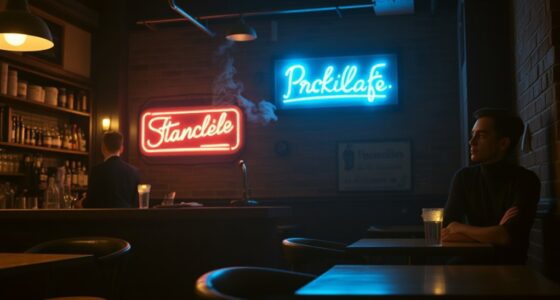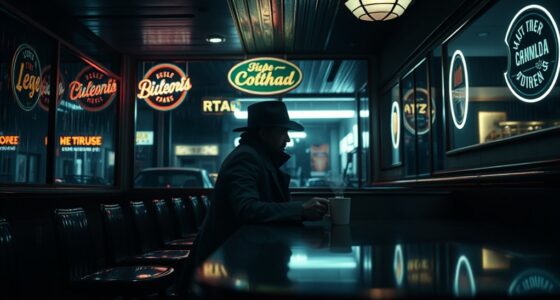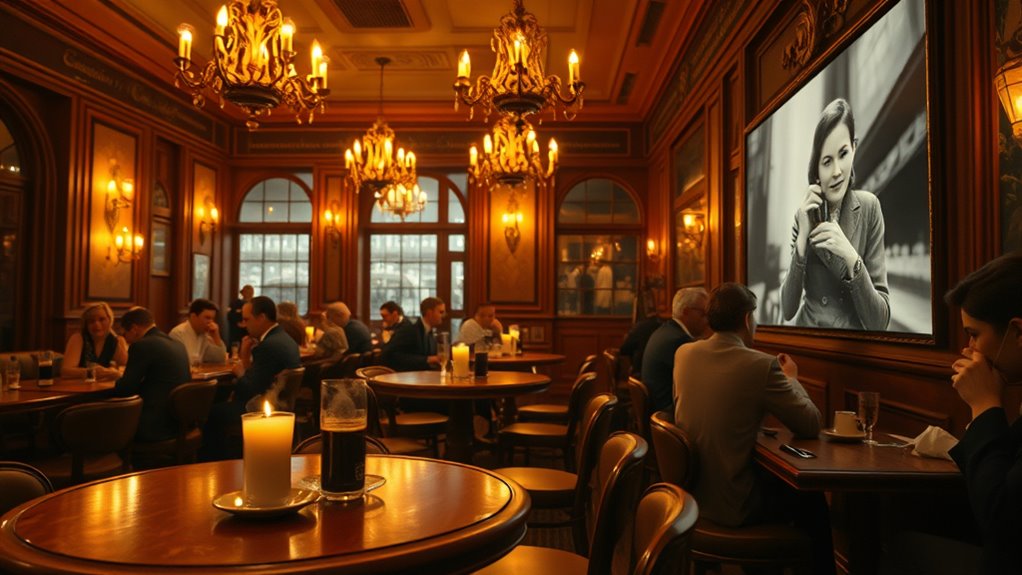

Cafés on screen aren’t just backdrops; they’re key to creating memorable moments. Think of Rick and Ilsa’s tense conversation in “Casablanca” or the romantic confessions in “Before Sunrise”—both scenes use cozy atmospheres, lighting, and décor to heighten emotions. These settings help reveal characters’ true selves and deepen stories. Curious about how filmmakers craft these iconic moments? Keep exploring, and you’ll discover the cinematic magic hidden behind every coffee shop scene.

Get coffee and tea gear delivered free with Prime
- Fast, free delivery on millions of items
- Prime Video, Amazon Music and more included
- Member-only deals all year
Key Takeaways
- Iconic scenes like Rick and Ilsa’s tense conversation in “Casablanca” highlight how cafés deepen emotional storytelling.
- “Before Sunrise” features romantic confessions set in Vienna coffee shops, emphasizing intimacy and connection.
- Cinematic techniques such as close-ups and strategic lighting enhance the mood and emotional impact of café scenes.
- Coffee shop environments serve as silent characters that amplify tension, secrets, and character development.
- These memorable moments demonstrate how cafés create authentic, emotionally resonant settings that leave a lasting cinematic impression.
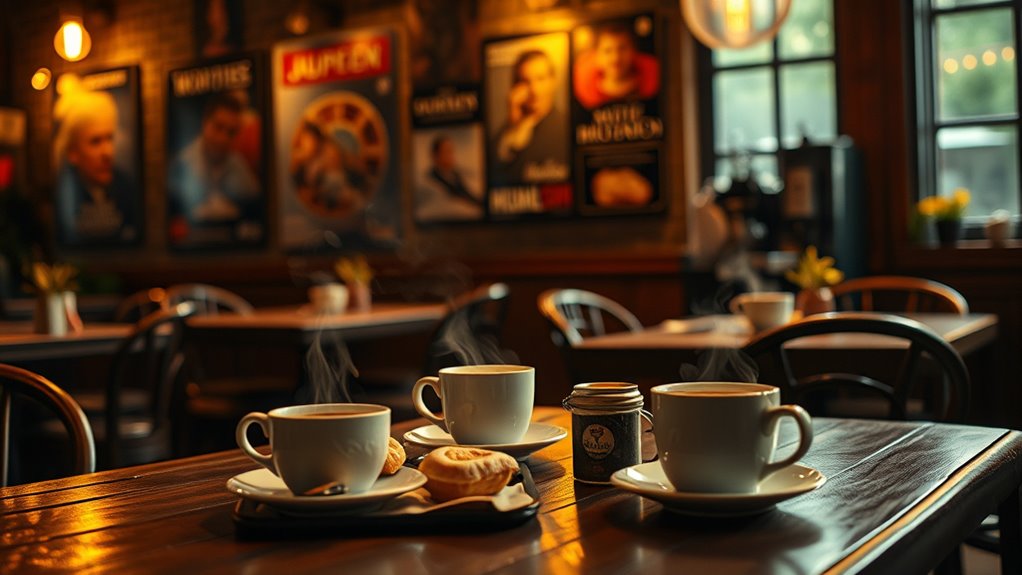
Cafés have long been a beloved backdrop in films and TV shows, serving as more than just settings for characters to gather. They set the stage for pivotal moments, intimate conversations, or even chance encounters that change lives. The coffee shop ambiance—think warm lighting, the aroma of freshly brewed coffee, the hum of quiet chatter—creates an inviting atmosphere that instantly draws you in. It’s no wonder filmmakers frequently use these spaces to enhance cinematic storytelling, making scenes feel authentic and emotionally charged.
When you watch a movie or a show, you might notice how a simple coffee shop scene can evoke a spectrum of feelings. It’s in these scenes that characters reveal their true selves, share secrets, or experience breakthroughs. The setting becomes a silent character itself, amplifying the narrative’s mood. For instance, a cozy café with vintage decor and soft background music can make a romantic scene feel intimate and tender. Conversely, a bustling, noisy coffee shop can heighten tension or chaos, emphasizing a character’s internal conflict. These environments are carefully crafted to augment storytelling, making each scene memorable.
Some of the most iconic moments in film history happen in cafés. Think of the legendary scene from “Casablanca,” where Rick and Ilsa share a tense yet meaningful conversation in a dimly lit, smoke-filled bar. Or the heartfelt confessions in “Before Sunrise,” set against the backdrop of a Vienna coffee shop, capturing the fleeting magic of a chance meeting. These scenes demonstrate how the coffee shop ambiance—its lighting, decor, and background sounds—becomes integral to cinematic storytelling. It’s not just about what’s said; it’s about how the space amplifies the emotion, drawing you deeper into the characters’ worlds.
You might also notice how directors use camera angles and framing to emphasize the intimacy or distance between characters in these settings. Close-ups of steaming cups or coffee-stained menus subtly underscore themes of comfort or secrecy. The mundane act of sipping coffee transforms into a powerful storytelling device, symbolizing connection, reflection, or even conflict. Moreover, the strategic use of cinematic lighting can enhance the mood, making scenes more visually compelling. Such scenes remind you that a café isn’t merely a place to drink coffee; it’s a space where stories unfold, secrets are shared, and lives intersect.
Ultimately, the coffee shop ambiance in cinema isn’t accidental. It’s a purposeful tool that filmmakers use to deepen emotional resonance and enrich their storytelling. The next time you find yourself in a cozy café, whether on screen or in real life, remember its cinematic power—how it can turn a simple moment into a lasting memory.
As an affiliate, we earn on qualifying purchases.
Frequently Asked Questions
Which Film Features the First Iconic Coffee Scene?
You’re asking which film features the first iconic coffee scene. The answer is *Casablanca* (1942), where Rick and Ilsa share coffee, establishing a powerful coffee symbolism. This scene exemplifies cinematic rituals, turning everyday moments into memorable symbols of love and longing. It set a precedent for coffee’s role in film, transforming simple beverages into meaningful storytelling tools that evoke emotion and deepen character connections.
How Do Coffee Scenes Influence Audience Perception?
Coffee scenes influence your perception by using visual symbolism and emotional resonance. When you see a character sipping coffee, it often signals intimacy, contemplation, or a pivotal moment. These scenes create a relatable atmosphere, drawing you into the story’s mood. The visual symbolism of coffee enhances emotional resonance, making you feel connected to characters’ inner thoughts and adding depth to the narrative.
Are There Specific Coffee Types Associated With Famous Films?
Yes, certain coffee types are linked to famous films, often highlighting coffee symbolism and brewing aesthetics. For example, black coffee in “Casablanca” emphasizes simplicity and timeless allure, while a rich espresso in “Amélie” showcases artisanal craftsmanship. These choices influence how audiences perceive characters and scenes, deepening emotional resonance through the visual and symbolic power of specific coffee styles. Your awareness of these details enhances your appreciation of cinematic storytelling.
How Do Directors Use Coffee to Develop Characters?
You see directors use coffee to develop characters by highlighting their traits through cinematic symbolism. When a character savors a cup, it reveals their personality, habits, or emotional state, making them more relatable. Coffee scenes also create intimacy and tension, enhancing character development. Through thoughtful shots and choices of coffee types, directors subtly communicate deeper layers of a character’s personality, making the story more engaging and authentic.
What Are the Most Recurrent Coffee Settings in Cinema History?
You’ll notice that coffee shop ambiance and cinematic coffee symbolism recur often in film history. These settings create a familiar, intimate atmosphere, perfect for meaningful conversations and character development. Coffee shops symbolize comfort, connection, and sometimes change, making them ideal for key scenes. Their warm, inviting environment helps filmmakers convey emotions subtly, making coffee shops a timeless backdrop that resonates with audiences worldwide.
Conclusion
As you step back from these cinematic cafés, you realize they’re more than just backdrops—they’re the heartbeat of stories and dreams. Each steaming cup, whispered secret, or stolen glance paints a vivid picture on the canvas of film history. These iconic scenes linger like the aroma of fresh coffee, inviting you to savor the magic, the mystery, and the timeless allure of cafés that forever brew memories on the silver screen.
Halloween Picks
halloween
As an affiliate, we earn on qualifying purchases.