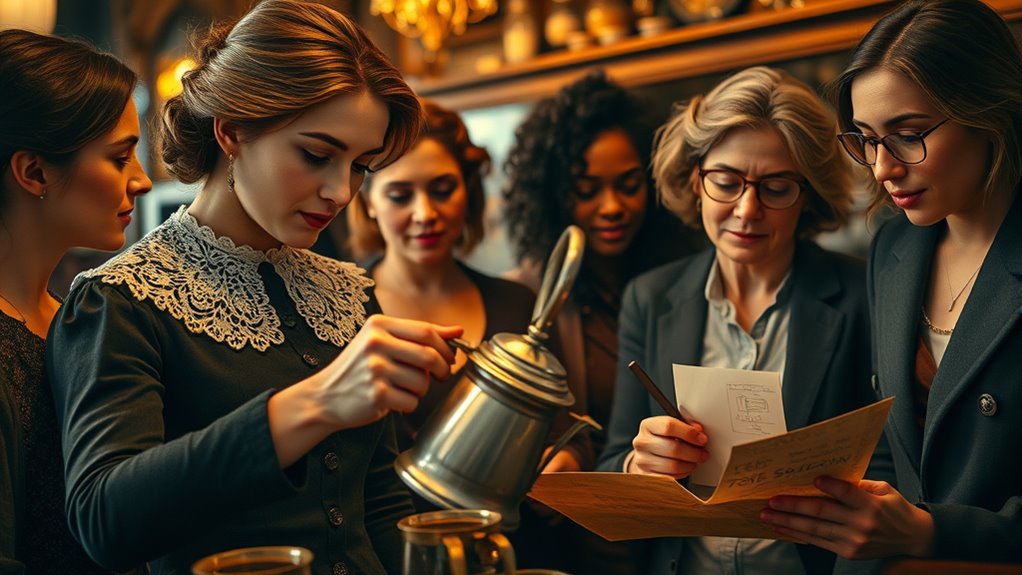

Women have historically been key entrepreneurs and innovators in the coffee industry, developing sustainable farming methods, building trade networks, and launching successful businesses. They promote eco-friendly practices, advocate for fair labor, and create community-focused cooperatives, driving economic growth and environmental responsibility. Their leadership helps foster gender equality and industry innovation. To uncover how women continue shaping coffee’s future, explore more about their inspiring contributions.
Key Takeaways
- Women have historically played vital roles in developing sustainable farming practices and preserving eco-friendly knowledge.
- Female entrepreneurs have built successful small-scale coffee businesses, focusing on value-added processing and branding.
- Women serve as key connectors in trade networks, advocating for fair prices and ethical sourcing.
- They promote community development through cooperatives, direct trade, and economic participation.
- Women influence industry standards by advocating for transparency, fairness, and environmentally responsible practices.

Women have played an essential role in shaping coffee history, yet their contributions often go unnoticed. Throughout centuries, women have been at the forefront of developing innovative practices that guarantee the sustainability of coffee farming. Their efforts in sustainable farming techniques help preserve soil health, conserve water, and reduce the use of harmful chemicals, all vital for maintaining productive coffee plantations. You might not realize it, but women farmers often serve as stewards of their land, passing down traditional knowledge that emphasizes eco-friendly practices. Their role isn’t limited to cultivation alone; they also influence the entire coffee supply chain by advocating for environmentally responsible methods that benefit both communities and ecosystems. Additionally, their participation helps promote agroecological approaches that support biodiversity and resilience in coffee-growing regions. In the complex web of coffee trade networks, women have historically held crucial, yet often underappreciated, positions. They act as key connectors, negotiating fair prices and establishing relationships that sustain local economies. Many women entrepreneurs have built their own businesses, transforming small-scale coffee operations into thriving enterprises. These women leverage their deep understanding of local markets and cultural nuances, which gives them a distinct advantage in maneuvering global trade. Their participation in coffee trade networks not only empowers them economically but also enables them to influence better trading practices that promote transparency and fairness. By doing so, they help foster more equitable distribution of profits and resources within the industry. Women in coffee trade networks often serve as community leaders, advocating for ethical sourcing and fair labor practices. Their entrepreneurial spirit drives innovations that benefit entire communities—such as creating cooperatives that provide access to better resources or establishing direct trade relationships that cut out middlemen. You’ll find that many women entrepreneurs focus on value-added processes, like roasting, packaging, or branding, which allow them to capture a larger share of the profits and elevate their status within the industry. Their proactive approach not only supports sustainable economic growth but also encourages other women to participate in coffee production and trade, breaking down gender barriers that have long persisted in the industry.
Top picks for "women coffee history"
Open Amazon search results for this keyword.
As an affiliate, we earn on qualifying purchases.
Frequently Asked Questions
What Are Some Lesser-Known Women Coffee Entrepreneurs in History?
You might not have heard of female coffee pioneers like Martha C. White, who started a women-led coffee startup in the early 20th century. These women-led coffee startups often faced challenges but broke new ground, inspiring future entrepreneurs. Lesser-known women coffee entrepreneurs continue to influence the industry today, showcasing resilience and innovation. Exploring their stories reveals the essential contributions of women in shaping coffee history beyond the well-known figures.
How Did Women Influence Coffee Cultivation Techniques Historically?
Imagine a lush, vibrant garden where women’s hands nurture every leaf—this visual captures how women historically influenced coffee cultivation. You see female-led plantations implementing innovative techniques, from selective breeding to sustainable farming methods. Women-led innovations transformed harvesting and processing, improving quality and yield. Their knowledge and leadership shaped the very roots of coffee cultivation, proving that even in fields, women’s influence grows deep, blossoming into lasting change.
Were Women Involved in Early Coffee Trade Negotiations?
Yes, women were involved in early coffee trade negotiations, often taking on key roles in women’s trade negotiations and female diplomatic roles. You may not realize it, but women helped shape trade agreements and fostered diplomatic relationships that supported coffee commerce. Their contributions, though often overlooked, laid important groundwork for international trade, demonstrating how women actively participated in shaping the coffee industry’s early development through negotiations and diplomacy.
What Challenges Did Women Face in the Coffee Industry?
You face significant challenges in the coffee industry due to gender barriers and societal expectations. Women often struggle to gain equal recognition, access resources, or leadership roles. These barriers limit your opportunities and influence within the industry. Societal norms may also pressure you to conform to traditional roles, making it harder to innovate or expand your presence. Despite these obstacles, many women persist and continue to shape the coffee industry’s evolution.
How Have Women Shaped Coffee Culture Globally Over Time?
Imagine walking into a vibrant coffee shop led by women, where they not only serve exceptional brews but also run coffee education initiatives. Women have long shaped coffee culture globally by creating inclusive spaces, pioneering innovative brewing techniques, and promoting coffee education. Their leadership inspires diverse communities, elevates appreciation for coffee, and fosters global connections—transforming how we experience and value coffee every day.
Conclusion
You’ve explored the inspiring stories of women in coffee history, showcasing their courage, creativity, and countless contributions. Their pioneering presence proves progress is possible with passion and perseverance. Remember, their resilience reigns as a reminder that women’s work in coffee continues to carve out a courageous, creative, and compelling chapter in history. So, stand inspired, celebrate their stories, and support women’s ongoing journey in the world of coffee’s enthralling culture.