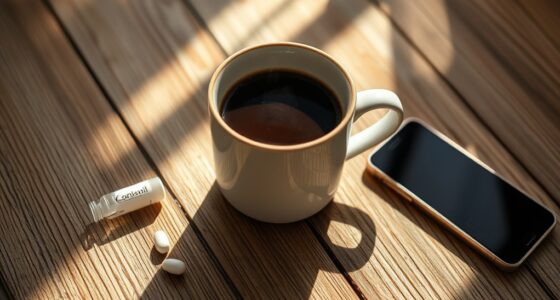

Microdosing caffeine means taking tiny sips of coffee or tea to boost your focus and alertness steadily without feeling jittery or anxious. By sticking to doses around 20 to 50 milligrams, you can enjoy sustained mental clarity while avoiding crashes or disruptions in sleep. This mindful approach helps you maintain energy levels and mental resilience throughout the day. Keep exploring to discover how fine-tuning your intake can maximize your productivity and well-being.
Key Takeaways
- Microdosing caffeine involves taking small, controlled amounts (20-50 mg) to boost alertness without jitters.
- It helps maintain steady energy and focus throughout the day by avoiding large doses.
- Starting with small sips allows experimentation to find an optimal dose for individual response.
- Microdosing reduces risks like sleep disruption, anxiety, and dependency associated with high caffeine intake.
- Combining microdosing with hydration and breaks enhances sustained mental clarity and productivity.

Have you ever wondered if tiny amounts of caffeine could boost your focus without the jitters? Microdosing caffeine offers a subtle way to enhance cognitive performance without the common side effects of larger doses. Instead of gulping down a tall coffee, you take small, carefully measured sips that provide just enough stimulation to sharpen your mind. This approach aligns with modern productivity strategies aimed at maximizing efficiency while minimizing burnout. When you microdose caffeine, you’re tapping into cognitive enhancement techniques that allow you to stay alert, focused, and productive throughout the day.
Microdosing caffeine boosts focus subtly, enhancing productivity without jitters or burnout.
The key to successful microdosing lies in understanding your body’s response to caffeine. A tiny dose—often around 20 to 50 milligrams—can elevate your alertness without causing the jitters or anxiety that often accompany higher consumption. This precise dosing helps you maintain steady energy levels, making it easier to stick to your work or study routines without sudden crashes. By integrating microdosing into your daily routine, you can develop a sustainable strategy for improving concentration, memory, and overall mental clarity. It’s a subtle yet effective way to implement cognitive enhancement as part of your broader productivity strategies.
Using microdosing caffeine can also help you avoid the pitfalls of over-caffeination, such as disrupted sleep and increased heart rate. When you focus on small, consistent doses, you’re less likely to develop dependency or experience withdrawal symptoms, which are common pitfalls with larger, irregular caffeine intake. This method encourages a more mindful approach to caffeine consumption—you’re intentionally choosing to enhance your mental performance without overdoing it. Over time, this can lead to better control over your energy levels and a more balanced, resilient mental state.
In addition, understanding the role of STEM toys in development highlights the importance of small, focused interventions—like microdosing—that support sustained growth and performance. Integrating microdosing caffeine into your routine requires some experimentation to find your ideal dose. Start with a small amount, and gradually adjust based on your focus and energy levels. Pair this with other productivity strategies like proper hydration, regular breaks, and mindfulness techniques to maximize your cognitive enhancement. The goal is to maintain a steady, manageable level of alertness that supports your work without causing strain. Over time, you’ll learn how tiny sips of caffeine can become a powerful tool for sustained mental clarity, helping you stay on top of your tasks with less reliance on large caffeine boosts. Ultimately, microdosing caffeine offers a practical, precise way to boost focus and productivity while keeping side effects at bay.

Neretva Espresso Grinder, 2 in 1 Professional Coffee Bean Grinder Stainless Steel Suit 51~58mm Portafilter Burr Coffee Grinder 30 Precise Setting&Anti-Static for Espresso/French Press/Drip/Moka-Silver
PROFESSIONAL CONICAL BURR COFFEE GRINDER- WIth new upgraded 3.0 conical burr grinding technoloy, the coffee grinder ensures that...
As an affiliate, we earn on qualifying purchases.
Frequently Asked Questions
Can Microdosing Caffeine Cause Long-Term Health Issues?
Microdosing caffeine can potentially impact your long-term health if you’re not careful. It might lead to issues with your long-term cardiovascular health, like increased blood pressure or heart rate, and affect your metabolic health by disrupting your sleep or increasing anxiety. While smaller doses are generally safer, over time, these effects could accumulate. Always monitor your body’s response and consult a healthcare professional to minimize risks.
How Does Microdosing Caffeine Affect Sleep Quality?
Think microdosing caffeine is harmless? Think again! Even tiny doses can cause sleep disruption and REM suppression, turning your nights into restless marathons. You might sneak in a sip, only to find your dreams hijacked by caffeine’s sneaky grip. Over time, this can mess with your sleep quality, leaving you groggy and craving more. So, beware—small sips can still sabotage your snooze!
Is Microdosing Caffeine Suitable for People With Anxiety?
Microdosing caffeine might be suitable for you if you’re managing anxiety, but it depends on your caffeine sensitivity. Small doses can help boost alertness without triggering anxiety symptoms, but if you’re highly sensitive, even microdoses could cause jitters or increased heart rate. Always monitor how your body reacts, and consult a healthcare professional to develop a personalized approach for effective anxiety management.
What Are the Best Times of Day to Microdose Caffeine?
Think of microdosing caffeine like planting seeds at the right time. The best times of day are early morning or mid-morning, fitting seamlessly into your daily routines. Use timing strategies that prevent late afternoon or evening doses, which could interfere with your sleep. By syncing your microdosing with natural energy peaks, you ensure steady gains without jitters, helping you stay focused and balanced throughout the day.
How Does Microdosing Caffeine Compare to Traditional Caffeine Consumption?
Microdosing caffeine offers more precise cognitive enhancement and sustained energy compared to traditional consumption. Instead of large doses that cause jitters or crashes, you take small sips regularly, maintaining alertness without overstimulation. This steady approach helps you stay focused longer and reduces side effects, allowing you to optimize your mental performance throughout the day. Overall, microdosing provides a smoother, more controlled caffeine experience.
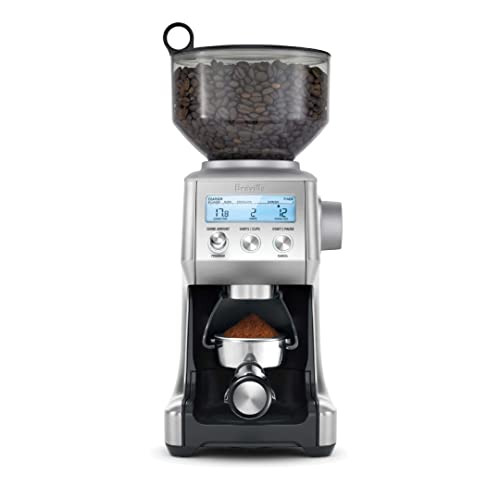
Breville BCG820BSS Smart Grinder Pro for Coffee and Espresso, Brushed Stainless Steel
The Breville Smart Grinder Pro includes 60 unique settings – this programmable conical burr grinder offers a wide...
As an affiliate, we earn on qualifying purchases.
Conclusion
By microdosing caffeine, you enjoy the subtle boost without the jitters, embracing a calm alertness that feels almost effortless. It’s a delicate balance—small sips sparking steady gains—where less truly becomes more. While a full cup might rush you into overstimulation, a measured dose grants sustained focus and clarity. In this quiet power, you find a paradox: strength in restraint, energy in moderation, and progress in the art of subtlety.

SHARDOR Professional 64mm Burr Coffee Grinder with 100 Grind Settings and All-Metal Chamber, Coffee Bean Grinder with Adjustable Electronic Timer and LED Display, Anti-Static,Black
64mm Flat Burr: Achieves uniform grinding with minimal heat generation, enhancing the flavor profile for a superior taste...
As an affiliate, we earn on qualifying purchases.

Fellow Opus Conical Burr Coffee Grinder – Electric Espresso Grinder for Home Use, 41 Adjustable Settings for Drip, French Press, Cold Brew & More, 40mm Stainless Steel Burrs, Matte Black
THE DO-IT-ALL GRINDER: Opus is a powerful all-purpose grinder that grinds for the full range of coffee brewing...
As an affiliate, we earn on qualifying purchases.