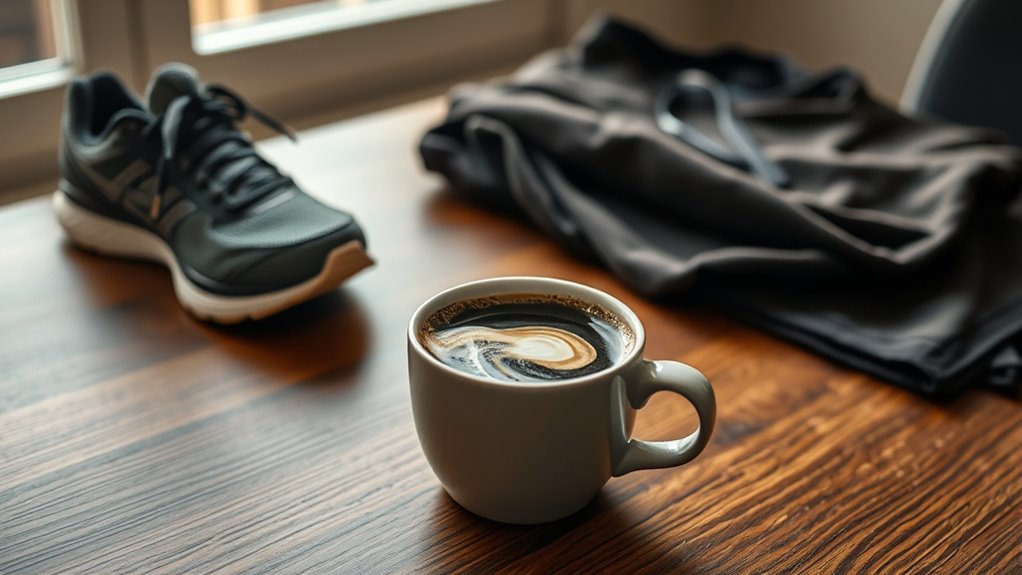

Drinking coffee about 30 minutes before exercise can boost your energy, focus, and endurance, helping you perform better. Caffeine acts as a natural stimulant, decreasing fatigue and making workouts feel less strenuous. To maximize benefits, watch your caffeine intake and stay hydrated. Proper timing and moderate doses are key, and individual responses vary. Stay tuned if you want to discover more tips on timing and optimizing your coffee routine for better workout results.

Get coffee and tea gear delivered free with Prime
- Fast, free delivery on millions of items
- Prime Video, Amazon Music and more included
- Member-only deals all year
Key Takeaways
- Consuming coffee about 30 minutes before exercise maximizes caffeine absorption and workout benefits.
- Caffeine enhances endurance, reduces fatigue perception, and enables longer, higher-intensity workouts.
- Moderate caffeine doses (around 95 mg or one standard cup) suit most individuals; adjust based on personal tolerance.
- Proper hydration alongside coffee is essential, as coffee is a diuretic, to maintain fluid balance during exercise.
- Timing and individual response are key; experiment to find the optimal balance for enhanced performance.

Many fitness enthusiasts swear by drinking coffee before a workout, and for good reason. Caffeine is a natural stimulant that can boost your energy levels, enhance focus, and improve overall workout performance. When you consume coffee beforehand, you’re giving your body a quick source of caffeine, which is absorbed rapidly into your bloodstream. The process of caffeine absorption typically peaks within 30 to 60 minutes after drinking, making timing vital if you want to maximize its benefits during exercise. By drinking coffee about 30 minutes before hitting the gym, you’re more likely to experience heightened alertness and improved workout endurance when you need it most.
Drinking coffee 30 minutes before exercise boosts alertness and enhances workout endurance.
Caffeine’s ability to influence workout endurance is one of its most lauded benefits. It works by stimulating your central nervous system, which can decrease the perception of fatigue and make physical activity feel less strenuous. This means you might be able to push through longer sessions or perform at higher intensities than you would without caffeine. Many athletes and fitness buffs find that their stamina improves after coffee, allowing them to train harder and for extended periods. The key is understanding how your body responds to caffeine and timing your intake accordingly. If you consume coffee too early, the stimulant effects might wear off before your workout ends. Conversely, if you wait too long, you might not experience the peak benefits during your session.
Another important aspect is the amount of caffeine you consume. A standard cup of coffee contains roughly 95 milligrams of caffeine, but this can vary depending on the brew strength. It’s recommended to start with a moderate dose to gauge your tolerance and prevent unwanted side effects like jitteriness or a rapid heartbeat. Drinking coffee with some carbohydrates or proteins can also help sustain energy levels during your workout. Remember to consider your personal sensitivity to caffeine, especially if you’re exercising later in the day, as it could interfere with your sleep.
In addition to timing and dosage, keep in mind that hydration plays a role. Coffee is a diuretic, so drinking water alongside your coffee can help maintain hydration levels. Interestingly, caffeine levels in cocoa can be lower and vary based on processing, so if you prefer a milder stimulant effect, using cocoa or dark chocolate could be an alternative. Overall, incorporating coffee into your pre-workout routine can be a simple yet effective way to boost workout endurance and improve your performance, as long as you pay attention to how your body responds and time your intake properly. With a little experimentation, you can find the perfect balance to get the most out of your coffee before exercise.
As an affiliate, we earn on qualifying purchases.
Frequently Asked Questions
Can Coffee Improve Endurance During Long Workouts?
Yes, coffee can improve your endurance during long workouts, especially if you have a low caffeine tolerance. The caffeine in coffee acts as a stimulant, helping you feel more alert and reducing perceived effort. Your brewing method matters; espresso or drip coffee provides a quick caffeine boost, while cold brew offers a smoother, longer-lasting effect. Just be mindful of your tolerance to avoid jitters or crashes.
Does Coffee Affect Hydration Levels During Exercise?
Coffee can slightly affect hydration levels during exercise because caffeine acts as a diuretic, which may increase urine production. However, if you consume moderate amounts, the hydration impact is minimal and unlikely to impair your performance. To stay well-hydrated, balance your coffee intake with plenty of water before, during, and after exercise. Be mindful of caffeine’s diuretic effects, especially during long or intense workouts.
Is Decaffeinated Coffee Beneficial Before Workouts?
Decaffeinated coffee can be beneficial before workouts, especially if you enjoy its flavor without the caffeine boost. You might worry about missing out on performance benefits, but decaf still provides antioxidants and a comforting routine. With minimal caffeine content, it won’t cause jitters or dehydration, making it a great option if you prefer flavor over stimulation. It’s an easy way to stay motivated without disrupting your sleep or energy levels.
How Does Coffee Influence Muscle Recovery Post-Exercise?
Coffee can help reduce muscle soreness and improve recovery speed after exercise. The caffeine in coffee stimulates your central nervous system, which may decrease the perception of pain and inflammation. Plus, it boosts adrenaline, helping you recover faster. Just be mindful not to overdo it, as too much caffeine might lead to dehydration or interfere with your sleep, ultimately hindering muscle recovery.
Are There Specific Types of Coffee Better for Exercise Performance?
You’ll get the best exercise performance from black coffee with moderate brew strength, as it provides ideal caffeine levels without excess bitterness. Avoid heavy additives like sugary syrups or creamers, which can hinder your energy. Instead, opt for plain coffee or add a splash of milk if needed. This way, you maximize caffeine’s benefits while keeping your coffee light and effective for workout boosts.
Conclusion
So, next time you plan your workout, consider the timing of your coffee. Will it give you that extra edge, or could it hold you back? The effects of caffeine vary from person to person, and the true impact remains a tantalizing mystery. Are you ready to experiment and release your peak performance? The answer might just be waiting in that first sip—if you dare to find out.
Halloween Picks
halloween
As an affiliate, we earn on qualifying purchases.