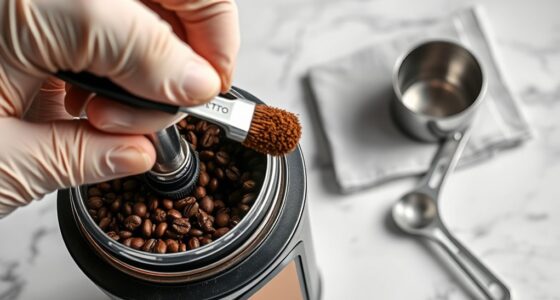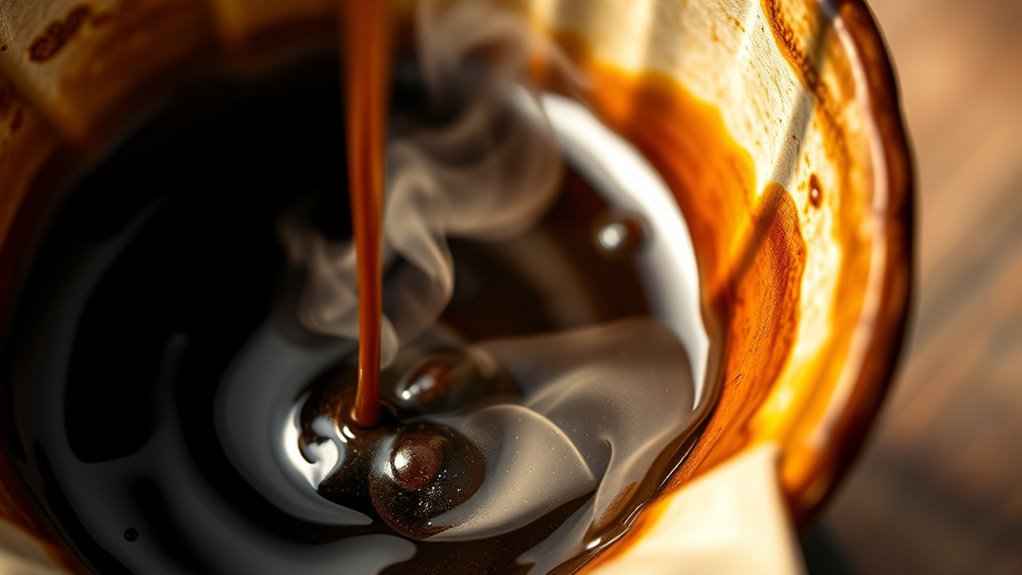

To fix channeling and stalls in your pour-over, start by ensuring your grind is not too fine, as a too-tight grind can slow water flow and cause blockages. Use a steady, controlled pour in circular motions to promote even water distribution and prevent water from finding weak paths. Adjusting your pour technique and grind size can markedly improve extraction. Keep experimenting with these methods, and you’ll uncover more ways to perfect your brew.
Key Takeaways
- Use a consistent, slow pouring technique with circular motions to prevent uneven water distribution and reduce channeling.
- Adjust grind size to be slightly coarser if water stalls or pools during brewing.
- Ensure even pouring across the coffee bed to avoid water finding preferred paths and causing channeling.
- Monitor water flow rate; slow or inconsistent flow indicates need for grind adjustment or pour technique change.
- Practice controlled, steady pours to promote uniform extraction and minimize flow stalls or uneven water passage.
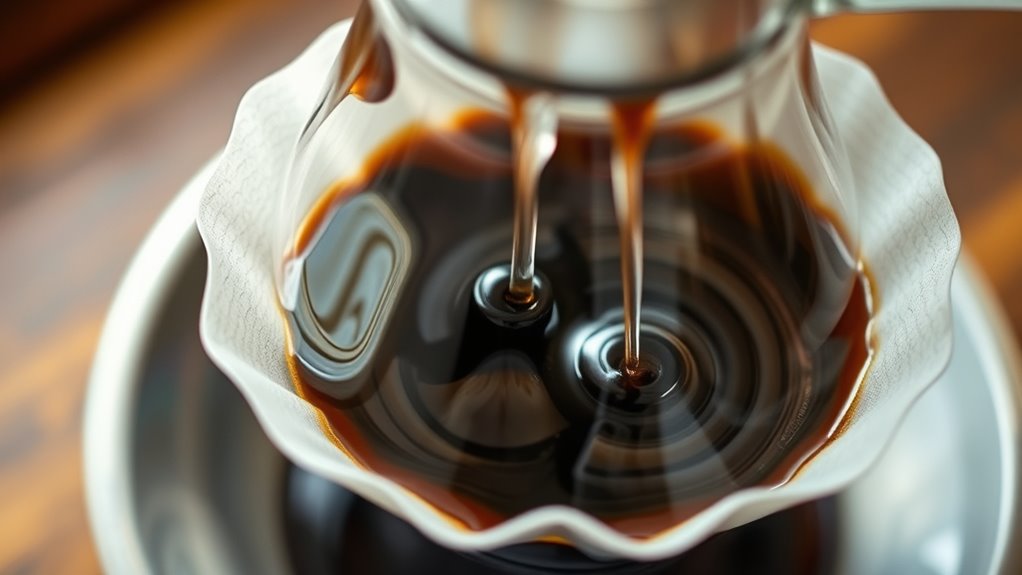
Pour-over coffee is celebrated for its rich flavor and clean clarity, but brewing it perfectly can sometimes be tricky. One common challenge you might face is water flow issues, which can lead to uneven extraction and a less-than-ideal cup. When your pour-over stalls or water seems to pool in certain areas, it’s often a sign that the flow isn’t steady or that the grind size needs adjusting. If you notice your brew slowing down markedly or water backing up, try tweaking your grind size. Making your coffee grounds slightly coarser can help improve water flow, reducing blockages and ensuring a more even extraction. Conversely, if your water passes through too quickly, and the flavor feels weak or underdeveloped, you might need to grind finer. Adjusting your grind size is the most direct way to influence water flow issues, but it requires a bit of experimentation. Start by making small changes and observing how they affect the brew.
Beyond grind size, check your pour technique. A slow, steady pour that covers all the grounds evenly promotes proper water flow. If you pour too quickly or unevenly, it can cause channeling — where water finds the path of least resistance and flows through specific parts of the coffee bed. This results in under-extracted flavors and a weak, imbalanced cup. To prevent this, pour in gentle, circular motions, ensuring that the water distributes uniformly across the grounds. Keep your pouring consistent and avoid rushing, especially during the initial bloom. A uniform bloom and steady pour help prevent water from pooling or rushing through certain areas, which ties back into managing water flow issues effectively.

Coffee Grinder, Viesimple Gen 4, Single Dose Burr Coffee Grinders with Magnetic Dosing Cup, Electric Coffee Bean Grinder with Anti-Static Design, Espresso Grinder Compact & Quiet for Home Use Black
THE DO-IT-ALL GRINDER:The electric coffee grinder is a powerful all-purpose coffee grinder featuring 5-blade of 48 mm conical...
As an affiliate, we earn on qualifying purchases.
Frequently Asked Questions
How Can I Prevent Channeling During Pouring?
To prevent channeling during pouring, you should control your flow rate and focus on even water distribution. Pour slowly and steadily to avoid sudden bursts that cause uneven saturation. Use a gentle, circular motion to distribute water evenly across the coffee bed, ensuring consistent flow through the grounds. This approach minimizes channel formation, resulting in a more uniform extraction and a better-tasting brew.
What Temperature Should the Water Be for Optimal Extraction?
Think of brew water temperature as the key to revealing your coffee’s full potential. You should aim for a temperature between 195°F and 205°F for ideal extraction. If the water’s too hot, it can over-extract, making your coffee bitter. Too cool, and you won’t extract enough flavor. Maintain this range to guarantee balanced, flavorful results, and you’ll enjoy a perfect pour-over every time.
How Do I Identify a Stall in My Brew?
You can identify a stall in your brew when the flow from your pour-over slows or stops during the bloom phase. If the coffee bed stops bubbling or the water seems to sit without progressing, it’s a clear sign. This indicates channeling or uneven extraction. To rectify it, stir gently or pour more evenly to guarantee water moves through the entire coffee bed, maintaining consistent flow and extraction.
Can Grind Size Affect Channeling and Stalls?
Yes, grind size can affect channeling and stalls. If your grind is too fine, it can cause uneven brew flow, leading to channeling, while inconsistent grind size can create uneven extraction, causing stalls. Confirm your grind consistency is uniform for better brew agitation and even water flow. Adjust the grind size gradually and observe how it influences your pour-over, aiming for a balanced extraction without creating pathways for water to bypass the coffee grounds.
What Tools Can Help Diagnose Pour-Over Issues?
Imagine you’ve got a time machine—your tools can do that for your pour-over! Use a coffee scale to measure water precisely, a stopwatch to control bloom times, and a gooseneck kettle for steady pouring. A magnifying glass helps spot equipment issues or uneven grounds. Regular equipment maintenance guarantees consistent results, and refining your brewing techniques can prevent channeling and stalls. These tools guide you to perfect your pour-over every time.

Neretva Espresso Grinder, 2 in 1 Professional Coffee Bean Grinder Stainless Steel Suit 51~58mm Portafilter Burr Coffee Grinder 30 Precise Setting&Anti-Static for Espresso/French Press/Drip/Moka-Silver
PROFESSIONAL CONICAL BURR COFFEE GRINDER- WIth new upgraded 3.0 conical burr grinding technoloy, the coffee grinder ensures that...
As an affiliate, we earn on qualifying purchases.
Conclusion
Now that you know how to troubleshoot channeling and stalls, you’re better equipped to perfect your pour-over brew. For instance, imagine you’re consistently getting a weak, uneven extraction. By adjusting your grind size and pouring technique, you could turn that around. Remember, small tweaks make a big difference. Keep experimenting and paying attention to your process—soon, you’ll enjoy rich, balanced pours every time. Happy brewing!

SHARDOR Conical Burr Espresso Coffee Grinder Electric with Precision Timer 2.0, Touchscreen Adjustable Burr Mill with 51 Precise Settings for Home Use, Anti-static, Stainless Steel
Premium 40 Millimeter Stainless Steel Conical Burr: Designed to minimize grinding heat and protect the essential oils in...
As an affiliate, we earn on qualifying purchases.

SHARDOR Professional 64mm Burr Coffee Grinder with 100 Grind Settings and All-Metal Chamber, Coffee Bean Grinder with Adjustable Electronic Timer and LED Display, Anti-Static,Black
64mm Flat Burr: Achieves uniform grinding with minimal heat generation, enhancing the flavor profile for a superior taste...
As an affiliate, we earn on qualifying purchases.