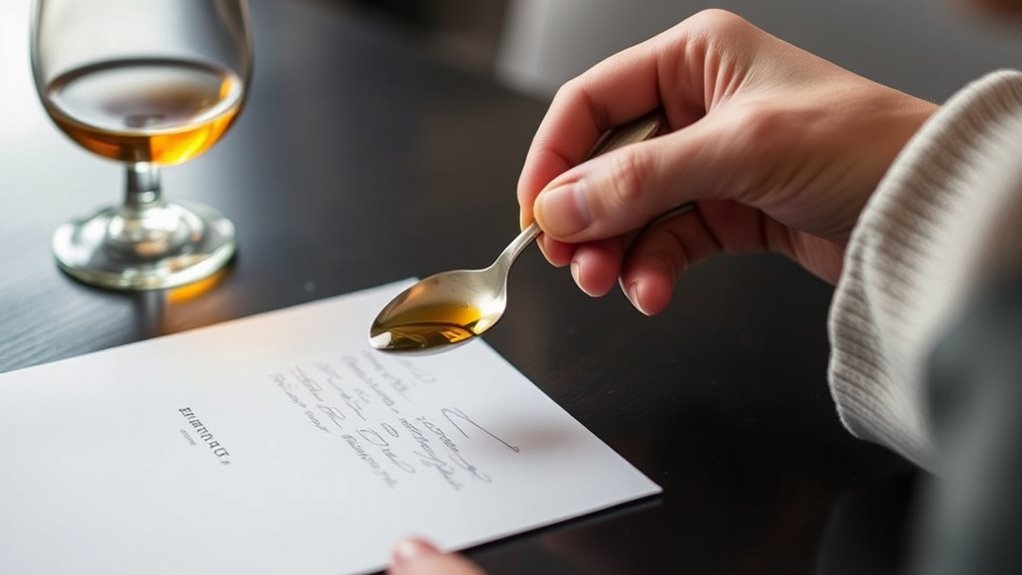

To write clear and useful tasting notes, focus on precise sensory descriptions for aroma, flavor, and texture. Start with an organized approach, noting appearance first, then aroma, taste, and finish. Use specific words to describe notes like “ripe blackberries” or “zesty citrus,” avoiding vague terms. Detailing each element helps you communicate your impressions accurately. If you keep honing your descriptions, you’ll develop a sharper palate and more insightful notes over time.

Get coffee and tea gear delivered free with Prime
- Fast, free delivery on millions of items
- Prime Video, Amazon Music and more included
- Member-only deals all year
Key Takeaways
- Use specific, vivid sensory language to describe aroma, taste, and texture for clarity.
- Follow a structured format: appearance, aroma, taste, and finish for consistency.
- Identify and articulate distinct aroma and flavor notes with precise descriptors.
- Detail initial impressions, mid-palate sensations, and lingering aftertaste for completeness.
- Maintain systematic and consistent notes to facilitate comparison and improve descriptive skills.
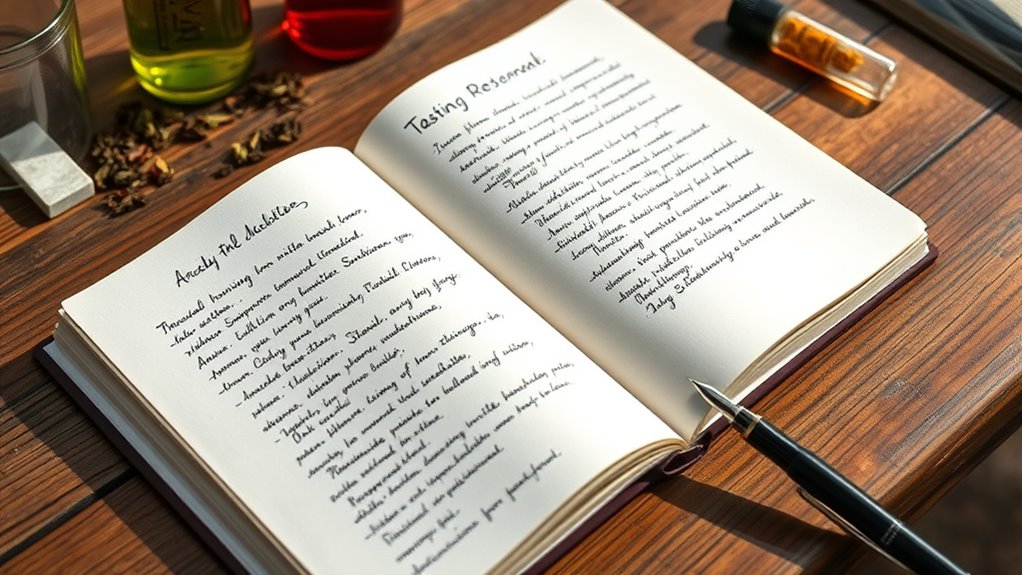
Have you ever wondered how to capture the true essence of a wine, coffee, or dish in words? Crafting effective tasting notes starts with understanding the importance of sensory language and note structure. Sensory language allows you to vividly describe what you experience, painting a clear picture for anyone reading your notes. Instead of vague adjectives like “good” or “nice,” use specific descriptors that evoke taste, aroma, and texture. For example, rather than saying a wine is “fruity,” specify whether it’s “ripe blackberry” or “zesty citrus,” helping others understand the flavor profile more precisely. Developing a consistent note structure also makes your descriptions more accessible. Typically, a well-organized note begins with the appearance, followed by aroma, taste, and finish. Each section should focus on specific details, guiding you to explore every aspect methodically. When describing aroma, don’t just mention the general scent but identify particular notes—say, “a hint of vanilla intertwined with toasted oak” instead of simply “pleasant aroma.” This specificity enhances the clarity of your notes and makes them more useful for future reference. Additionally, understanding the relationship between sensory perceptions and note structure can help you recognize patterns and improve your descriptive skills over time. In the taste section, describe the initial impression, mid-palate sensations, and the aftertaste, emphasizing textures and flavors. For instance, you might note a “silky mouthfeel with a burst of bright acidity,” or “a lingering, spicy finish that leaves a warm sensation.” This detailed approach helps you and others understand the complexity of what you’re tasting. The note structure acts as a roadmap, guiding your observations logically and systematically. It also encourages consistency, making it easier to compare different wines, coffees, or dishes over time. As you practice, your descriptions will become sharper, more precise, and more evocative. Remember, the goal is to communicate your sensory experience clearly and accurately so that others can visualize and understand what you’re tasting. By focusing on sensory language and maintaining a consistent note structure, you’ll develop a more refined palate and a more useful set of tasting notes. This approach ensures your descriptions are not only enjoyable to read but also serve as valuable references for future tastings.
Frequently Asked Questions
How Can I Improve My Tasting Vocabulary?
To improve your tasting vocabulary, you should practice using sensory language and descriptive adjectives. Pay close attention to flavors, aromas, and textures, then try to articulate them with precise words. Keep a tasting journal, noting new terms and refining your descriptions over time. Engage your senses actively during tastings, and read other detailed tasting notes for inspiration. This will help you develop a richer, more expressive vocabulary for your tasting notes.
What Tools Help Record Tasting Notes Efficiently?
You can use tasting journals or apps designed for note organization to record tasting notes efficiently. These tools often include built-in tasting terminology and customizable sections, making it easier to categorize flavors, aromas, and textures. They help you stay organized and consistent, so you quickly capture detailed notes. By integrating tasting terminology, you guarantee your notes are clear and useful, improving your overall tasting experience and communication.
How Do I Avoid Bias in Tasting Notes?
Think of your palate as a clear pond, untouched by muddy waters. To avoid bias in your tasting notes, you focus on sensory biases and stick to objective language. Be mindful of personal preferences and external influences, describing flavors and aromas precisely without exaggeration. This approach helps you capture the true essence of what you’re tasting, ensuring your notes are fair, accurate, and truly helpful for others seeking genuine insights.
Can Tasting Notes Be Personalized for Different Audiences?
Yes, you can personalize tasting notes for different audiences by tailoring your sensory language and focusing on what matters most to them. For example, use more technical terms for connoisseurs, while simplifying descriptions for casual drinkers. Always keep audience awareness in mind, highlighting specific flavors or aromas that resonate with their preferences. This approach makes your notes more engaging and accessible, ensuring they effectively communicate the tasting experience.
How Often Should I Update My Tasting Note Format?
You should update your tasting note format whenever you notice a decline in clarity or consistency. Regularly reviewing guarantees your tasting note consistency stays high, making your notes more useful. Flexibility in your note format allows you to adapt to different wines or audiences, so don’t hesitate to make adjustments as needed. Aim for periodic updates—every few months or after tasting a new wine style—to keep your notes sharp and relevant.
Conclusion
Think of your tasting notes as a lighthouse guiding others through the dark waters of unfamiliar flavors. Your words become the beacon, illuminating the true character of each sip and helping others navigate their own tasting journey. When you write with clarity and passion, you’re not just describing a beverage—you’re opening a door to shared experiences and memories. Let your notes be the lighthouse that inspires others to discover their own flavorful adventures.
Fall Picks
fall essentials
As an affiliate, we earn on qualifying purchases.