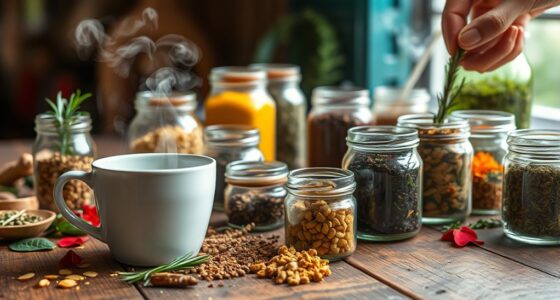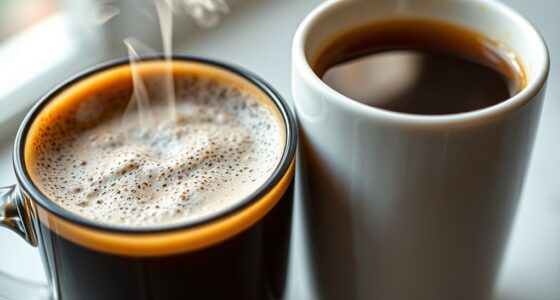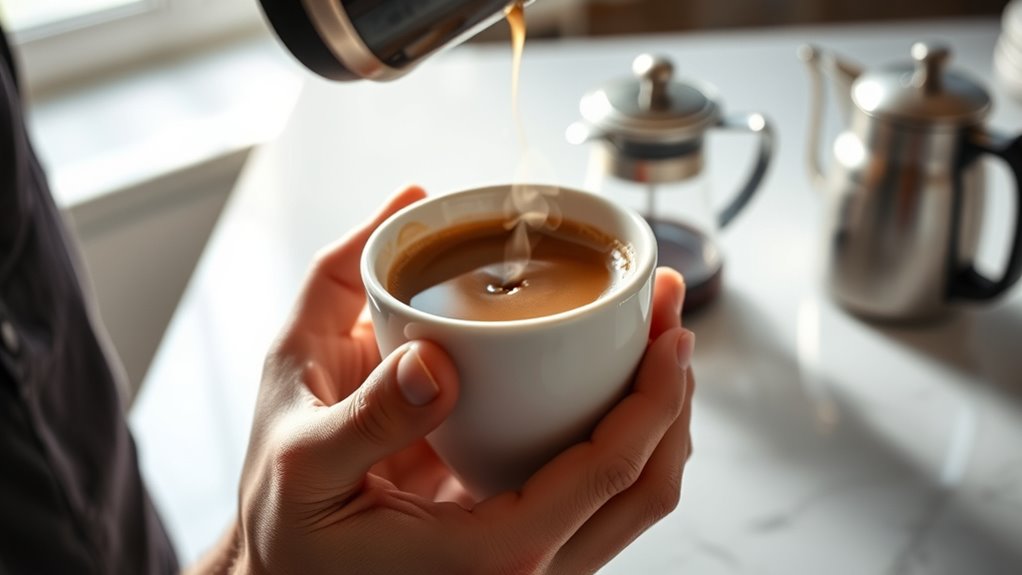

To cup coffee at home following the simplified SCA protocol, start by selecting freshly roasted beans and grinding them to a coarse consistency. Brew using a consistent method like pour-over or French press, with water just below boiling. After steeping for about four minutes, break the crust and smell the aroma. Slurp the coffee to aerate and taste for body, acidity, and sweetness. Continue exploring different techniques to refine your palate and discover your preferred flavors. If you keep practicing, you’ll uncover even more about what makes a perfect cup.
Key Takeaways
- Use fresh, coarsely ground coffee and heat water to just below boiling (200°F) for consistent brewing.
- Follow the SCA protocol by pouring water evenly, allowing a four-minute steep, then breaking the crust to evaluate aroma.
- Slurp the coffee quickly to aerate, then assess flavor, body, acidity, and aftertaste systematically.
- Conduct multiple cuppings with different brewing methods (e.g., French press, pour-over) to compare flavor profiles.
- Take detailed notes to refine your palate, improve brewing techniques, and develop a better understanding of coffee nuances.
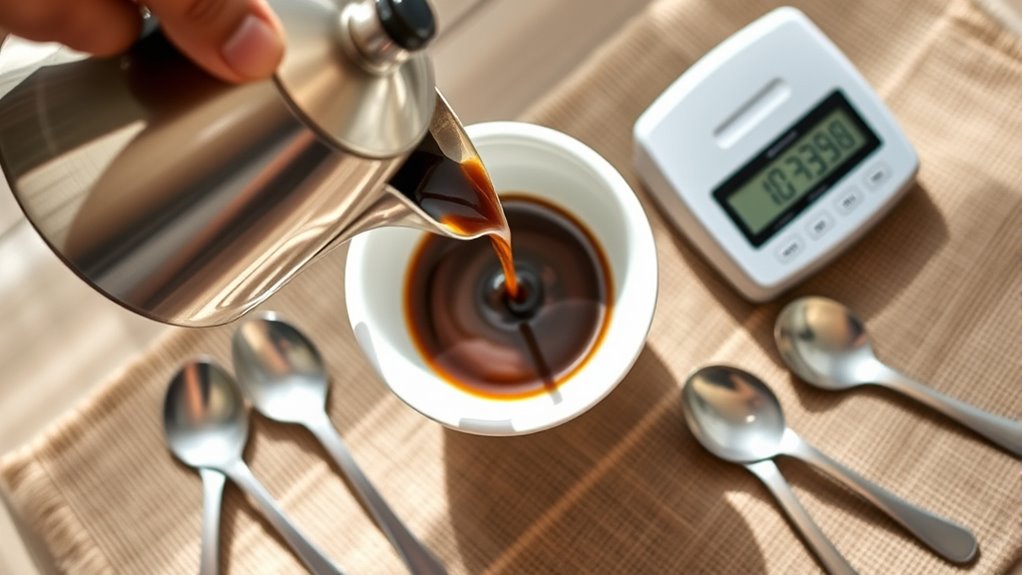
Cupping coffee at home is a rewarding way to explore different flavors and better understand your preferences. When you take the time to taste coffee in a structured way, you gain insight into the nuances of each brew and develop a more refined palate. The process centers on evaluating coffee flavor, which involves paying close attention to aroma, taste, and mouthfeel. To do this effectively, you need to understand how different brewing techniques influence the final cup. Each method extracts flavors differently, so experimenting with various approaches helps you discover what resonates most with your palate.
Start by selecting freshly roasted coffee beans. The quality and freshness of your beans profoundly impact the flavor profile you experience during cupping. Grind the beans to a consistent coarse grind, similar to sea salt, ensuring even extraction. The right grind size is essential because it affects how water interacts with the coffee during brewing, influencing the clarity and intensity of flavors. When brewing, you want to use a standardized method, such as a French press or pour-over, to control variables and make fair comparisons. The brewing technique determines how much of the bean’s aromatic oils and soluble compounds are extracted, shaping the coffee’s flavor profile.
Choose freshly roasted beans and grind them coarsely for optimal cupping results.
Next, heat your water to just below boiling, around 200°F (93°C). Pour the water over the coffee grounds evenly, ensuring all grounds are saturated. After pouring, allow the coffee to steep for about four minutes. During this time, you’ll notice a bloom—an aromatic release that indicates freshness. Skimming off the foam is optional but can help clarify the final cup. Once steeped, break the crust of grounds gently with a spoon and inhale deeply to evaluate the aroma. This step is essential for understanding the coffee’s initial scent, which often hints at its flavor. Understanding the impact of brewing techniques on flavor extraction helps you tailor your brewing process to achieve desired taste profiles.
Taste is the core of cupping, so use a spoon to slurp the coffee quickly from the cup. This aerates the liquid, allowing you to experience the full spectrum of flavors. Pay attention to how the coffee feels on your palate—its body, acidity, sweetness, and aftertaste. Comparing multiple cups brewed with different techniques reveals how brewing methods impact flavor. For example, a French press might produce a fuller-bodied cup with more oils, while a pour-over might highlight brighter acidity and cleaner flavors. By systematically tasting and noting these differences, you’ll develop a deeper appreciation of how brewing techniques influence coffee flavor and refine your preferences over time.
Cupping at home is more than just tasting; it’s about observing, analyzing, and learning. The process encourages you to become more intentional with your brewing and helps you identify what flavors excite you most. With practice, you’ll notice subtle distinctions in aroma, taste, and mouthfeel that elevate your coffee experience. Whether you’re experimenting with different beans or brewing methods, each session brings you closer to understanding how to craft the perfect cup tailored to your taste.

Neretva Espresso Grinder, 2 in 1 Professional Coffee Bean Grinder Stainless Steel Suit 51~58mm Portafilter Burr Coffee Grinder 30 Precise Setting&Anti-Static for Espresso/French Press/Drip/Moka-Silver
PROFESSIONAL CONICAL BURR COFFEE GRINDER- WIth new upgraded 3.0 conical burr grinding technoloy, the coffee grinder ensures that...
As an affiliate, we earn on qualifying purchases.
Frequently Asked Questions
What Equipment Is Essential for Home Cupping?
You need a few essential items for home cupping, starting with a good cupping vessel selection like appropriate bowls or glasses. You’ll also want a spoon for slurping and aroma evaluation techniques like gently sniffing the coffee after brewing. A scale helps measure coffee precisely, and a kettle ensures you have hot water. These tools let you evaluate aroma, flavor, and body effectively, giving you a professional cupping experience at home.
How Do I Store Coffee Beans for Cupping?
Think of coffee beans like a treasure chest; their freshness is the key. Store your beans in an airtight container, away from light, heat, and moisture to keep their flavor intact. Use small portions to avoid repeated exposure to air, and avoid refrigeration, which can cause condensation. Following these storage tips guarantees you preserve freshness, giving you the best experience during every cupping session.
Can I Cup Decaffeinated Coffee Effectively?
Yes, you can cup decaffeinated coffee effectively. Keep in mind, decaffeinated flavor may differ slightly from regular coffee, but proper cupping highlights its unique qualities. Be aware that during caffeine extraction, some flavor compounds might be affected, so focus on aroma, body, and overall balance. Use fresh, properly stored decaf beans, grind consistently, and follow the same cupping steps to get an accurate assessment of its qualities.
How Do I Calibrate My Palate for Cupping?
To calibrate your palate for cupping, focus on flavor recognition through consistent palate training. Taste different coffees regularly, paying attention to subtle nuances, and compare them to established flavor profiles. Practice identifying aromas, acidity, body, and finish. Over time, your palate will become more sensitive and accurate, helping you distinguish quality and flavor differences more effectively. Keep notes of your impressions to track your progress and refine your sensory skills.
What’s the Ideal Temperature for Brewing During Cupping?
You should brew your coffee at about 200°F (93°C) during cupping, which is close to boiling. This temperature optimizes the extraction rate, ensuring you release maximum flavor complexity. Interestingly, at this temperature, about 90% of the soluble compounds are extracted in the first few seconds, revealing the coffee’s true profile. Maintaining this brew temperature helps you achieve consistent, balanced cupping results every time.

Coffee Grinder, Viesimple Gen 4, Single Dose Burr Coffee Grinders with Magnetic Dosing Cup, Electric Coffee Bean Grinder with Anti-Static Design, Espresso Grinder Compact & Quiet for Home Use Black
THE DO-IT-ALL GRINDER:The electric coffee grinder is a powerful all-purpose coffee grinder featuring 5-blade of 48 mm conical...
As an affiliate, we earn on qualifying purchases.
Conclusion
Now, as you sit with your freshly brewed cup, you realize that coffee tasting isn’t just about the beans—it’s about your experience. Just like a professional cupping, your home session blends precision with personal flair, turning a simple brew into a sensory journey. With each sip, you create a moment of connection between the science of coffee and the warmth it brings. It’s a small ritual, but one that elevates your everyday coffee experience to something truly special.

Fellow Opus Conical Burr Coffee Grinder – Electric Espresso Grinder for Home Use, 41 Adjustable Settings for Drip, French Press, Cold Brew & More, 40mm Stainless Steel Burrs, Matte Black
THE DO-IT-ALL GRINDER: Opus is a powerful all-purpose grinder that grinds for the full range of coffee brewing...
As an affiliate, we earn on qualifying purchases.

SHARDOR Conical Burr Espresso Coffee Grinder Electric with Precision Timer 2.0, Touchscreen Adjustable Burr Mill with 51 Precise Settings for Home Use, Anti-static, Stainless Steel
Premium 40 Millimeter Stainless Steel Conical Burr: Designed to minimize grinding heat and protect the essential oils in...
As an affiliate, we earn on qualifying purchases.