To host a tasting night with friends, start by selecting a variety of items like wines, cheeses, or chocolates that showcase different flavors. Plan the tasting with pairing techniques to elevate the experience, encouraging everyone to share their impressions while respecting tasting etiquette. Use organized sheets to record notes and foster open-minded conversations. Keep the atmosphere fun and educational, and if you keep exploring, you’ll discover even more ways to fine-tune your senses and enjoy the journey.
Key Takeaways
- Select a diverse range of tasting items to challenge and expand everyone’s palate.
- Establish clear tasting etiquette, encouraging respectful sharing of impressions and active listening.
- Use pairing techniques to enhance flavors and foster collaborative exploration among friends.
- Maintain organized notes and tasting sheets to calibrate perceptions and track insights.
- Prioritize safety by respecting legal limits, promoting moderation, and ensuring a fun, educational environment.
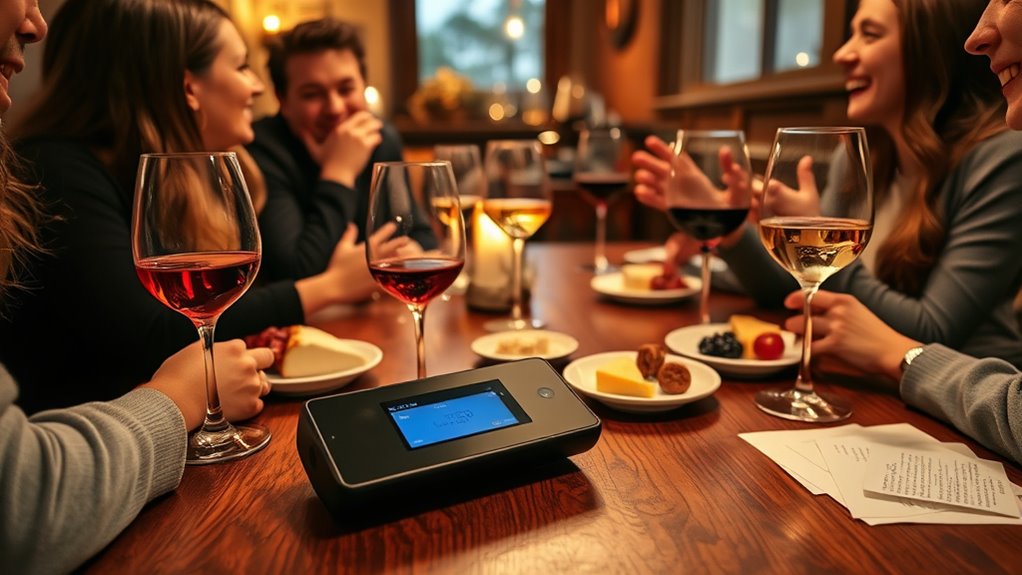
Have you ever wondered how friends can help you fine-tune your skills or perceptions? Hosting a tasting night with friends offers a perfect opportunity to do just that. When you gather a small group, you create an environment where everyone can share insights, ask questions, and learn from each other. This collaborative approach makes the experience more enjoyable and educational. To get started, plan a selection of items—whether wines, cheeses, chocolates, or craft beers—that showcase a variety of flavors and styles. The goal is to challenge your senses and expand your palate, but doing so with friends makes the process less intimidating and more fun.
As you prepare, think about pairing techniques. Pairing techniques are vital because they influence how flavors complement or contrast each other. For example, you might serve a bold red wine alongside a rich, aged cheese to highlight the wine’s tannins and the cheese’s creaminess. Or, pair a sweet chocolate with a robust coffee to enhance the richness of both. When you discuss these pairings with friends, you learn different perspectives, which can refine your understanding of flavor combinations. Encourage everyone to experiment and suggest their own pairings—it turns your tasting into a collaborative exploration rather than a lecture.
Tasting etiquette also plays an essential role in making the experience comfortable and respectful. Basic tasting etiquette involves being attentive and respectful of others’ opinions, even if they differ from yours. For example, when sampling a new wine, take small sips and pause to observe its aroma, taste, and finish. Share your impressions, but listen carefully to others’ observations, recognizing that everyone’s palate is different. Avoid dominating the conversation or rushing through the samples; instead, foster an atmosphere of curiosity and open-mindedness. Proper tasting etiquette also means having clean glasses, a neutral palate cleanser like water or plain bread, and organized tasting sheets to jot down notes. These small details help maintain focus and ensure everyone can participate fully without distractions. Additionally, understanding the importance of regulatory compliance and best practices can help ensure your tasting night remains enjoyable and safe for all participants. These practices include maintaining proper records of your selections and respecting any legal limits on alcohol consumption.
Throughout the night, your friends will serve as a valuable calibration tool. Their feedback helps you recognize subtle flavors, improve your tasting skills, and develop your personal preferences. Sharing these experiences with friends also makes the process more dynamic, as you exchange ideas and learn from each other’s insights. By paying attention to pairing techniques and maintaining good tasting etiquette, you create a smooth, engaging experience that elevates your understanding of flavor. So, gather your friends, plan your tasting night carefully, and enjoy the journey of calibrating your senses together.
Frequently Asked Questions
What Types of Beverages Are Best for Tasting Nights?
For tasting nights, you should focus on a variety of beer varieties like IPAs, stouts, and lagers to showcase different flavors. Including some cocktail recipes, such as margaritas or mojitos, adds diversity. Choose beverages with distinct profiles to keep the tasting engaging. Make sure to offer enough options so everyone can sample and compare. This variety keeps the experience fun and educational for all your guests.
How Do I Choose the Right Tasting Themes?
Imagine you’re a sommelier in a 1920s speakeasy, picking the perfect theme. To choose, consider your guests’ tastes and interests—like pairing cheese or exploring specific regions. Keep tasting etiquette in mind, ensuring everyone gets a fair shot at sampling. Select a theme that sparks curiosity and encourages discussion. Whether it’s wines from France or craft beers, the right theme makes your tasting night memorable and engaging for all.
What Snacks Complement Different Drinks During Tastings?
You should choose snacks that enhance the flavors of your drinks, like pairing cheese with wines or spirits. Consider snack platters with a variety of cheeses, cured meats, nuts, and fresh fruits to complement different beverages. Light, savory options work well for spirits, while sweeter snacks suit dessert wines. Keep balance in mind, so your snacks don’t overpower the drinks, creating a harmonious tasting experience for everyone.
How Can I Ensure Each Guest’s Palate Is Fairly Calibrated?
Sure, because everyone’s palate magically aligns without effort, right? To guarantee fair palate calibration and tasting consistency, you should start with a neutral taste test, like water or plain bread, to reset everyone’s palate. Provide tasting notes and encourage honest feedback, ensuring everyone’s on the same page. Keep the environment consistent, avoid distractions, and remind guests to cleanse their palate between samples. That way, your tasting stays fair and fun!
What Are Fun Activities to Include Besides Tasting?
You can spice up your tasting night by including fun activities like interactive games and tasting challenges. Organize blindfolded tastings where guests identify flavors or ingredients, adding a playful twist. You could also host a flavor pairing contest or trivia related to the tasting theme. These activities encourage engagement, spark conversation, and make the experience memorable without overshadowing the main tasting event.
Conclusion
As you gather with friends, remember that tasting nights aren’t just about perfecting flavors—they’re about connection, much like the poets of old who sought harmony in their verses. Embrace the imperfections, for they mirror life’s true essence. Just as a symphony finds beauty in every note, your shared experiences will deepen bonds and sharpen your palate. In these moments, you’re not just calibrating taste, but also forging memories that linger long after the last sip.