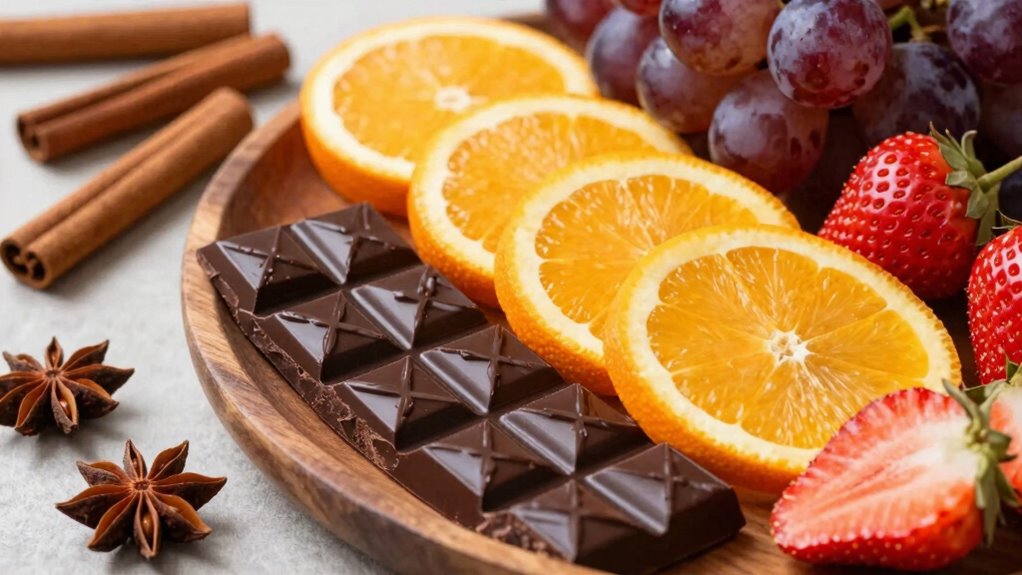

To train your palate at home, focus on sensory awareness by slowly tasting different fruits, chocolates, and spices. Notice subtle flavors, aromas, textures, and aftertastes to sharpen your perception. Try pairing fruit with dark or milk chocolate, then add spices like cinnamon or ginger to see how they enhance or transform the flavors. Repeating these exercises helps you recognize nuanced tastes and build a more refined palate—discover ways to elevate your tasting skills as you explore further.

Get coffee and tea gear delivered free with Prime
- Fast, free delivery on millions of items
- Prime Video, Amazon Music and more included
- Member-only deals all year
Key Takeaways
- Practice mindful tasting of fruits, noting flavors, aromas, textures, and aftertastes to develop sensory awareness.
- Pair fruits with different chocolates to explore flavor balance and enhance palate perception.
- Incorporate spices like cinnamon or ginger to observe their impact on flavor complexity and layering.
- Use a descriptive sensory vocabulary to articulate nuanced flavor interactions and refine discernment.
- Regularly repeat tasting exercises to improve recognition of subtle differences and deepen appreciation.
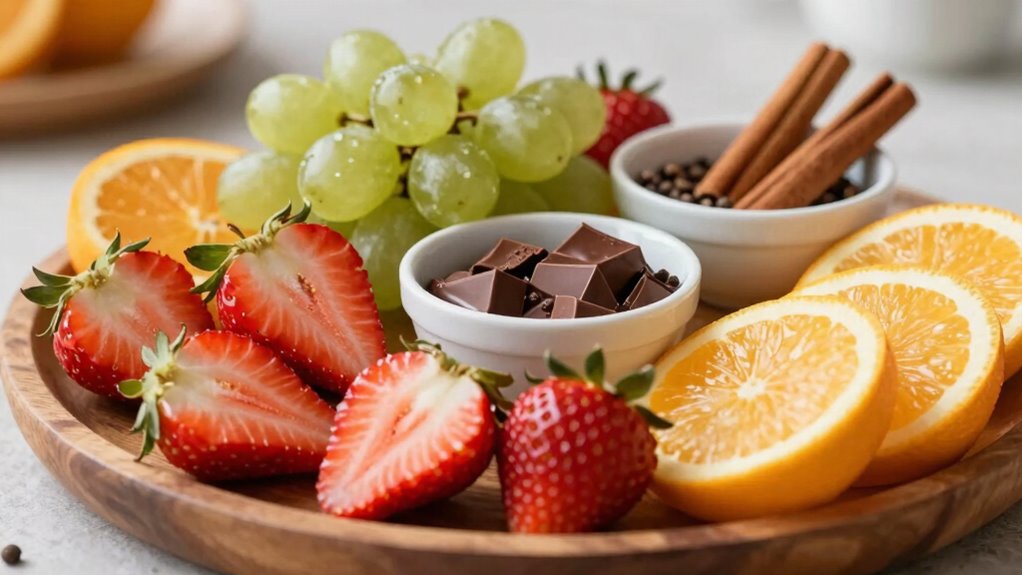
Have you ever wondered how to refine your taste buds without leaving home? The key lies in developing your palate through simple yet deliberate exercises that focus on flavor pairing and sensory awareness. When you start exploring fruit, chocolate, and spices, you open yourself up to a world of nuanced tastes and textures. These ingredients are perfect for training your palate because they offer a wide range of flavors that can be easily manipulated and compared. Engaging in mindful tasting helps to embrace biodiversity by appreciating the variety of natural flavors present in different ingredients.
Begin by tasting a piece of fruit, such as apple or pear, and pay close attention to its natural sweetness, acidity, and aroma. Try to identify subtle flavor notes—perhaps hints of floral, citrus, or earthiness. Once you’re familiar with the fruit’s profile, experiment with pairing it with different chocolates. Dark chocolate, with its complex bitterness, can balance the fruit’s sweetness, creating a harmonious contrast. Milk chocolate, on the other hand, adds creaminess and mellow sweetness, which can highlight different aspects of the fruit. As you work through these pairings, you sharpen your sensory awareness, learning to distinguish how flavors interact and complement each other.
Tasting fruit and pairing it with chocolates sharpens your senses and reveals how flavors beautifully interact.
Next, incorporate spices like cinnamon, cardamom, or ginger into your tasting sessions. These spices bring warmth and complexity, transforming simple fruit and chocolate combinations into layered sensory experiences. For example, add a pinch of cinnamon to apple slices or sprinkle ginger onto dark chocolate. Notice how the spice alters the flavor profile—does it intensify sweetness, add a spicy kick, or bring out hidden notes in the fruit or chocolate? This process enhances your ability to recognize how different ingredients influence each other, strengthening your skill in flavor pairing. Developing a sensory vocabulary can help you articulate and understand these flavor interactions more clearly.
Throughout these exercises, focus on developing your sensory awareness. Close your eyes if it helps, and take slow, deliberate bites to really absorb the flavors. Notice the textures, aromas, and aftertastes. This heightened awareness allows you to identify subtle distinctions and build a more refined palate. As you repeat these tastings regularly, you’ll notice your ability to distinguish complex flavors improves, and your overall appreciation for taste deepens.
As an affiliate, we earn on qualifying purchases.
Frequently Asked Questions
How Often Should I Practice Palate Training for Best Results?
You should practice palate training daily or at least several times a week to see the best results. Consistency helps improve your ability to differentiate flavors and strengthen your sensory memory. By regularly exposing yourself to fruits, chocolates, and spices, you sharpen your palate, making flavor differentiation easier and more intuitive over time. Keep practicing consistently, and you’ll notice your sensory memory becoming sharper, enhancing your overall tasting experience.
Can Palate Training Help Improve My Cooking Skills?
Absolutely, palate training acts like a magnifying glass for your senses, sharpening your flavor discrimination and sensory development. As you refine your ability to identify subtle tastes, your cooking skills will naturally improve. You’ll understand how different ingredients interact and develop a more nuanced palate. This heightened awareness helps you create more balanced, flavorful dishes, turning everyday cooking into an art form. Keep practicing, and you’ll notice your culinary creations become more vibrant and sophisticated.
Are There Any Risks or Allergies Associated With Tasting Spices and Chocolates?
Yes, there are risks like spice allergies and chocolate sensitivities you should watch for. Some people may experience allergic reactions such as skin rashes, swelling, or trouble breathing. To stay safe, start with small tastes and pay attention to how your body reacts. If you notice any adverse symptoms, stop immediately and consult a healthcare professional. Being cautious helps you enjoy palate training without risking your health.
What Are Some Common Mistakes to Avoid During Palate Training?
You should avoid common mistakes like letting flavor fatigue set in or choosing overpowering tastes. When flavors blend into one, you lose the ability to distinguish subtle differences. Don’t rush through tasting; take your time to savor each bite. Overpowering tastes can mask other nuances, so start with milder options. Stay attentive, reset your palate regularly, and remember: patience is essential for developing a refined palate.
How Long Does It Typically Take to Notice Palate Sensitivity Improvements?
You might notice palate sensitivity improvements within a few weeks, as taste bud regeneration occurs and enhances your flavor perception. Consistent practice helps your palate become more responsive to subtle differences in fruit, chocolate, and spices. Keep in mind, patience is key; with regular training, you’ll gradually experience sharper taste distinctions and a richer flavor perception, making your palate training more rewarding over time.
Conclusion
By exploring fruits, chocolates, and spices, you train your palate to recognize flavors, appreciate nuances, and develop your taste buds. You experiment with different combinations, embrace new sensations, and expand your culinary horizons. You savor each discovery, learn from each experience, and deepen your appreciation. You enhance your meals, elevate your cooking, and enjoy every bite. Keep tasting, keep exploring, and keep transforming your palate into a world of endless flavor possibilities.
Halloween Picks
halloween
As an affiliate, we earn on qualifying purchases.