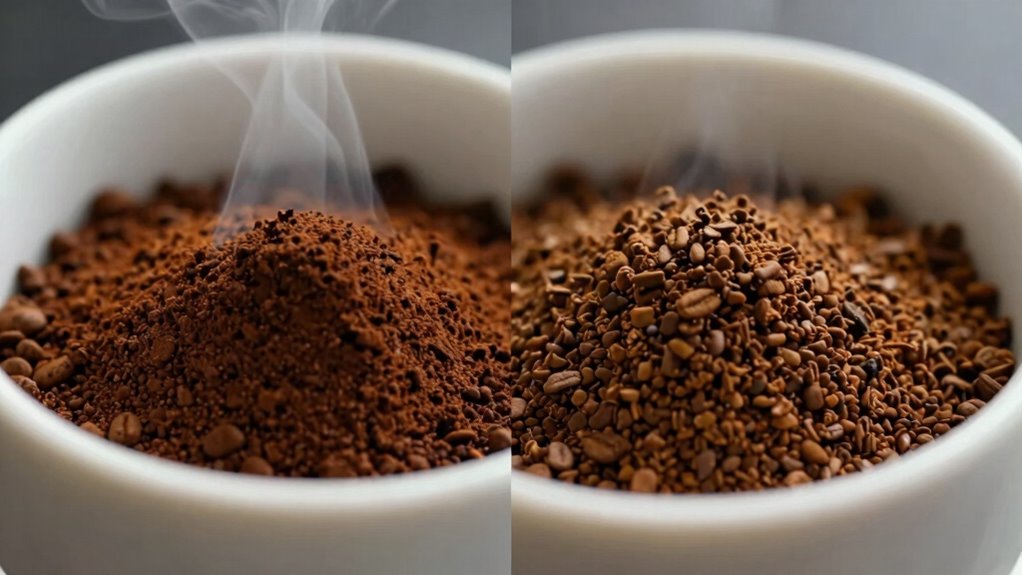

Your grind size impacts how quickly flavors are extracted during brewing, which in turn affects acidity. Finer grinds increase surface area, leading to faster extraction of acids, making your coffee brighter and more tangy. Coarser grinds slow down extraction, resulting in a smoother, less acidic cup. Adjusting your grind allows you to control brightness and flavor clarity. To learn more about fine-tuning your brew for the perfect balance, keep exploring how these variables work together.

Get coffee and tea gear delivered free with Prime
- Fast, free delivery on millions of items
- Prime Video, Amazon Music and more included
- Member-only deals all year
Key Takeaways
- Finer grind size increases surface area, leading to faster extraction of acidic compounds.
- Shorter brew times with fine grinds emphasize acidity and brightness in the cup.
- Coarser grinds slow extraction, resulting in less acidity and a smoother flavor profile.
- Overly fine grinds with quick brews can cause over-extraction, making the coffee overly sharp and acidic.
- Adjusting grind size allows precise control of acidity levels and overall flavor balance.

Have you ever wondered how the grind size of your coffee beans affects the acidity in your cup? The answer lies in how grind size influences flavor extraction and brew time. When your coffee is ground too fine, the increased surface area causes extraction to happen more quickly. This rapid extraction can lead to a more vibrant, sometimes sharper, acidity because acids are released early in the brewing process. Conversely, a coarser grind slows down flavor extraction, often resulting in a smoother, less acidic cup because fewer acids are pulled out during brewing.
Your choice of grind size directly impacts how the flavors develop during brewing. Fine grinds are typical for espresso because they maximize flavor extraction in a short period, but they can also intensify acidity if not carefully controlled. When water passes through a fine grind quickly, it extracts more of the acidic compounds early on, giving your coffee that bright, tangy quality. On the other hand, coarser grinds require longer brew times, which can reduce the acidity by allowing more balanced extraction. This slower process tends to emphasize the sweeter and more bitter notes instead of sharp acidity.
Choosing the right grind size shapes your coffee’s flavor—finer for brightness, coarser for balance and smoothness.
Brew time is a vital factor here. Shorter brew times with fine grinds tend to emphasize acidity because the acids dissolve rapidly. If you’re brewing espresso or using a AeroPress with a fine grind, you’ll notice a lively, tangy profile. However, if the grind is too fine and the brew time is too short, you might under-extract, leading to sour or overly acidic flavors. On the flip side, coarser grounds require longer extraction periods—think French press or cold brew—allowing for a more gradual release of acids and other compounds. This extended brew time gives your coffee a richer, rounder flavor with less pronounced acidity.
Adjusting your grind size and brew time allows you to control the clarity and brightness of your cup. If you prefer a more acidic, lively taste, go for a finer grind with a shorter brew time. If you want a smoother, less acidic experience, opt for a coarser grind paired with a longer brewing process. Being mindful of how these factors interact helps you fine-tune your brewing method, so you can enjoy coffee that perfectly matches your taste preferences. Understanding the relationship between grind size and acidity and the impact of brew time empowers you to craft a cup that’s just right—bright and crisp or mellow and rounded. Exploring how grind size affects flavor extraction can further enhance your brewing skills for a customized coffee experience. Additionally, knowing how grind size influences extraction rate can help you better predict the flavor profile of your brew. Moreover, adjusting grind size can also influence brew strength, adding another layer of control over your coffee’s final character.
As an affiliate, we earn on qualifying purchases.
Frequently Asked Questions
Does Grind Size Affect Coffee Brewing Time?
Yes, grind size impacts coffee brewing time. When you use a finer grind, the water takes longer to pass through, resulting in a longer brew time and more extraction of flavors. Conversely, a coarser grind allows water to flow quickly, reducing brewing time. Maintaining consistent grind size guarantees you control brewing time and ultimately influences your coffee flavor. Proper grind consistency helps achieve the desired strength and taste in your cup.
How Does Roast Level Influence Acidity?
You’ll find that roast level considerably impacts acidity because it alters coffee bean chemistry, affecting the acidity’s brightness and sharpness. Light roasts retain more of the original bean’s acidity, highlighting fruity and floral roast flavor profiles. Dark roasts, however, develop deeper, roasted flavors with lower acidity due to the breakdown of acids during roasting. So, your choice of roast level directly influences the vibrant or mellow taste you experience in your cup.
Can Water Temperature Impact Acidity More Than Grind Size?
Imagine your coffee’s acidity as a dance, with water temperature leading the rhythm. Water chemistry and pH balance can sway this dance more than grind size, making your brew brighter or bolder. Hotter water extracts acids more intensely, sharpening the tang. So, yes, adjusting water temperature can impact acidity more profoundly, as it influences how minerals and acids interact, creating a vibrant, lively cup that’s all about precise temperature control.
Is There an Ideal Grind Size for Low-Acid Coffee?
For low-acid coffee, a medium grind size works best, helping you achieve a balanced coffee pH. This grind provides consistent extraction, which minimizes over-extraction that can increase perceived acidity. If you opt for a very fine grind, you might get a sharper, more acidic taste, while too coarse a grind could result in under-extraction and weak flavor. Focus on maintaining grind consistency to control acidity levels effectively.
How Do Brewing Methods Interact With Grind Size and Acidity?
Think of brewing methods as dance partners, each with its own rhythm that influences flavor extraction. With pour-over, a consistent grind guarantees even extraction, highlighting subtle acidity. French press, with a coarse grind, allows for slower extraction, mellowing sharp notes. Espresso, needing a fine grind, quickly extracts intense flavors, often amplifying acidity. Your choice of method and grind consistency shape how acidity and flavor harmonize in your cup.
Conclusion
By now, you see how grind size can really shape the acidity in your cup. Adjusting it isn’t just about flavor—it’s about mastering balance and brightness. So next time you brew, ask yourself: do I want a sharper, more vibrant cup or a smoother one? Experimenting with grind size puts you in control. Isn’t it worth exploring how small tweaks make a big difference in every sip?
Fall Picks
fall essentials
As an affiliate, we earn on qualifying purchases.