🔍 Read the full analysis: Amaro 101: Italy's Bittersweet After-Dinner Tradition on Mad Tasting

Get coffee and tea gear delivered free with Prime
- Fast, free delivery on millions of items
- Prime Video, Amazon Music and more included
- Member-only deals all year
TL;DR
Amaro is a broad category of sweetened Italian bitter liqueurs traditionally served in a small pour after a meal. Flavors vary by producer and can range from citrusy and herbal to earthy and intensely bitter; the source guide recommends tasting it neat before trying it chilled or in a cocktail.
Mad Tasting has published a guide to amaro, the varied category of sweetened Italian bitter liqueurs often served in a small pour after dinner. The guide describes how a drink called a digestivo can differ widely in sweetness, bitterness and botanical flavor, and offers suggestions for tasting and choosing a bottle without treating the after-meal custom as medical advice.
Amaro means “bitter,” but the name does not describe one fixed recipe or flavor. Producers use their own combinations of botanicals, which can include citrus peel, gentian, wormwood, rhubarb, angelica, fennel, mint and other herbs or flowers. These ingredients may be steeped or infused in alcohol; the resulting liquid is sweetened and may be aged. The source guide says recipes are often closely guarded, and the balance of ingredients matters as much as any individual botanical.
The result can be bright and citrus-led, minty, earthy, spicy or strongly bitter. Sweetness may soften the bitterness, and the flavor can change over a sip: an opening note of orange, for example, may give way to roots or herbs. The guide places many amari at about 20–35% alcohol by volume, while noting that some bottles fall outside that range. Consumers should check a bottle’s label rather than assume all amari have the same strength.
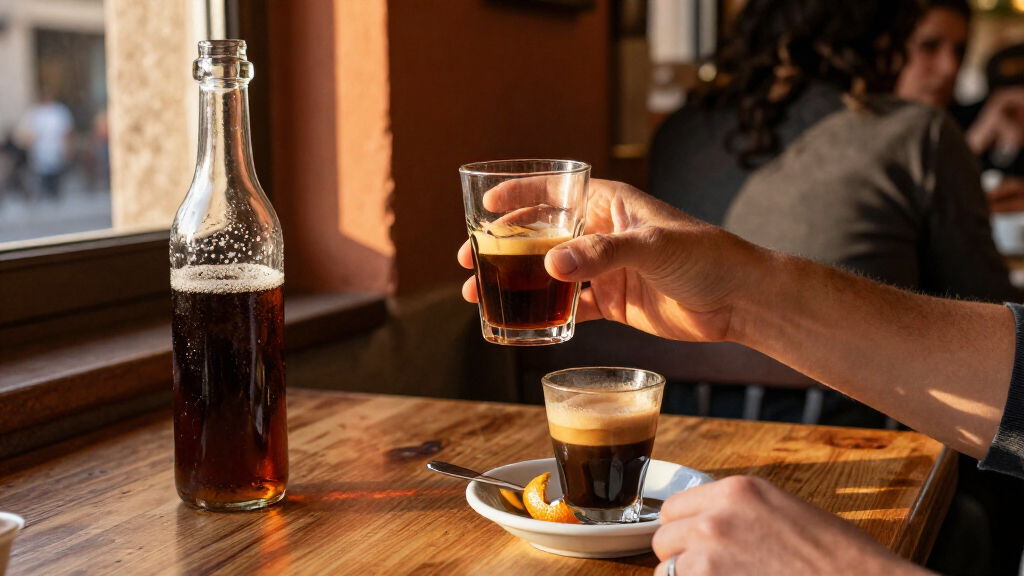
The guide suggests beginning with a small neat pour at room temperature to establish a flavor baseline, then comparing it with a chilled pour or one served over ice. Smelling before sipping can help identify citrus, mint, roots, spice, coffee or floral notes. A cordial glass or a small tumbler can work; the suggested starting amount for someone new to the category is an ounce or less. The drink can also be used in cocktails, though the guide’s first recommendation is to taste it on its own.
Amaro 101 Italy’s bittersweet after-dinner tradition
Amaro is a broad family of sweetened Italian bitter liqueurs served in a small pour after a meal. Each bottle has its own balance of botanicals, sweetness and bitterness.
One name, many flavors
Recipes vary, so color and broad regional labels cannot guarantee a bottle’s taste.
Bright and zesty
Citrus peel can lead the flavor; a starting point for fans of orange.
Mint to earthy
Botanicals such as mint, gentian and roots create varied herbal profiles.
Sweetness varies
Sweetness can soften bitterness, but some bottles remain intensely bitter.
Taste before you mix
A small neat pour helps set a baseline for the bottle.
ABV varies; the 20–35% range does not cover every bottle.
Try a modest pour at room temperature and notice citrus, herbs, roots or spice.
Then try it chilled or over ice to see how temperature and dilution change the aromas.
Choose by flavor clues
Start with tastes you already enjoy; descriptions are clues, not guarantees.
- Botanical or place names on the label
- A finish described as citrusy, minty, earthy or sharp
- A retailer’s guidance on the bottle’s profile
- Regional styles can vary from bottle to bottle
- Color does not reliably signal sweetness or strength
- Sweetness can make alcohol strength less obvious
A tradition, not a health claim
Digestivo means a drink served after a meal; the custom does not establish a medical benefit.
A Small Pour, Many Flavor Choices
For readers encountering amaro for the first time, the guide’s main point is that the category is broader than its name suggests. A person who expects every bottle to taste sharply bitter may miss sweeter, citrus-forward or minty examples. Conversely, a dark color or a regional label cannot reliably tell a shopper how sweet, bitter or strong a particular bottle will be.
The custom also gives readers a practical way to approach a drink they may see on restaurant menus or in shops: treat a digestivo as a small after-meal serving and a matter of taste, not as a remedy. The guide explicitly cautions against treating the tradition as medical advice. Because amaro contains alcohol—and its sweetness can make its strength less apparent—moderate serving and checking the ABV matter.
Trying a small pour neat before adding ice or mixing a cocktail can help a drinker decide whether a bottle suits their preferences. A citrus-led amaro might work for someone who likes orange peel, while an earthy or medicinally bitter style may appeal to someone who enjoys stronger herbal flavors. These are starting points, not guarantees about any specific bottle.
Products Worth Considering

Le Creuset Essential 10-Piece Ceramic Nonstick Cookware Set

De'Longhi COM630BK All-in-One Coffee and Espresso Machine

Ninja Luxe Café Mini Plus with AutoFroth – Bone & Champagne
As an affiliate, we earn on qualifying purchases.
A Tradition Without One Recipe
Digestivo is the Italian term used for a drink served after a meal. Amaro is one kind of drink associated with that custom, but the term covers products made with varied ingredients and approaches. The source guide links regional identity to local plants, food habits and producers’ choices while warning that broad geographic labels do not establish a single recipe.
In the guide’s examples, mountain styles may lean resinous and herbal, while southern styles may bring forward citrus, spice or local plants. Those descriptions are flavor clues rather than rules: two bottles from the same broad area can differ in sweetness, bitterness, color and alcohol strength. The source material does not provide a historical timeline for the tradition, so it supports a description of how amaro is served and explored, not a detailed account of its origins.
For choosing a bottle, the guide recommends starting with flavors a shopper already likes and looking for botanical or place names on the label. Asking a retailer about the finish—whether it is citrusy, minty, earthy or sharp—may be more useful than relying on color alone. A small local pour with a meal can also give travelers a direct sense of a producer’s style.
“Amaro (plural amari) is a category of Italian bitter liqueur traditionally enjoyed after a meal.”
— Mad Tasting guide
What Labels Cannot Tell You
The guide does not identify a specific amaro producer, bottle, launch or change to industry practice; its publication date is also not provided. It is a general consumer guide, not a report of a new policy or a documented shift in how Italians serve the drink. The source material does not supply independent expert interviews or research supporting health claims, and it advises readers not to treat the digestivo custom as medical advice.
Exact botanical blends may be private, and broad regional descriptions cannot establish what is in a particular bottle. The guide also does not provide a complete list of brands or confirm a standard serving size across producers and restaurants. Alcohol strength varies, so the stated 20–35% ABV range should not be taken as applying to every product; the bottle label is the relevant source for a specific pour.
How to Explore a Bottle
There is no announced next milestone tied to the guide. For readers who want to try amaro, its suggested next step is to choose a bottle by a flavor they already enjoy, check the ABV and label, and begin with a modest neat pour. They can then compare it with a chilled serving or a little ice to see how temperature and dilution affect the aromas.
For a meal pairing, the guide offers broad suggestions such as a citrus-forward style with fruit or a darker one with dark chocolate. These are starting points rather than fixed pairings. Serve responsibly, keep the bottle sealed and away from heat and direct sunlight, and remember that an after-dinner tradition is not a health claim.
Key Questions
What is amaro?
Amaro is a category of sweetened Italian bitter liqueurs made with varying combinations of botanicals. The name means “bitter,” but bottles can range from citrusy and relatively gentle to earthy, herbal or intensely bitter.
How is amaro traditionally served?
It is often served in a small pour after a meal, as a digestivo. The guide recommends trying a modest neat pour first; chilled or ice-served versions are also options, not universal requirements.
How strong is amaro?
The source guide says many bottles are around 20–35% ABV, while some fall outside that range. Check the individual bottle’s label, and remember that sweetness can make alcohol strength less obvious.
How should I choose a first bottle?
Start with flavors you already like: look for a citrus-forward profile if you enjoy orange peel, or ask a retailer about minty, earthy or sharper options. Regional labels can offer clues, but they do not guarantee a specific taste.
Does amaro aid digestion?
The source describes amaro as a traditional after-meal drink and cautions against treating that custom as medical advice. It does not establish a health benefit.
Source: Mad Tasting