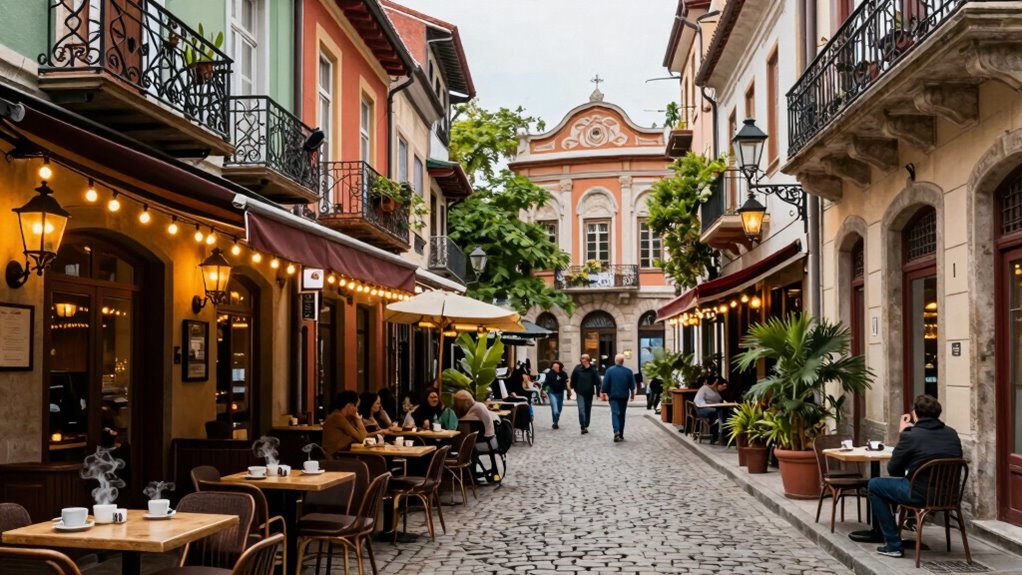

Cities develop famous café streets through careful urban planning that creates inviting, accessible public spaces, and blends historic charm with modern design. These streets often flourish thanks to rich cultural histories, where cafés become social hubs and symbols of local identity. Community involvement and smart development help sustain vibrant, authentic atmospheres that attract both locals and tourists. If you want to discover the key ingredients behind these iconic spots, there’s much more to explore.
Key Takeaways
- Strategic urban planning enhances street accessibility, safety, and aesthetic appeal, attracting foot traffic and fostering vibrant café scenes.
- Historical preservation combined with modern design creates unique, authentic environments that draw locals and tourists alike.
- Community engagement and cultural activities transform cafés into social and cultural hubs, strengthening city identity.
- Integration of heritage buildings with contemporary architecture maintains tradition while appealing to diverse demographics.
- Iconic café streets reflect a city’s creative spirit and urban development, boosting tourism and global recognition.
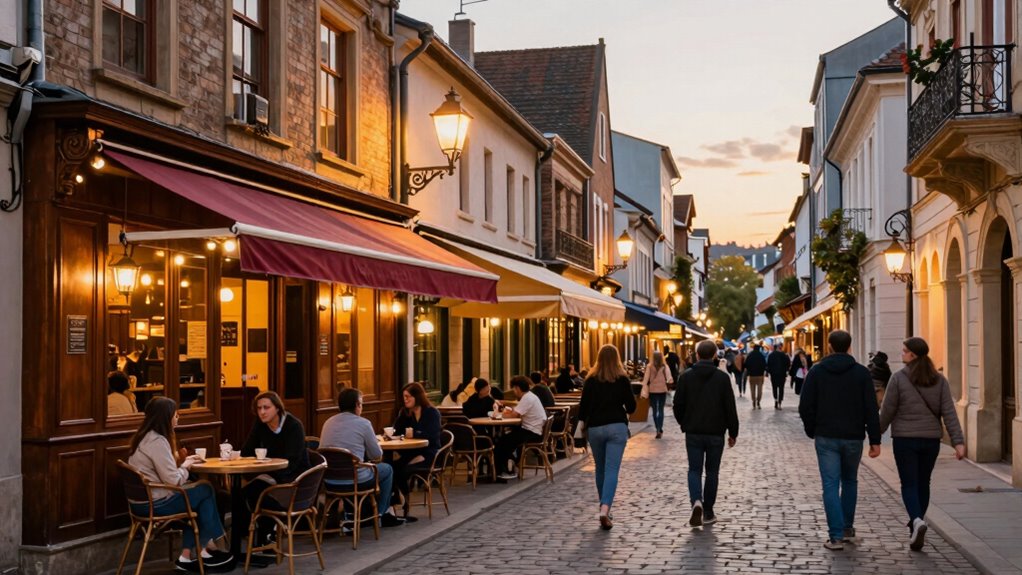
Many cities develop iconic café streets not by chance, but through a combination of history, culture, and strategic urban planning. These streets often become the heartbeat of a city’s coffee culture, where locals and visitors gather to share stories, relax, and enjoy a carefully curated atmosphere. Your experience on these streets isn’t just about the quality of the coffee; it’s about the ambiance, the people, and the history embedded in every corner. Urban development plays an essential role in shaping these vibrant hubs. City planners and developers recognize that a well-designed street, with accessible pathways, inviting façades, and public spaces, can transform a simple row of cafés into a cultural landmark. This deliberate planning encourages foot traffic, making the area lively and economically sustainable. When a city invests in its urban development with an eye toward cultural significance, it often lays the foundation for a thriving coffee scene that draws in both locals and tourists.
The origins of these famous café streets are rooted in their city’s historical and cultural evolution. Over time, certain neighborhoods attract artists, intellectuals, and entrepreneurs, who establish cafés that become more than just places to grab a drink—they become social institutions. As these spots grow popular, they foster a unique coffee culture that emphasizes local identity and innovation. You’ll notice that in these areas, cafés often serve as gathering spots for community events or creative endeavors, reinforcing their importance within the city’s fabric. The strategic placement of these streets ensures they’re accessible, safe, and appealing, further fueling their popularity. Urban development initiatives that prioritize walkability, public transportation access, and diverse commercial offerings tend to elevate these streets into iconic destinations. Additionally, the integration of historic buildings with modern design elements often enhances their appeal and preserves the sense of continuity with the past. This blend of tradition and modernity is vital for maintaining the cultural appeal of these streets over time. A focus on urban planning that considers both heritage preservation and contemporary needs is crucial for sustaining their vibrant character. Moreover, successful cafes often leverage community engagement to strengthen their role as cultural hubs and maintain their relevance amid changing trends.
Furthermore, the success of these café streets relies heavily on a city’s ability to blend tradition with modernity. Many of the most famous streets feature historic buildings repurposed into trendy cafés, creating a sense of continuity with the past while embracing contemporary coffee culture. This balance attracts a wide demographic—locals seeking familiarity and tourists eager for an authentic experience. As a result, these streets become symbols of a city’s identity, showcasing its history, creativity, and progressive urban planning. Ultimately, the convergence of a rich coffee culture, thoughtful urban development, and a vibrant community spirit transforms a simple street into a globally recognized hub of culture and conversation.
As an affiliate, we earn on qualifying purchases.
Frequently Asked Questions
How Do Café Streets Impact Local Economies?
Café streets boost your local economy by attracting tourists and encouraging longer stays, which increases spending. They also enhance the cultural influence of your city, making it more appealing and vibrant. This cultural appeal draws in more visitors, supporting economic sustainability over time. As you invest in cozy cafés and lively outdoor spaces, you create a thriving hub that benefits local businesses and fosters a sense of community.
Are Café Streets Popular Among Tourists or Locals?
You’ll find café streets are popular among both tourists and locals. For example, in Milan, the vibrant café culture attracts international visitors and residents alike, showcasing the city’s cultural influence and enhancing urban aesthetics. Locals enjoy the social atmosphere, while tourists seek authentic experiences. This blend creates a lively, diverse environment, making café streets a beloved part of city life and a must-visit destination for all.
What Are the Environmental Effects of Busy Café Streets?
You might notice that busy café streets can increase noise pollution, making the area less peaceful and potentially affecting residents’ health. However, they can also promote urban greenery if cafes incorporate plants and trees, improving air quality and aesthetics. While these streets attract visitors and boost local economies, managing noise levels and encouraging green spaces are vital to minimize environmental impacts and create a more sustainable, enjoyable environment for everyone.
How Do City Planners Decide Where to Develop Café Districts?
City planners decide where to develop café districts by analyzing urban zoning laws and the area’s accessibility. They consider cultural influences that attract both locals and tourists, ensuring the district fits with the city’s identity. You’ll find planners also evaluate foot traffic, proximity to public transportation, and nearby attractions, aiming to create vibrant, walkable spaces. This strategic approach helps transform certain neighborhoods into lively, popular café streets that boost the local economy and culture.
Do All Cities With Famous Café Streets Have Similar Histories?
You’ll find that not all cities with famous café streets share similar histories. Coincidences often play a role, where cultural significance and historical origins intertwine unexpectedly. Some cities’ café districts emerge from colonial influences, while others develop through artistic movements or social hubs. These unique origins shape their character, making each café street a reflection of its city’s distinct history and cultural evolution, rather than a uniform pattern.
Conclusion
So, next time you stroll down a city’s famous café street, remember it’s no accident—it’s a carefully brewed blend of history, culture, and community. These streets are like magnets, pulling people in with their charm and stories, turning ordinary corners into vibrant hubs of life. Just like a perfectly brewed cup of coffee, they remind us that the magic happens when people, place, and passion come together—creating a spot that feels like home, no matter where you are.