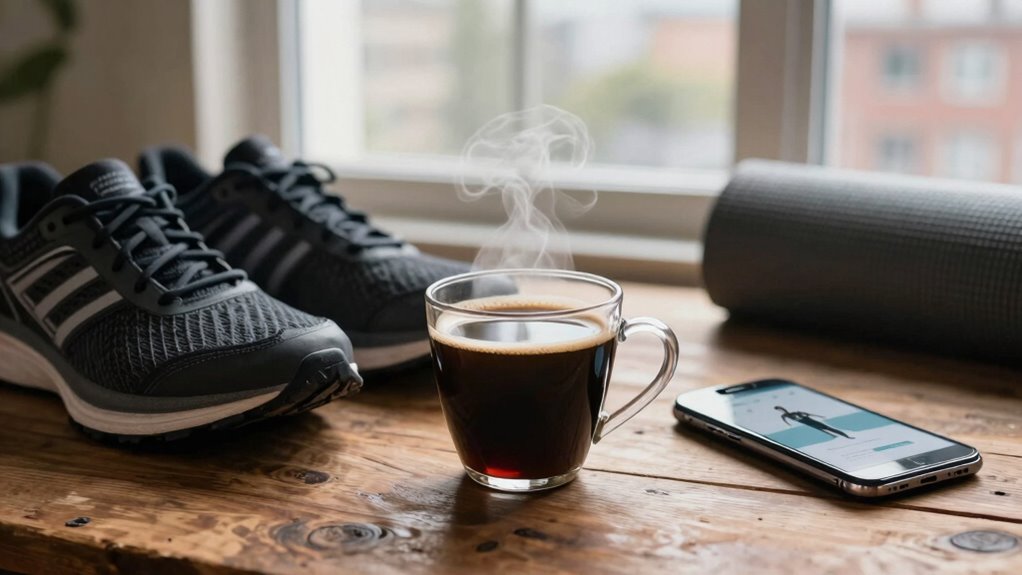

If you want to boost endurance and focus during your workout, drinking coffee about 30-60 minutes beforehand can give you maximum stamina and alertness. For days when you need a mental edge or increased productivity at work, having coffee in the morning helps sharpen concentration and mood. The best approach depends on your daily goals—whether prioritizing physical performance or mental clarity. Keep exploring to discover how timing coffee can work best for you.
Key Takeaways
- Coffee before workouts enhances stamina and focus, especially when timed 30-60 minutes prior for peak caffeine effects.
- Drinking coffee before work boosts mental clarity and mood, ideal for mornings requiring high concentration.
- The best timing depends on daily goals: pre-workout for physical performance, pre-work for mental alertness.
- Adjust caffeine intake based on individual sensitivity and metabolic rate to avoid jitters or anxiety.
- Experimenting with timing and dosage helps determine whether coffee benefits your workout or workday more.
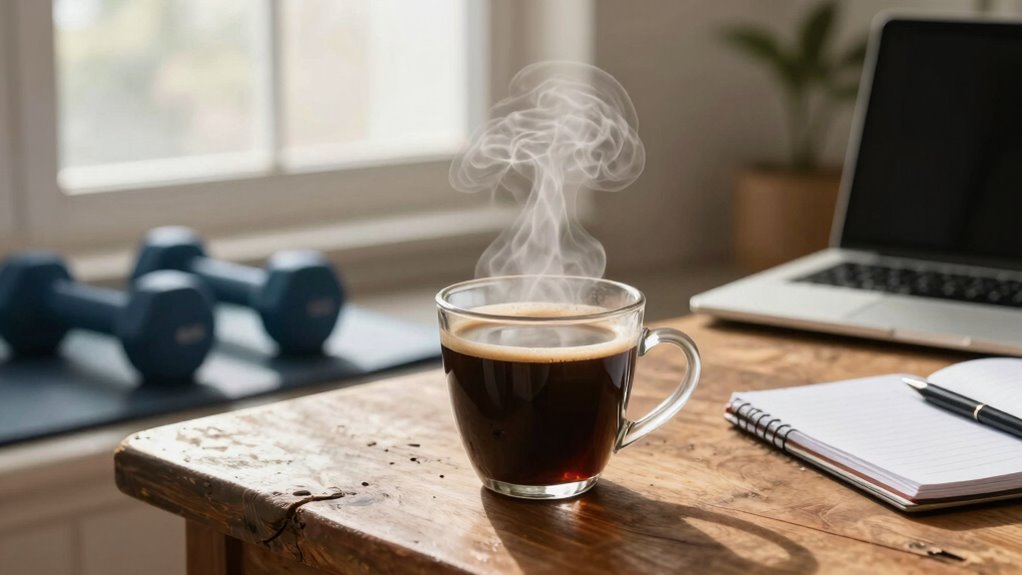
Many people wonder whether drinking coffee before a workout or before heading to work offers the best benefits. The answer depends on your goals and your daily rhythm, but understanding how caffeine works can guide your decision. When you consume coffee, caffeine enters your bloodstream and is metabolized by your liver, a process known as caffeine metabolism. This process influences how quickly caffeine affects you and how long its effects last. If you’re aiming to boost exercise performance, timing your coffee intake to optimize caffeine metabolism can give you an edge. Drinking coffee before a workout can enhance alertness, reduce perceived exertion, and increase stamina, all thanks to caffeine’s ability to block adenosine receptors in your brain. This leads to a heightened sense of focus and reduced fatigue, making it easier to push through tough workouts.
Timing coffee intake before exercise boosts alertness, stamina, and focus by blocking fatigue-inducing adenosine receptors.
On the other hand, if your goal is simply to wake up and get moving for your workday, having coffee beforehand can improve your mental clarity and mood, setting a productive tone for the day. However, the benefits of caffeine on exercise performance tend to be more immediate and pronounced when you consume it about 30 to 60 minutes before your workout, aligning with peak caffeine levels in your blood. This timing allows your body enough time to metabolize caffeine and experience its full performance-enhancing effects. Additionally, timing and dosage play crucial roles in maximizing caffeine’s benefits while minimizing side effects. Understanding caffeine metabolism can help you better plan your coffee intake for different activities.
It’s also worth noting that exercise performance isn’t just about stamina; caffeine can improve reaction times and focus, which are beneficial whether you’re in the gym or at your desk. If you tend to feel jittery or anxious after coffee, you might want to limit intake or choose a smaller dose before physical activity. Conversely, if you need a mental boost for work, a cup of coffee in the morning can sharpen your concentration and help you tackle complex tasks. Being aware of your own caffeine sensitivity can help you customize your intake for optimal results. Moreover, understanding your body’s metabolic rate can further refine the ideal timing and dosage, enhancing the benefits of caffeine tailored to your personal physiology. Additionally, knowing how caffeine interacts with other substances can influence your overall response and should be considered when planning your intake.
Ultimately, the better use of coffee depends on your day’s priorities. For physical performance, timing your coffee intake about an hour before exercise maximizes benefits through caffeine metabolism. For mental alertness and productivity, having coffee before work can help you start your day on a focused note. Experimenting with timing and dosage can help you find what works best, ensuring you get the most out of your coffee, whether you’re working out or working.
As an affiliate, we earn on qualifying purchases.
Frequently Asked Questions
Does Coffee Affect Workout Performance Differently in the Morning Versus Evening?
Yes, coffee affects your workout performance differently in the morning versus evening. In the morning, it boosts your alertness, helping you wake up and energize for exercise. In the evening, it can improve focus during workouts, but may interfere with sleep afterward. You might find that morning coffee enhances your alertness, while evening coffee sharpens your focus, though timing is key to avoid disrupting your sleep cycle.
Can Coffee Replace a Pre-Workout Meal for Energy?
Coffee can’t fully replace pre-workout nutrition for sustained energy, but it can give you a boost if your meal is lacking. Relying solely on coffee for energy isn’t ideal because pre workout nutrition provides essential carbs and protein, fueling your muscles. Consider coffee timing to maximize its benefits—having it about 30-60 minutes before your workout can enhance focus and performance without replacing proper nutrition.
How Does Caffeine Impact Hydration During Workouts?
Did you know caffeine is absorbed into your bloodstream within 45 minutes? It impacts hydration levels during workouts because it’s a diuretic, which can cause you to lose fluids. However, moderate caffeine intake doesn’t considerably dehydrate you if you stay well-hydrated. To maximize benefits, balance your caffeine consumption with water, ensuring your hydration levels stay high and caffeine absorption doesn’t lead to dehydration during your workout.
Is Decaffeinated Coffee an Effective Alternative Before Workouts?
Decaffeinated coffee can be a good alternative before workouts if you’re sensitive to caffeine or want to avoid its effects. The decaffeinated benefits include hydration and antioxidants without the jitteriness or sleep issues. As a coffee alternative, it provides the familiar taste and some hydration, making it suitable when you want a mild boost. Keep in mind, it doesn’t offer the same energy spike as regular coffee, but it’s still a helpful option.
Are There Specific Coffee Types Better Suited for Workouts or Work?
You might find that a bold, dark roast boosts your workout energy, thanks to its higher caffeine content and robust flavor. For work, a lighter brew with nuanced flavors from pour-over or drip brewing can help you stay alert without jitters. Experiment with different coffee flavors and brewing methods to discover what energizes you best—whether you’re powering through a workout or tackling your daily tasks.
Conclusion
Ultimately, whether you choose coffee before workouts or before work depends on your goals and day. The common belief that caffeine boosts performance or alertness holds truth, but it’s not universal. Sometimes, it’s about listening to your body and timing your coffee for maximum benefit. Remember, the real power lies in moderation and understanding your own response. The key is to find what fuels your day best, turning simple coffee into a smarter, personalized boost.