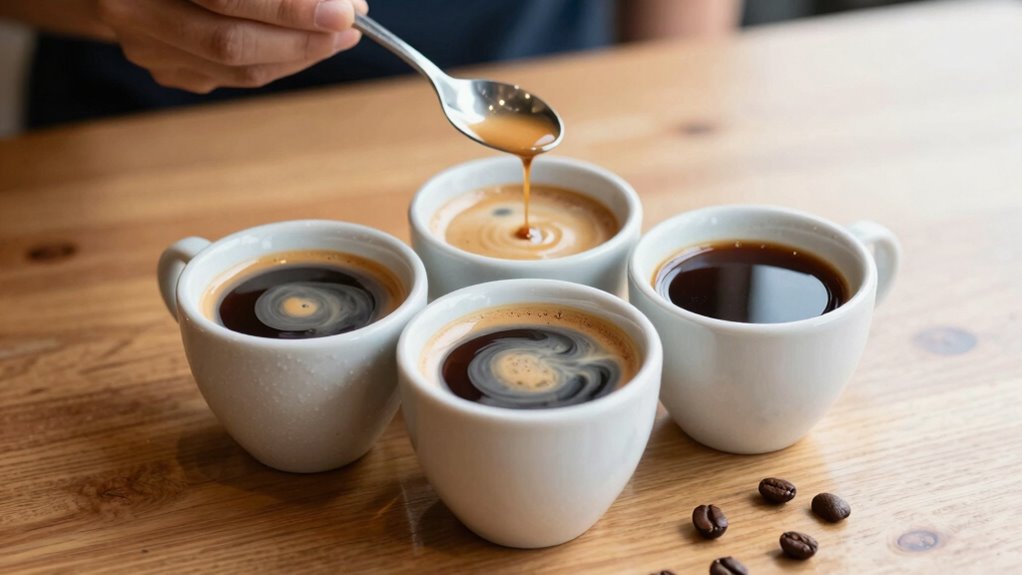

Triangulation tests are a fun and simple way to sharpen your coffee tasting skills. By identifying the unique flavor profile of one sample among two identical ones, you challenge your palate and develop a keener sense of nuance. These exercises improve your ability to detect flavors like acidity, sweetness, or chocolate, making you more confident in your tasting abilities. Keep exploring, and you’ll discover even more ways to enhance your coffee journey.

Get coffee and tea gear delivered free with Prime
- Fast, free delivery on millions of items
- Prime Video, Amazon Music and more included
- Member-only deals all year
Key Takeaways
- Triangulation tests challenge you to distinguish the unique flavor sample among two identical ones, making tasting fun and engaging.
- They improve sensory skills by enhancing detection of subtle flavor notes like acidity, sweetness, and aftertaste.
- These exercises are portable, allowing you to practice anywhere—home, cafes, or tasting rooms.
- Variations such as temperature changes and tasting order keep the exercises interesting and help develop nuanced palate awareness.
- Regular triangulation practice builds confidence, sharpens discrimination, and deepens appreciation for coffee’s complexity.

If you’ve ever struggled to distinguish subtle coffee flavors, triangulation tests offer a fun and effective way to sharpen your palate. These tests challenge you to identify the unique coffee flavor profiles within a set of three samples, where two are identical, and one is different. By practicing this method, you train your taste buds to notice nuanced differences, enhancing your overall appreciation for coffee. The beauty of triangulation tests lies in their simplicity and adaptability—they can be performed with various tasting technique variations, making them suitable for both beginners and seasoned coffee enthusiasts.
Triangulation tests sharpen your coffee palate through simple, adaptable flavor identification exercises suitable for all enthusiasts.
When you engage in triangulation testing, you start to develop a more refined sense of flavor. You learn to pick up on subtle notes like acidity, body, sweetness, and aftertaste that might otherwise go unnoticed. As you repeat these exercises, your ability to differentiate between light roasts and dark roasts, or identify specific flavor notes like citrus or chocolate, improves markedly. This heightened awareness directly influences your coffee tasting experience, allowing you to better understand and appreciate the complexities of each brew. Plus, these tests are portable and can be done anywhere, whether you’re at home or in a tasting room. Engaging in sensory training like triangulation tests also helps to foster a deeper connection with the nuances of coffee, supporting more mindful tasting practices. Developing your sensory acuity can further enhance your ability to detect subtle flavor differences. Incorporating structured tasting exercises can boost your progress and keep your palate engaged.
Adding variety to your testing methods, such as adjusting the temperature or focusing on aroma evaluation, can further enhance your sensory development. You can also explore different tasting techniques to challenge your palate in new ways, making the process more engaging and insightful. Tasting technique variations can make triangulation tests even more engaging and effective. For example, you might change the order in which you sample the coffees or adjust the temperature to see how flavors evolve. Some enthusiasts incorporate aroma evaluation before tasting to deepen their perception of flavor profiles. Others might focus on specific elements, such as acidity or sweetness, during each test. These variations keep the exercise fresh and help you identify which sensory cues matter most to you. They also encourage you to approach coffee tasting with a more analytical mindset, sharpening your ability to distinguish between subtle differences.
As you continue practicing triangulation tests, you’ll notice your confidence growing. You may start to recognize particular flavor profiles more quickly or accurately, making your coffee experiences more satisfying. Over time, this skill can even influence your choices when selecting beans or brewing methods, guiding you toward coffees that suit your taste preferences. Ultimately, triangulation tests aren’t just a fun way to train your coffee tongue—they’re a practical tool that elevates your understanding of coffee’s complexity and enhances every cup you enjoy. With consistent practice and a willingness to experiment with different tasting technique variations, you’ll develop a sharper, more discerning palate that enriches your entire coffee journey.
As an affiliate, we earn on qualifying purchases.
Frequently Asked Questions
Can Triangulation Tests Improve My Overall Coffee Tasting Skills?
Yes, triangulation tests can improve your overall coffee tasting skills. They help you develop better sensory memory by challenging you to distinguish subtle flavor differences, enhancing your ability to recognize consistency in flavor profiles. As you practice, you’ll become more confident in identifying nuances, leading to improved flavor consistency in your brewing. This fun method sharpens your palate and deepens your appreciation for coffee’s complex flavors.
How Often Should I Perform Triangulation Exercises?
You should perform triangulation exercises a few times a week to boost your sensory memory and improve tasting accuracy. Regular practice helps reinforce flavor distinctions and sharpens your palate. By making these exercises a consistent habit, you’ll notice better identification of subtle notes and more confident tasting. Keep it fun and engaging, and over time, your sensory memory will strengthen, leading to more precise and enjoyable coffee tasting experiences.
Are Triangulation Tests Suitable for Beginner Coffee Tasters?
Yes, triangulation tests are suitable for beginner coffee tasters. They help build your confidence by improving flavor recognition through fun, engaging exercises. As a beginner, these tests challenge you to discern subtle differences, gradually sharpening your palate. With consistent practice, you’ll notice increased confidence in identifying coffee flavors, making your tasting experience more enjoyable and insightful. Keep it light and enjoy the process!
What Equipment or Tools Are Needed for Triangulation Tasting?
You’ll need a few simple tools for triangulation tasting to enhance your coffee flavor detection and improve tasting accuracy. Grab three small cups or taste vials, a neutral spoon or stirrer for sampling, and a notebook for notes. Using clean, consistent equipment guarantees your taste comparisons are reliable. These tools help you focus on flavor differences, making your training enjoyable and effective as you sharpen your palate.
How Do Triangulation Tests Differ From Other Coffee Tasting Methods?
You might find triangulation tests more engaging because they sharpen your sensory accuracy through flavor comparison. Unlike other methods that focus on identifying specific flavors or aromas, triangulation challenges you to discern the odd one out among three samples. This method pushes your palate’s precision, making it a fun, dynamic way to enhance your coffee tasting skills and truly understand subtle flavor differences.
Conclusion
So, next time you try a triangulation test, remember it’s more than just fun—it’s a clever way to sharpen your palate. Some say it helps train your tongue by challenging your perception and revealing subtle flavors. While the science isn’t conclusive, many coffee lovers swear it boosts their tasting skills. Give it a shot, trust your senses, and see if triangulation transforms your coffee experience into a flavorful adventure. Who knew training your palate could be so enjoyable?
Halloween Picks
halloween
As an affiliate, we earn on qualifying purchases.