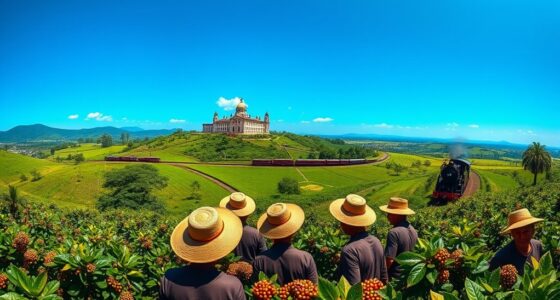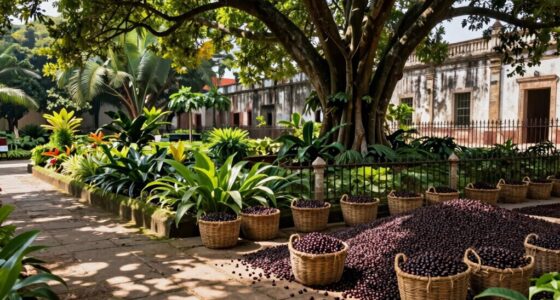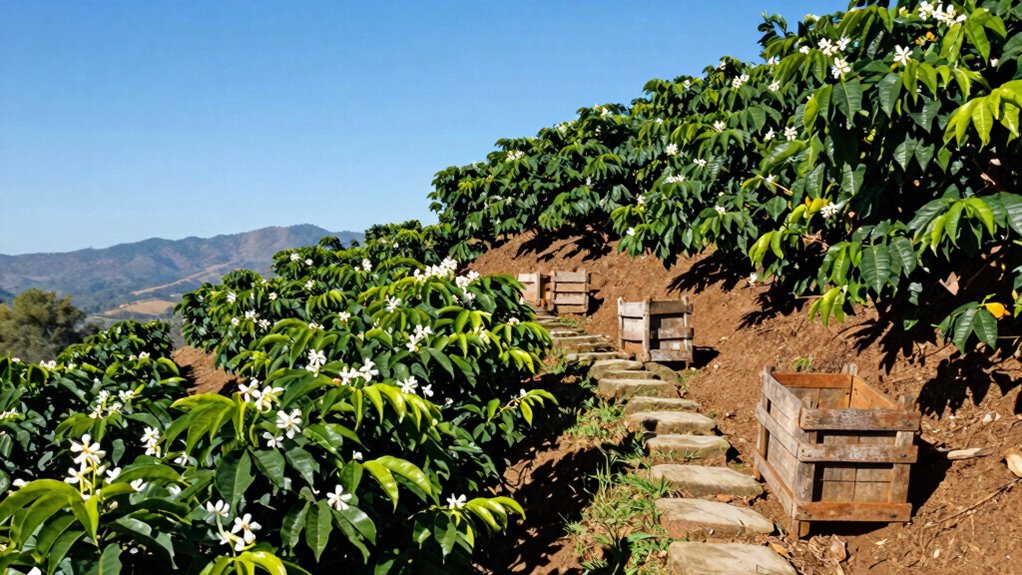

You’ll find that the Caribbean’s first coffee farms, established by European colonizers before the region became famous for beaches, played a key role in shaping global coffee trade. These farms introduced European cultivation techniques adapted to local conditions, creating unique flavors. Driven by enslaved labor, the industry connected Caribbean ports to international markets and influenced coffee traditions worldwide. To uncover how these early farms transformed global habits and economies, explore the full story.
Open a free Amazon Business account
Business pricing, bulk buying and tax-exempt orders.
As an affiliate, we earn on qualifying purchases.
Key Takeaways
- Early Caribbean coffee farms were established by European colonizers before the region gained fame for its beaches and culture.
- These farms introduced coffee cultivation techniques adapted to Caribbean climate and soil conditions.
- Caribbean coffee became a vital part of colonial trade, connecting the region to global markets.
- The industry relied heavily on enslaved labor, shaping social and economic structures in the Caribbean.
- Modern Caribbean coffee continues to reflect its colonial heritage while embracing sustainable and innovative practices.
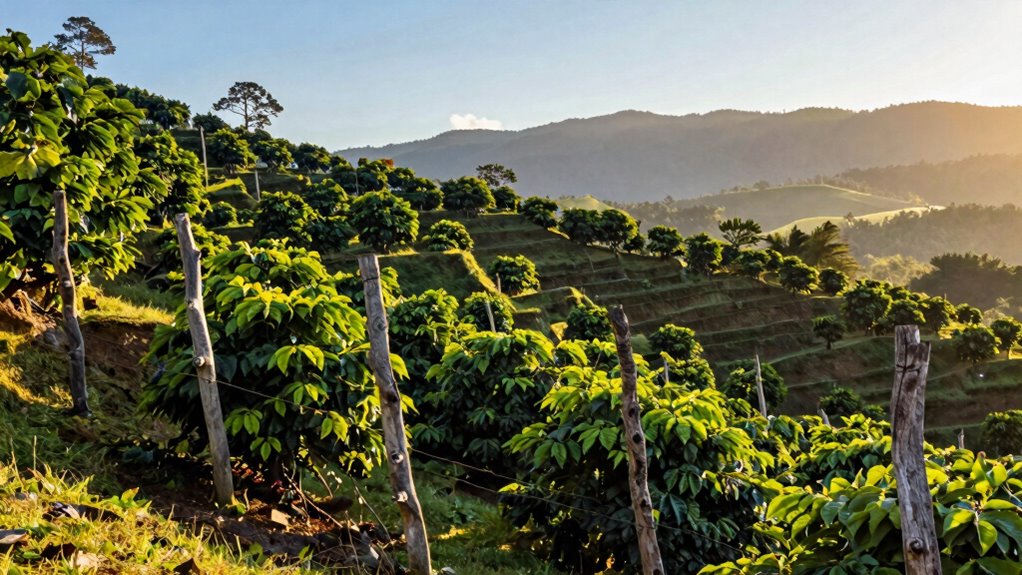
Long before the Caribbean became known for its stunning beaches and vibrant culture, it also played a role in the history of coffee cultivation. You might not realize it, but the region’s early coffee farms set the stage for a global industry that still thrives today. When Europeans arrived, they brought with them not only their ships and ambitions but also seeds of coffee plants, which soon took root in the Caribbean’s fertile soils. This colonial influence introduced coffee cultivation to the islands, transforming them into important producers in the New World. As colonizers established plantations, they often relied on enslaved labor, shaping the social and economic fabric of the islands for generations. Coffee became more than just a crop; it was a symbol of colonial enterprise and economic opportunity, fueling the growth of port towns and connecting the Caribbean to international markets.
You might notice how, during this period, coffee farming was heavily influenced by colonial powers that sought to replicate successful cultivation methods from other parts of the world. The Europeans brought their knowledge of planting, harvesting, and processing coffee, adapting techniques to fit the Caribbean’s specific climates. This colonial influence made the Caribbean a crucial part of the wider coffee trade, with farms producing beans that would eventually reach Europe, North America, and beyond. You could say that the early Caribbean coffee farms were a fusion of local conditions and European expertise, creating a unique flavor profile and production style that still echoes today. The legacy of these pioneering efforts continues to influence modern coffee cultivation in the region, preserving a colonial heritage that remains integral to Caribbean coffee identity. Additionally, the adaptation of sustainable farming practices is increasingly shaping the future of the region’s coffee industry.
As you explore the history of these farms, you’ll see how they laid the groundwork for the region’s enduring reputation in coffee cultivation. The legacy of colonial influence is embedded in the very soil of these farms, in the varieties of coffee grown, and in the cultural practices that persisted through centuries of change. Despite the shifts in political power and economic focus, some of the original plantations continue to operate, honoring their roots while adapting to modern demands. These farms often serve as living museums, preserving traditional techniques that have been passed down through generations. The story of the Caribbean’s first coffee farms isn’t just about agriculture; it’s about a complex history of influence, resilience, and transformation. When you taste Caribbean coffee today, you’re experiencing a centuries-old tradition that started with colonial ambitions but has grown into a crucial symbol of rich, diverse flavors.
As an affiliate, we earn on qualifying purchases.
Frequently Asked Questions
How Did Coffee Cultivation Impact Local Caribbean Economies Historically?
You see, coffee cultivation historically boosted local Caribbean economies by creating new trade routes and expanding export opportunities. As coffee became a valuable commodity, it increased income for farmers and merchants, fostering economic growth. This crop connected the Caribbean to international markets, attracting investments and developing infrastructure. The rise of coffee trade transformed local economies from subsistence farming to thriving commercial hubs, shaping their economic landscape for years to come.
What Unique Coffee Varieties Originated From the Caribbean’s First Farms?
You discover that the Caribbean’s first farms cultivated unique coffee bean varieties like Jamaica Blue Mountain and Jamaican High Mountain, renowned for their smooth flavor and vibrant aroma. These varieties resulted from plantation innovations that optimized climate and soil conditions, creating distinctive profiles. These pioneering efforts not only shaped regional coffee identity but also influenced global markets, establishing the Caribbean as a significant player in coffee cultivation and setting standards for quality and flavor.
How Did Early Coffee Farming Influence Caribbean Social Structures?
Early coffee farming in the Caribbean shaped social hierarchies and cultural traditions. You see, it established wealth for plantation owners and created a distinct class system, reinforcing social divides. Coffeehouses became social hubs, influencing cultural practices and community interactions. As a result, these farms not only transformed local economies but also cemented social structures and cultural norms, impacting Caribbean society for generations to come.
Were There Any Environmental Challenges Faced by the Original Coffee Plantations?
Like a delicate dance with nature, the original coffee plantations faced harsh environmental challenges. You’d notice climate adaptation becoming essential as unpredictable weather threatened crops, while soil degradation risked turning fertile land into barren wastelands. Constant effort was needed to protect the land’s vitality, employing innovative techniques to sustain these early farms. Without such resilience, the lush landscapes that birthed Caribbean coffee might have withered into a distant memory.
How Did Caribbean Coffee Farms Influence Global Coffee Trade?
Caribbean coffee farms revolutionized global trade by establishing early trade networks that spread coffee cultivation worldwide. You see, their innovative practices and high-quality beans attracted international markets, boosting coffee’s popularity. This influence helped shape modern global coffee trade, making the Caribbean a essential hub for coffee export. As a result, coffee cultivation expanded, connecting distant regions and creating a thriving international industry that persists today.
Conclusion
Your journey through the Caribbean’s coffee history reveals a tapestry woven with resilience and innovation. Like seeds planted in fertile ground, these first farms sprouted a legacy that spread far beyond island shores, reshaping global coffee culture. Remember, each sip you take is a taste of history—a gentle reminder that even the smallest beginnings can ripple into waves of change, transforming the world one cup at a time.
Fall Picks
fall essentials
As an affiliate, we earn on qualifying purchases.