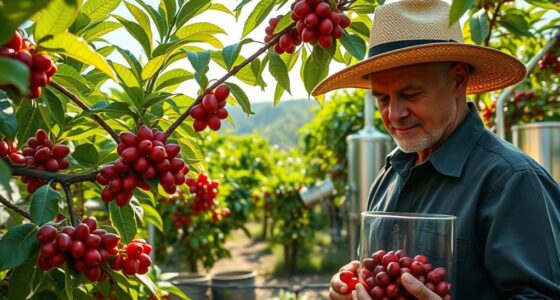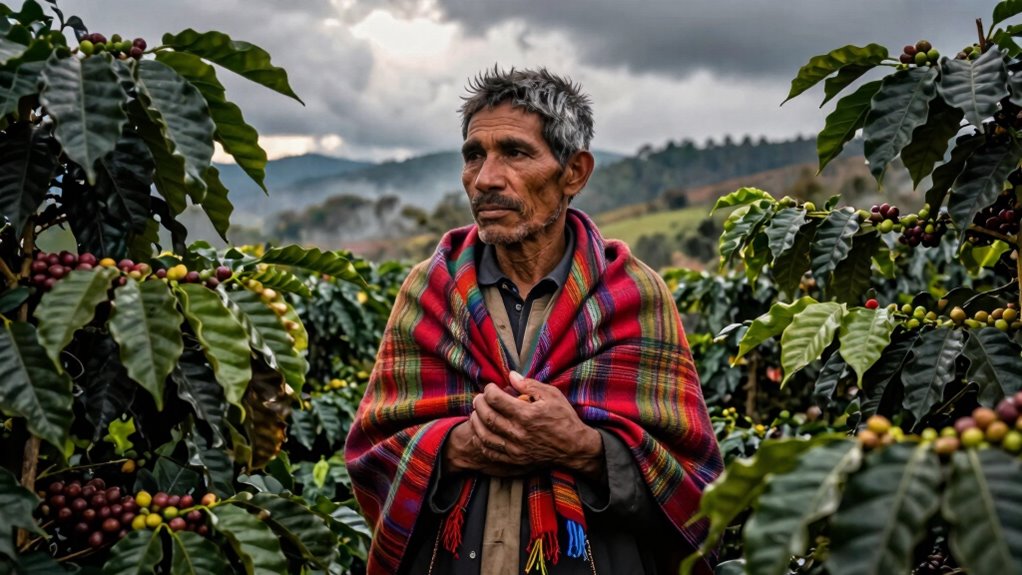

Climate change forces coffee communities to face tough choices, often leading families to migrate in search of better opportunities. As traditional farms become unreliable, people leave their land, disrupting social ties and cultural traditions. Remaining communities work to adapt through sustainable practices and collective efforts, trying to build resilience. The human side of this change is emotional and challenging but also sparks innovation. Keep exploring to understand how these shifts are shaping lives behind your daily coffee cup.
Key Takeaways
- Climate change prompts migration, disrupting traditional coffee communities and causing social and economic upheaval.
- Remaining farmers adapt through sustainable practices, diversification, and collective efforts to build resilience.
- Migration affects social ties, erodes cultural traditions, but can also bring new skills and innovative solutions.
- Community-based strategies, education, and resource sharing are vital for enhancing resilience against climate impacts.
- Addressing human dimensions of climate migration emphasizes emotional, social, and cultural challenges faced by coffee communities.
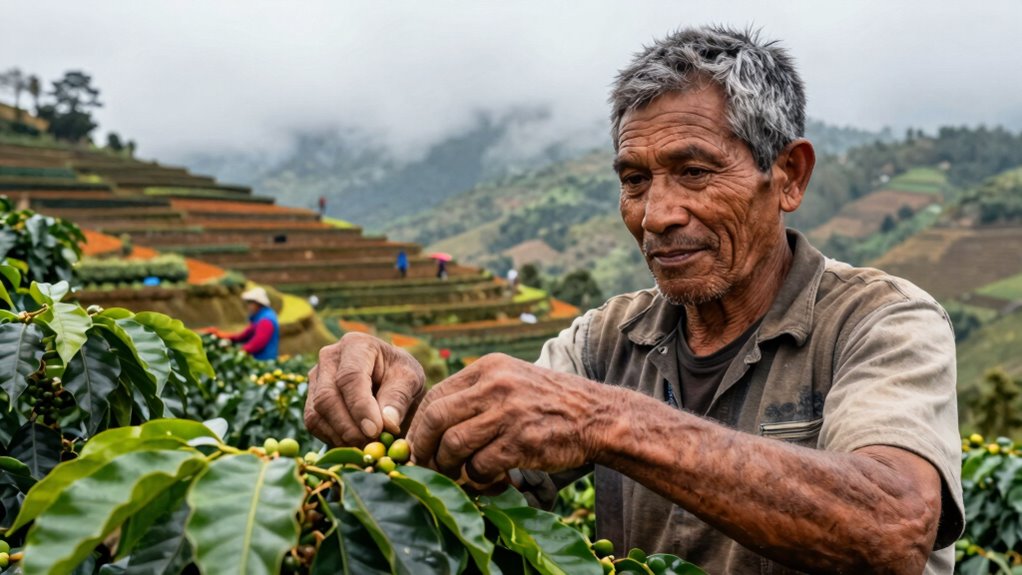
Climate change is rapidly transforming coffee-growing regions, forcing communities to confront the reality of migration and economic upheaval. As temperatures rise and unpredictable weather patterns become the norm, traditional farming practices are no longer reliable. You see, many farmers are turning to sustainable farming methods to adapt to these changes. By implementing practices that conserve water, improve soil health, and reduce chemical use, communities can better withstand the stresses brought on by climate shifts. Sustainable farming isn’t just about protecting crops; it’s about ensuring the long-term survival of the community and maintaining the local economy. When farmers adopt these methods, they strengthen community resilience, making it easier to face uncertain futures and share resources or knowledge.
Sustainable farming enhances community resilience amid climate change and secures long-term coffee cultivation and local economies.
However, despite these efforts, some communities find that migration becomes inevitable. You might notice families moving to cities or other regions in search of better opportunities, leaving behind their ancestral lands. This migration isn’t just about seeking new jobs; it’s often driven by the inability to sustain traditional coffee farms under changing climate conditions. The loss of land and livelihood can fracture social ties and erode cultural traditions, leaving communities vulnerable. Yet, migration also opens doors for new skills and ideas, which can eventually lead to innovative solutions when communities regroup elsewhere. Still, the emotional toll of leaving familiar landscapes and community networks weighs heavily on those who stay.
For the communities that remain, building resilience becomes a vital part of their response. Local cooperatives and organizations are increasingly focusing on education and resource sharing, helping farmers adopt climate-smart practices. You can see efforts to diversify crops or integrate agroforestry systems, which provide shade and reduce temperature stress on coffee plants. These strategies help buffer the impacts of climate change, but they also require collective effort and knowledge sharing. Community resilience isn’t just about individual farmers; it’s about creating a support system that sustains everyone through these turbulent times. Embracing biodiversity and diverse farming systems can enhance ecological stability and boost resilience. Additionally, incorporating sustainable farming practices that conserve resources and promote soil health can further strengthen their adaptive capacity. Promoting climate-smart agriculture is essential for long-term sustainability. When communities work together to implement sustainable farming techniques, they strengthen their ability to adapt, survive, and preserve their cultural identity despite the upheaval caused by climate change. Recognizing the importance of climate resilience can help communities develop more effective strategies for facing future challenges. Moreover, fostering a sense of community cohesion can significantly improve collective action and support during these challenging times.
sustainable coffee farming tools
As an affiliate, we earn on qualifying purchases.
As an affiliate, we earn on qualifying purchases.
Frequently Asked Questions
How Do Coffee Farmers Adapt to Changing Climate Conditions?
You adapt to changing climate conditions by practicing farm diversification, planting a variety of crops to reduce risks and increase resilience. You also implement water management techniques, such as efficient irrigation systems and rainwater harvesting, to optimize water use during droughts or irregular rainfall. These strategies help you maintain coffee production despite climate shifts, ensuring your livelihood and the sustainability of your community.
What Support Systems Exist for Climate-Affected Coffee Communities?
You can find support systems like community resilience initiatives and policy interventions that help climate-affected coffee communities. These programs offer training, financial aid, and access to new farming techniques. Governments and NGOs work together to strengthen local capacities, ensuring farmers adapt to climate changes. By participating in these efforts, you can help bolster your community’s ability to withstand climate impacts and secure a sustainable future for coffee production.
Are There Specific Regions More Vulnerable to Climate Migration?
Isn’t it obvious that vulnerable zones and regional disparities carve out the most perilous paths for climate migration? You’ll find that low-altitude coastal areas and arid regions are especially susceptible, as they face rising sea levels and droughts. These regions, often economically fragile, become hotspots of climate vulnerability, forcing communities to migrate. Your awareness of these vulnerable zones highlights where intervention is most desperately needed to prevent crisis.
How Does Climate Migration Impact Global Coffee Prices?
Climate migration impacts global coffee prices by disrupting supply chains and reducing coffee production in vulnerable regions. You’ll notice increased market volatility and economic implications as supplies become scarce and prices fluctuate unpredictably. When coffee communities face migration due to climate change, it affects the stability of the global coffee market, making prices less predictable and causing economic uncertainty for producers, traders, and consumers alike.
What Are Long-Term Solutions for Sustainable Coffee Farming Amidst Climate Change?
You should promote genetic diversification and adopt agroforestry practices to guarantee sustainable coffee farming amid climate change. Genetic diversification helps create resilient coffee varieties that withstand changing conditions, while agroforestry improves soil health, conserves water, and provides shade, reducing heat stress. These long-term solutions enhance ecosystem stability and crop resilience, allowing you to adapt to climate shifts and secure coffee production for future generations effectively.
Conclusion
As you witness the struggles of coffee communities facing climate change, remember that your actions ripple far beyond your awareness. Every choice you make can either help preserve these vibrant lives or contribute to their decline. The human side of climate migration isn’t just a story; it’s a warning louder than a thunderstorm. If you don’t act now, the future of countless communities could vanish faster than morning dew—gone before you even realize it’s missing.