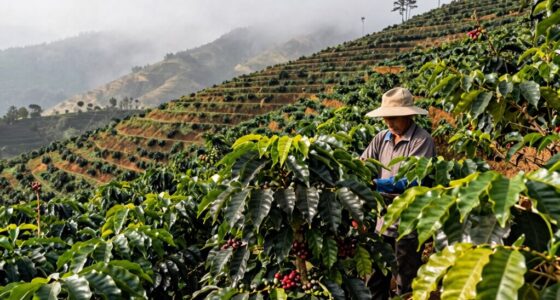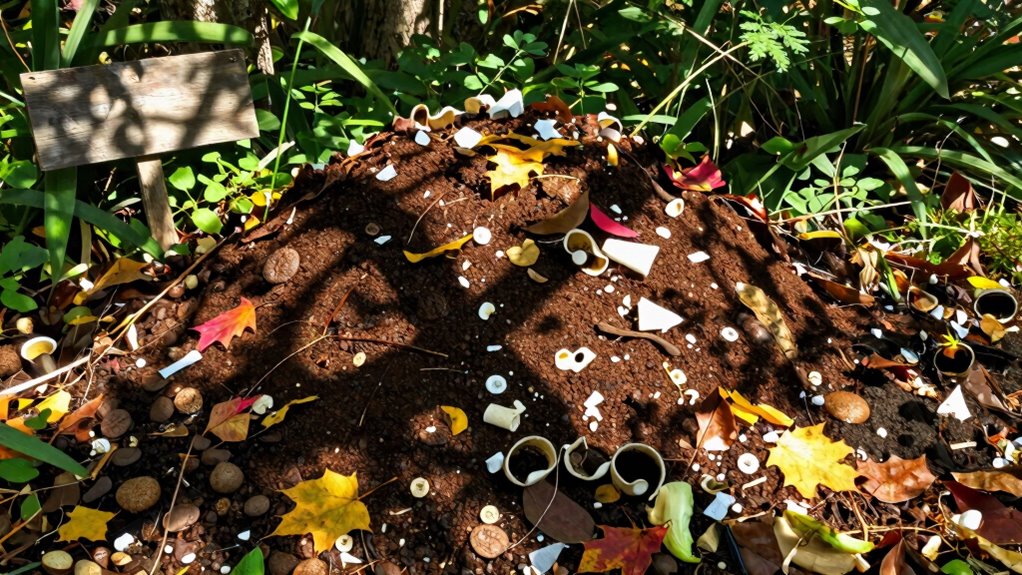

When you discard a coffee cup, it typically ends up in a landfill unless recycled or composted properly. Many cups contain plastic linings that make recycling difficult, so they often sit for years, harming the environment. Coffee grounds, however, can be composted to create nutrient-rich soil. Using reusable cups and recycling correctly can make a big difference. To discover more about sustainable options and how your choices impact the environment, keep exploring.

Get coffee and tea gear delivered free with Prime
- Fast, free delivery on millions of items
- Prime Video, Amazon Music and more included
- Member-only deals all year
Key Takeaways
- Coffee grounds are often composted or repurposed as organic fertilizer to reduce waste.
- Single-use cups typically end up in landfills, taking years to decompose and causing environmental harm.
- Recycling facilities can separate paper and plastic components for reuse, though recycling rates remain low.
- Proper disposal and public awareness improve recycling outcomes and decrease landfill accumulation.
- Promoting reusable cups and sustainable materials significantly reduces overall coffee waste.
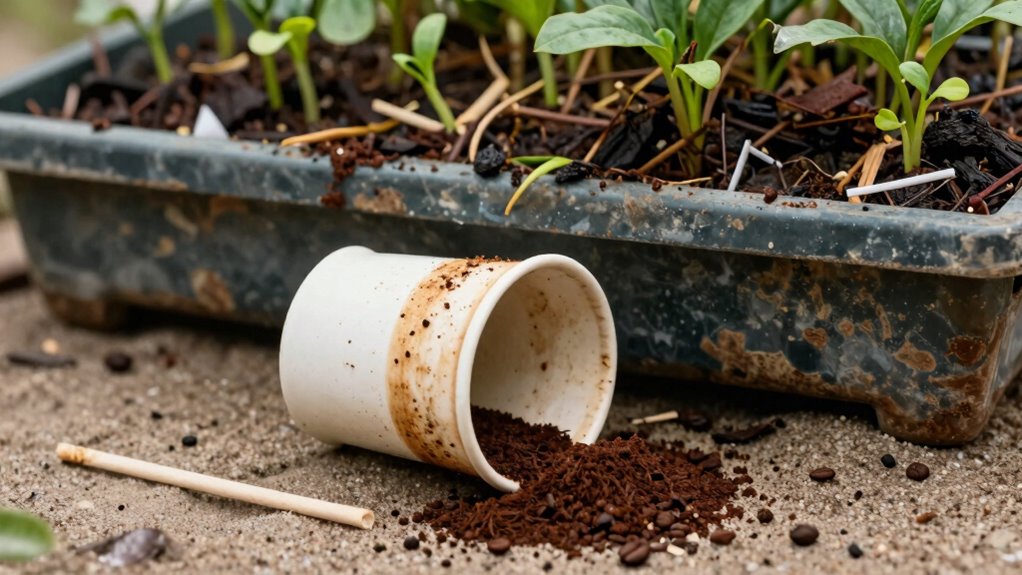
Every day, millions of coffee cups are tossed away, leaving behind a significant amount of waste that often ends up in landfills. This waste includes not just the paper cup itself but also the plastic lining inside many disposable cups, which complicates proper disposal. When you toss your coffee cup into the trash, it generally ends up in a landfill where it takes years to decompose. The environmental impact of this waste is substantial, as the materials used in single-use cups are not biodegradable and can contribute to pollution and resource depletion. Additionally, many cups are made with mixed materials, making recycling even more difficult. Proper disposal methods and increased awareness can significantly improve recycling outcomes. However, recycling methods offer a potential solution to mitigate this problem. Some cups are now designed to be recyclable, with materials that can be separated and processed. Specialized recycling facilities can extract the paper from the plastic lining, turning the paper into new products and repurposing the plastic. Yet, the actual recycling rate remains low because many cups aren’t properly sorted or are made with mixed materials that are difficult to recycle. When recycling is done correctly, it reduces the need for virgin resources, saves energy, and lessens landfill waste. But if the cups aren’t disposed of properly or end up in regular trash, these benefits are lost, and the environmental impact grows. Furthermore, increased public awareness about proper disposal can help improve overall recycling rates and reduce environmental harm. Promoting sustainable materials in cup manufacturing can also significantly lessen their environmental footprint over time.
Millions of disposable coffee cups end up in landfills, taking years to decompose and harming the environment.
Beyond recycling, composting coffee waste—specifically the grounds—can be an eco-friendly alternative. Coffee grounds are rich in nutrients and can be composted to create organic fertilizer. This process helps reduce waste and promotes healthy soil, closing the loop in the coffee lifecycle. Still, this only applies to the grounds, not the entire cup, which often contains non-compostable materials. Composting offers a sustainable way to turn organic waste into valuable resources, reducing the burden on landfills. Proper composting techniques can help ensure that nutrients are retained and that the process benefits the environment without creating additional pollution. Incorporating composting programs can further support community efforts to manage organic waste sustainably. Understanding what happens after you discard your coffee cup is essential. The improper disposal of these cups contributes to environmental degradation, including land pollution and potential harm to wildlife. Initiatives encouraging the use of reusable cups directly tackle this issue, reducing the amount of waste generated each day. By being mindful of recycling methods and making smarter choices, you can lessen your environmental impact. Opt for cups made from sustainable materials, participate in recycling programs, and consider reusable options whenever possible. These small actions collectively make a significant difference in reducing the long-term effects of coffee waste on the environment. Ultimately, the goal is to shift away from single-use convenience toward more sustainable practices that protect our planet for future generations.
reusable coffee cups with eco-friendly materials
As an affiliate, we earn on qualifying purchases.
As an affiliate, we earn on qualifying purchases.
Frequently Asked Questions
Can Coffee Waste Be Recycled Into New Coffee Products?
Yes, you can recycle coffee grounds into new coffee products. Recycling methods include composting, where grounds enrich soil, or using them to flavor baked goods and skincare products. Some companies turn used coffee grounds into eco-friendly products like biofuels or coffee-infused items. You can even repurpose grounds for gardening or cleaning. By recycling coffee grounds, you reduce waste and create useful, sustainable products, making your coffee habit more environmentally friendly.
How Long Does Coffee Waste Take to Decompose Naturally?
You might worry that coffee waste takes forever to decompose, but in reality, it’s quite quick. Typically, coffee grounds go through organic breakdown within 3 to 6 months, depending on environmental conditions. The decomposition timeline varies with factors like moisture and temperature, but in a compost heap, your coffee waste transforms into rich soil surprisingly fast. This natural process helps reduce landfill waste and supports eco-friendly gardening efforts.
Are There Any Health Risks in Composting Coffee Waste?
Yes, there are health hazards in composting coffee waste if you’re not careful. Mold growth can develop, especially in moist, warm conditions, posing respiratory risks. To minimize health hazards, you should avoid adding large amounts of coffee grounds at once, guarantee proper aeration, and keep the compost in a well-ventilated area. Regularly monitoring the compost helps prevent mold growth and keeps the process safe for you and your environment.
What Are the Environmental Benefits of Recycling Coffee Waste?
Recycling coffee waste considerably reduces environmental impact by cutting down on landfill waste and lowering greenhouse gas emissions. When you opt for coffee waste disposal methods like composting, you help create nutrient-rich soil, which supports sustainable agriculture. This eco-friendly choice minimizes pollution and conserves resources, making a positive difference. So, by managing your coffee waste responsibly, you contribute to a healthier planet and promote eco-conscious living.
Can Coffee Waste Be Used as Animal Feed?
You can use coffee husks as animal feed, especially in animal nutrition. Imagine a small farm where farmers incorporate dried coffee husks into livestock diets, providing fiber and nutrients. Coffee husks are rich in antioxidants and can supplement traditional feed, reducing waste and costs. Just guarantee proper processing to remove caffeine and contaminants. This sustainable approach benefits both the environment and farmers, turning waste into valuable feed resources.
Conclusion
When you toss that coffee cup away, you’re planting the seeds of change. Coffee waste is like a forgotten treasure chest, waiting to be opened and transformed into something new—compost, energy, or even art. By choosing to recycle or repurpose, you’re turning yesterday’s brew into tomorrow’s hope. Think of your waste as a butterfly emerging from its cocoon, ready to spread beauty and life into the world. Your small act can spark a big transformation.
Halloween Picks
halloween
As an affiliate, we earn on qualifying purchases.