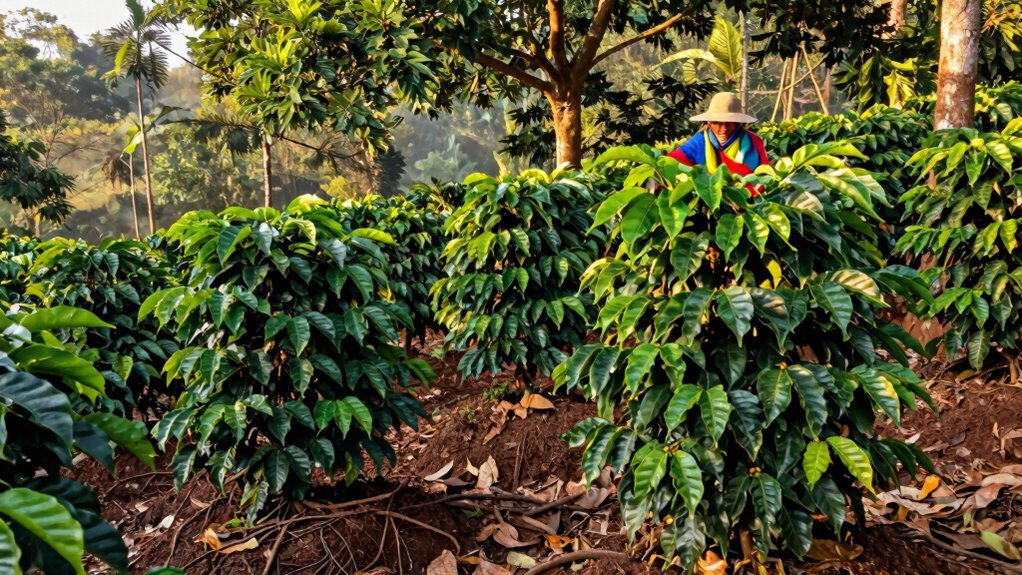

Regenerative coffee farming is a sustainable practice that improves soil health, boosts biodiversity, and reduces environmental impact. It involves techniques like cover cropping, composting, and minimal chemical use, which help your land become more resilient and productive over time. These methods promote long-term land health, sequester carbon, and support local communities. If you want to discover how this approach can transform coffee farms and benefit the planet, you’re about to learn more.
Key Takeaways
- Regenerative coffee farming enhances soil health, biodiversity, and carbon sequestration, supporting long-term environmental sustainability.
- It employs practices like cover cropping, composting, and reduced chemical use to restore land vitality.
- Farmer education and community programs are vital for adopting regenerative techniques effectively.
- These practices improve farm resilience, productivity, and the quality of coffee produced.
- Regenerative farming restores degraded land and promotes environmentally responsible land stewardship for future generations.
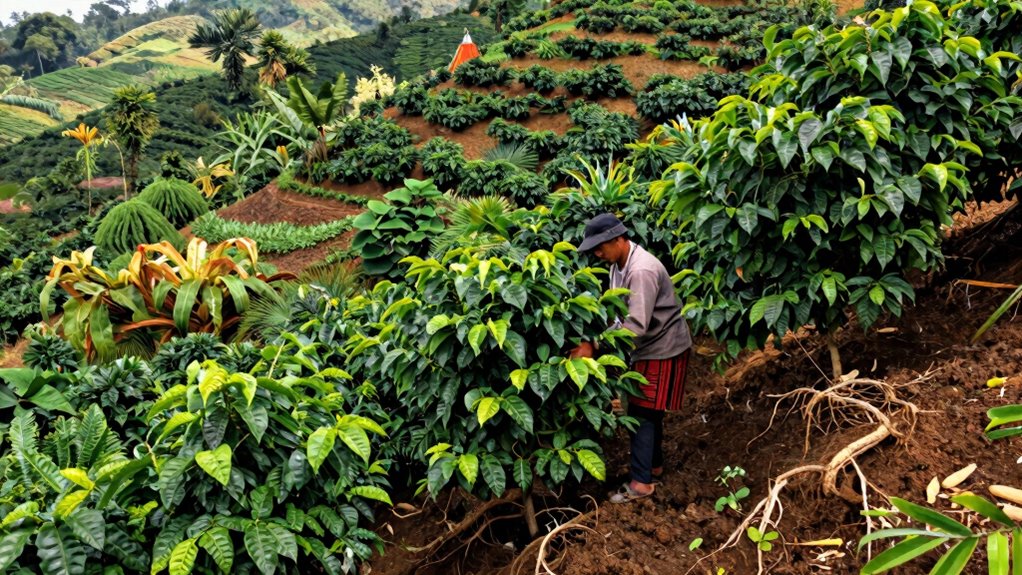
Have you ever wondered how coffee farming can actually improve the environment rather than degrade it? It might seem surprising, but with regenerative practices, coffee cultivation can enhance soil health, boost biodiversity, and create a more sustainable ecosystem. When farmers adopt these methods, they work with nature instead of against it, restoring degraded land and enriching the soil, which is the foundation for healthy coffee plants. Healthy soil retains water better, reduces erosion, and supports a diverse array of microorganisms that benefit plant growth. This cycle of improvement not only sustains the land but also produces better-quality coffee.
A key element in these practices is farmer education. When farmers are informed about regenerative techniques, they can make smarter decisions about land management. Education empowers them to implement cover cropping, crop rotation, composting, and reduced chemical use—all of which contribute to healthier soil. As farmers learn to nourish their land naturally, they break free from harmful chemical dependency, leading to more resilient farms. The knowledge transfer often comes through community programs, workshops, or partnerships with organizations committed to sustainable agriculture. This ongoing learning process helps farmers adapt their practices to their specific environments and challenges. Additionally, understanding the importance of soil health encourages long-term investment in sustainable farming methods. Recognizing the role of soil microbiota in maintaining soil vitality can further motivate farmers to adopt organic and regenerative practices. Incorporating soil testing can also help farmers monitor their land’s health and make informed decisions about amendments or interventions. Moreover, embracing regenerative techniques not only benefits the land but also enhances farm resilience to climate impacts, which is increasingly vital in today’s changing climate. Adopting regenerative practices can contribute to climate change mitigation efforts by sequestering carbon in the soil.
By focusing on soil health through regenerative farming, you’re also supporting long-term productivity. Healthy soil isn’t just about avoiding degradation; it actively sequesters carbon, reduces runoff, and promotes a thriving ecosystem. When farmers prioritize soil health, they create a cycle of renewal that benefits everyone—workers, communities, and the planet. It’s a shift from short-term gains to sustainable, resilient coffee production. You’ll notice that these practices often involve minimal tillage and organic amendments, which keep the soil structure intact and encourage microbial activity. As a result, the land becomes more fertile over time, requiring fewer external inputs like fertilizers.
Farmer education plays an essential role in this transformation. When farmers understand the science behind regenerative methods, they’re more likely to embrace and sustain these practices. This knowledge helps them see beyond immediate yields, focusing instead on the health of their land for generations to come. As they learn and adapt, they become stewards of the environment, turning their farms into models of sustainability. Ultimately, regenerative coffee farming isn’t just about growing better coffee—it’s about restoring the land that produces it, ensuring a healthier planet for everyone.

Back to the Roots 25.7qt (1 Cubic ft) Organic Premium Compost
- Organic and Peat-Free: 100% organic, peat-free compost mix
- Ideal for Garden Use: Perfect for herbs, vegetables, and fruits
- Made in the USA: Proudly produced in the United States
As an affiliate, we earn on qualifying purchases.
As an affiliate, we earn on qualifying purchases.
Frequently Asked Questions
How Does Regenerative Farming Impact Coffee Bean Flavor?
You’ll notice that regenerative farming improves coffee bean flavor by boosting soil health and increasing biodiversity. Healthier soil provides better nutrients, leading to richer, more complex flavors in your coffee. Additionally, enhanced biodiversity creates a balanced environment that promotes resilient plants and reduces pests, resulting in a cleaner, more vibrant taste. So, when you choose coffee from regenerative farms, you’re likely to enjoy a more flavorful, sustainable cup of coffee.
What Are the Initial Costs of Adopting Regenerative Practices?
Imagine planting seeds of change; the initial costs of regenerative practices are like nurturing new growth. You’ll invest in soil restoration techniques, which might mean new equipment or cover crops, and support biodiversity benefits by diversifying plant and insect life. These upfront expenses may seem steep, but they lay a resilient foundation, fostering healthier soil, vibrant ecosystems, and ultimately, richer coffee beans that reward your early commitment.
Can Small Farms Implement Regenerative Coffee Farming Effectively?
Yes, small farms can implement regenerative coffee farming effectively. By focusing on improving soil health through cover cropping and composting, you enhance productivity and resilience. Incorporating natural pest management methods reduces chemical use, promoting healthier plants and environment. While initial investments might be needed, the long-term benefits include better yields, reduced input costs, and a more sustainable farm ecosystem, making it a practical approach for small-scale coffee growers.
How Long Does It Take to See Environmental Benefits?
You’ll start seeing environmental benefits within a few years of adopting regenerative coffee farming practices. Improved soil health develops as organic matter increases, which also enhances carbon sequestration. As soil becomes richer and more resilient, it captures more carbon from the atmosphere, helping fight climate change. While some benefits are visible quickly, significant changes in soil health and carbon levels typically take around three to five years, with ongoing improvements over time.
Are There Certifications for Regenerative Coffee Products?
Think of regenerative coffee certifications as badges of honor, shining a light on your commitment. Yes, there are certification standards like Rainforest Alliance and Fair Trade that recognize regenerative practices. These certifications boost market recognition, helping your product stand out and attract conscious consumers. They serve as proof that your coffee meets rigorous sustainability criteria, turning your farm’s efforts into a powerful symbol of environmental and social responsibility.
Conclusion
By embracing regenerative coffee farming, you’re not just sipping a cup of joe—you’re contributing to a healthier planet. Think of it as planting seeds for a future where agriculture restores rather than depletes. Just like the legendary explorers of old, you can pioneer a new way forward, forging a path toward sustainability. So, next time you enjoy your brew, remember: your choice can make a difference, turning the tide toward a greener, more resilient world.