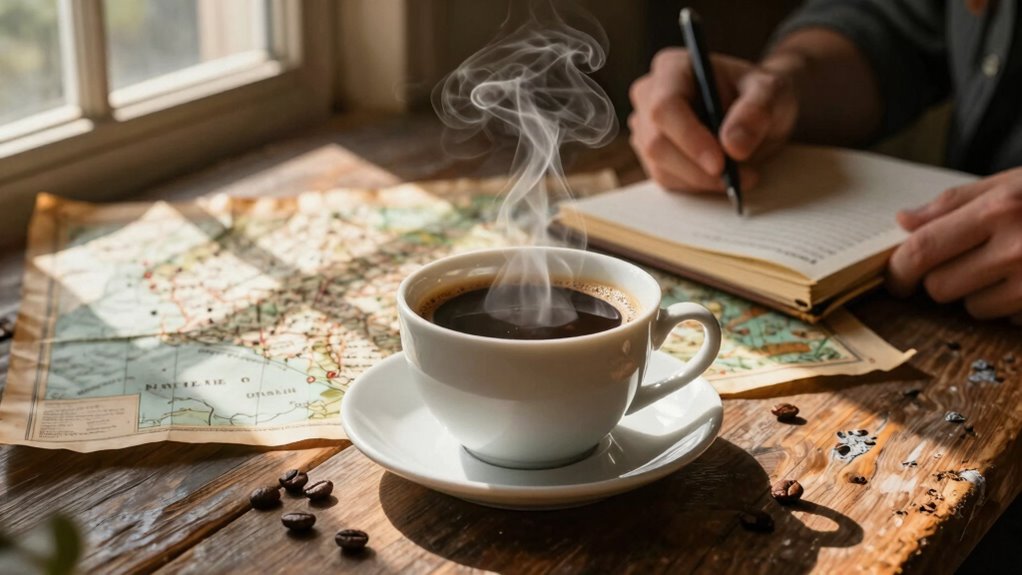

Sipping coffee in a travel story instantly transports you to the local culture, setting the mood and revealing the place’s essence. It’s more than just a drink; it’s a gateway to understanding history, tradition, and social customs. Whether in a bustling café or a quiet corner, coffee captures the spirit of a location—lively or contemplative. If you keep exploring, you’ll discover how these moments deepen your connection to a place’s unique character.
Key Takeaways
- Describing coffee rituals and settings immerses readers in the local culture and atmosphere of a destination.
- Coffee’s sensory details evoke the mood, whether vibrant, relaxed, or contemplative, enhancing storytelling.
- Incorporating coffee history and traditions provides cultural depth and authenticity to travel narratives.
- Coffeehouses serve as symbolic spaces that reflect social dynamics and communal identity.
- Mentioning regional coffee customs highlights unique place-specific experiences and emotional resonance.
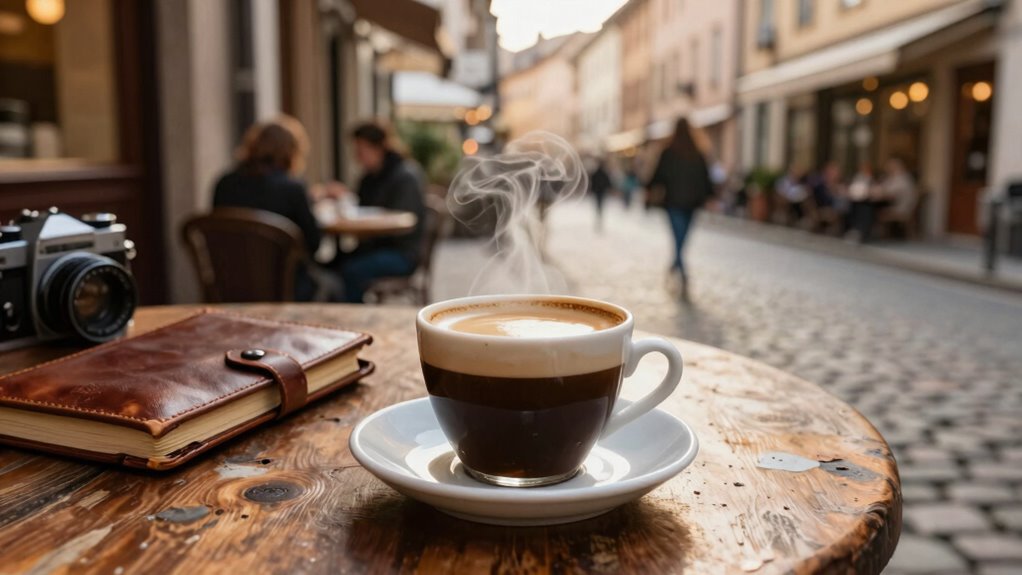
Have you ever noticed how coffee often becomes a pivotal part of travel stories? It’s more than just a beverage; it’s a gateway into a place’s essence. When you sip that first aromatic brew in a foreign city, you’re not only tasting coffee—you’re immersing yourself in centuries of history and tradition. The historical origins of coffee trace back centuries, beginning in Ethiopia, where legend says a goat herder discovered its energizing effects. From there, it traveled through the Middle East, Africa, and eventually to Europe, shaping social customs along the way. This rich history lends coffee a sense of authenticity that travelers seek when they want to connect with a place’s roots. For centuries, coffeehouses have served as social hubs, intellectual salons, and political gathering spots, especially in cities like Istanbul, Vienna, and Paris. These spaces became more than just places to drink; they were cultural institutions that fostered conversation, ideas, and community. When you include coffee in your travel writing, you tap into that significance, grounding your story in a tradition that’s woven into the fabric of countless societies. Additionally, the cultural rituals associated with coffee preparation and consumption reveal much about a region’s values and social fabric. The history of coffee itself, with its centuries of tradition and cultural significance, enriches the narrative you craft. Exploring the origins of coffee can deepen your understanding of its cultural importance and how it evolved across different regions. Moreover, the social role of coffeehouses highlights how these venues have historically facilitated dialogue and social cohesion. Recognizing the global spread of coffee offers insight into how this beverage became a universal symbol of hospitality and community. When you write about coffee in your travel narratives, you’re not just describing a drink; you’re illustrating a way people express their heritage and hospitality. It’s a sensory experience that encapsulates the mood of a place—whether lively and bustling or slow and contemplative.

Owala SmoothSip Slider Insulated Stainless Steel Coffee Tumbler, Reusable Iced Coffee Cup, Hot Coffee Travel Mug, BPA Free 12 oz, Crochet Queen
12-ounce insulated stainless-steel tumbler with a completely leak-proof lid
As an affiliate, we earn on qualifying purchases.
As an affiliate, we earn on qualifying purchases.
Frequently Asked Questions
How Does Coffee Influence Travel Narratives’ Emotional Tone?
Coffee influences travel narratives’ emotional tone by evoking warmth and comfort through its rich aromas. You feel a sense of familiarity and intimacy as you describe the coffee’s scent, creating a cozy atmosphere that invites readers into your experience. This narrative intimacy strengthens emotional connection, making the story more vivid and relatable. The sensory detail of coffee aromas helps you set a mood that resonates deeply, enhancing the overall emotional impact of your travel story.
Are There Cultural Differences in Coffee Descriptions Among Travel Writers?
You’ll notice that travel writers often highlight cultural differences through coffee descriptions. They capture unique coffee rituals, like Turkish coffee’s preparation or Ethiopian coffee ceremonies, to convey cultural authenticity. By emphasizing these rituals, writers help you experience the local atmosphere vividly. These descriptions serve as authentic cultural markers, allowing you to connect emotionally and understand the place’s identity through its cherished coffee traditions.
What Are the Best Coffee-Related Metaphors Used in Travel Writing?
You should consider using coffee-related metaphors like describing a coffee aroma as a “warm embrace,” which instantly evokes comfort and familiarity. Comparing the morning ritual of brewing coffee to a “dawn chorus,” captures the start of a new day full of potential. These metaphors help readers feel connected to a place, making your travel writing more vivid and engaging—turning simple moments into memorable sensory experiences.
How Do Writers Choose Specific Coffee Types to Evoke Place?
You choose specific coffee types to evoke place by matching their flavor profiles and brewing styles to the setting. For example, a dark, rich espresso mirrors a bustling Italian piazza, while a light, floral pour-over captures the serenity of a Japanese garden. By blending sensory details with brewing methods, you craft a vivid scene that transports readers, using coffee as a flavorful map to the heart of a place.
Can Coffee Symbolism Deepen the Sense of Adventure in Travel Stories?
Yes, coffee symbolism can deepen the sense of adventure in your travel stories. You can describe the coffee aroma, which evokes local flavors and environments, immersing your readers in the scene. Highlight the caffeine ritual, emphasizing the cultural significance and personal connection to the place. This approach not only enriches the narrative but also invites readers to experience the energy and discovery that come with every sip, fueling their own sense of adventure.

Live Beautiful
As an affiliate, we earn on qualifying purchases.
As an affiliate, we earn on qualifying purchases.
Conclusion
As you sip your coffee and turn the pages of your journey, remember that, like Dante’s divine café, each cup holds a portal to place and mood. It’s your secret map, guiding you through bustling markets or tranquil mornings. Just as Hemingway found clarity in a cup, you too can craft stories that blend scent and scene. Let coffee be your compass—an unspoken invitation to explore, feel, and truly taste the world in every word.

Mini Manual Coffee Grinder with 40 Adjustable Settings, Portable Hand Coffee Bean Mill with 30g Capacity, Conical Burr Coffee Grinder with Crank for Travel, Camping, Office, Espresso, Pour Over, etc
40 EXTERNAL ADJUSTABLE GRIND SETTINGS – Unlike traditional grinders with internal adjustments, our manual coffee grinder offers 40…
As an affiliate, we earn on qualifying purchases.
As an affiliate, we earn on qualifying purchases.

Travel French Press Coffee Maker Set – 12 oz | Portable Travel French Press Coffee Maker | Double Wall Insulated with Dual Stainless Filters & 2 Steel Canisters for Grounds, Tea, Creamer & Sugar
100% Plastic Free Coffee Maker – Our 12 oz stainless steel french press resists rust and corrosion, ensuring…
As an affiliate, we earn on qualifying purchases.
As an affiliate, we earn on qualifying purchases.