

You’ll notice the newsroom coffee trope hasn’t really disappeared because it symbolizes authenticity, urgency, and the dedication of journalists. It’s a visual shorthand for intense, high-stakes environments and reminds you of their hard work and resilience. Despite digital shifts, this ritual remains a powerful cue for the relentless pace of newsroom life. If you want to understand why this symbol endures and what it truly represents, there’s more to uncover ahead.
Key Takeaways
- The coffee trope symbolizes journalistic dedication and authenticity, continuing to depict intense newsroom environments.
- It reflects journalists’ reliance on caffeine during long shifts and deadlines, maintaining its cultural significance.
- Despite digital shifts, the coffee visual remains a quick cue for urgency and hard work in media portrayals.
- Coffee emphasizes energy, perseverance, and the relentless pace inherent in newsroom storytelling.
- Its universal symbolism of late nights and passion ensures the trope’s enduring presence in media representations.
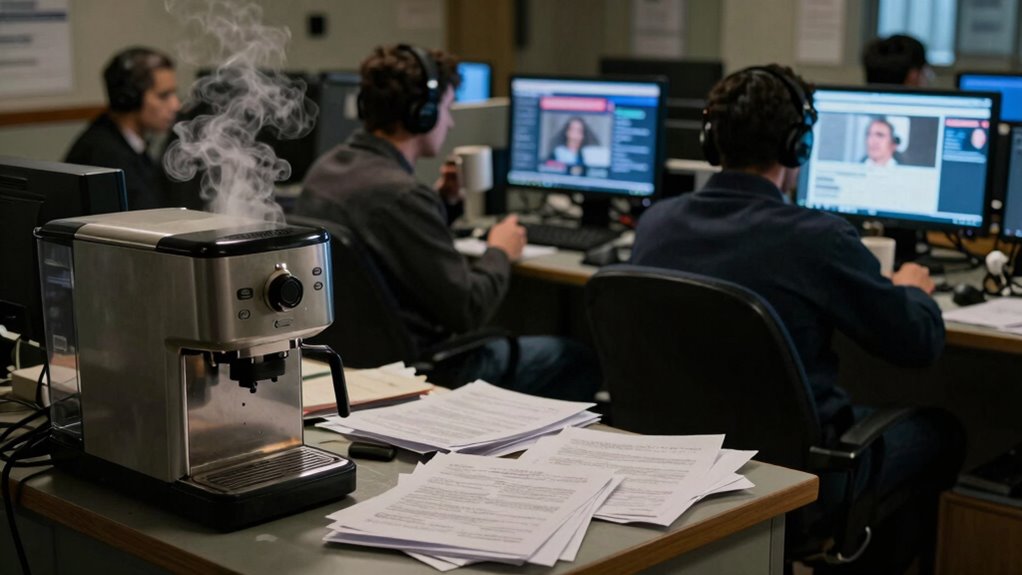
Have you ever noticed how coffee often appears as a staple in newsroom scenes in film? It’s almost impossible not to. From early morning meetings to late-night deadline pushes, coffee is woven into the fabric of journalistic life onscreen. This recurring image isn’t just about caffeine; it reflects a deeper desire to portray journalistic authenticity. The presence of coffee signals that the characters are immersed in the real, gritty work of uncovering truths and delivering news. It’s a visual shorthand that suggests seriousness, dedication, and the high-stakes environment of the newsroom.
Coffee in newsroom scenes symbolizes authenticity, dedication, and the intense pursuit of truth in journalism.
This caffeine culture has persisted because it resonates with the reality of many journalists’ routines. The image of a reporter or editor clutching a steaming mug isn’t just cinematic; it’s rooted in truth. Journalists often rely on coffee to stay alert during long shifts, to sharpen their focus during breaking news, and to foster camaraderie with colleagues. This shared ritual becomes a symbol of commitment and resilience, reinforcing the authenticity of the story being told. When films show characters grabbing coffee amidst frantic newsroom activity, it’s a subtle nod to this authentic experience, making the scene feel more genuine and relatable.
Despite the rise of digital and remote journalism, the newsroom coffee trope remains firmly in place. It’s an essential element in visual storytelling, helping viewers quickly understand the environment’s intensity and urgency. It also reflects journalistic authenticity and the commitment needed to pursue important stories. The caffeine culture isn’t just about caffeine itself; it’s about what coffee represents—hard work, perseverance, and the relentless pursuit of truth. These qualities are central to the journalistic identity, and coffee imagery helps communicate them efficiently. Caffeine culture is a powerful visual motif that emphasizes the energy and dedication necessary in newsrooms. Additionally, the visual depiction of coffee often underscores the work ethic and sense of urgency that define journalistic endeavors.
In many ways, this ongoing trope continues because it taps into a universal truth about the newsroom experience. It’s a symbol of the relentless pace, the late nights, and the passionate pursuit of newsworthy stories. The coffee cup becomes more than just a beverage; it’s a visual cue that tells you this is a space where real, urgent work happens. And even as the industry evolves and new methods of reporting emerge, the classic image of journalists with coffee in hand remains a powerful reminder of journalistic authenticity and the caffeine culture that sustains it. Recognizing visual storytelling tools like the coffee trope helps us understand how film and media reinforce familiar industry themes.
stainless steel insulated coffee mug
As an affiliate, we earn on qualifying purchases.
As an affiliate, we earn on qualifying purchases.
Frequently Asked Questions
When Did the Newsroom Coffee Trope First Originate in Film?
You’re asking when the newsroom coffee trope first originated in film. It started in the early days of cinema, around the 1930s and 1940s, capturing journalistic authenticity and workplace realism. The coffee cup became cinematic symbolism for the fast-paced, high-pressure news environment, emphasizing dedication and camaraderie among journalists. This trope persists because it visually conveys the intensity and authenticity of newsroom life, resonating with audiences and filmmakers alike.
How Has the Trope Evolved Over Different Film Eras?
Think of the newsroom coffee trope as a chameleon, adapting with each cinematic era. You see it evolving from simple background detail to a symbol of journalistic authenticity and camaraderie. In classic films, it’s a cozy, cluttered space, while modern versions highlight caffeine-fueled urgency. This cinematic symbolism underscores the enduring human element in journalism, reminding you that behind every headline, there’s a story brewed over countless cups of coffee.
Are There Specific Actors Known for Iconic Newsroom Coffee Scenes?
You might recognize actors like William Hurt and Tom Hanks for iconic newsroom coffee scenes that capture behind-the-scenes moments of caffeine culture. These scenes often highlight the intense work environment and personal struggles of journalists, making the audience feel connected. Their performances bring authenticity, emphasizing how essential coffee is in fueling newsroom chaos. These moments remind you that behind every big story, there’s a caffeine-fueled effort.
What Does the Coffee Symbolize in Newsroom Films?
In newsroom films, coffee symbolizes journalistic authenticity and cultural symbolism. It represents the dedication and urgency of reporters, fueling their pursuit of truth amidst chaos. You see it as a sign of commitment, a way to stay alert during long hours, and a marker of the newsroom’s gritty reality. The coffee underscores the importance of journalism’s role in society, emphasizing authenticity and the cultural significance of those who endeavor to inform the public.
How Does the Trope Influence Viewer Perception of Journalists?
The coffee trope shapes how you see journalists, often reinforcing stereotypes of hardworking, caffeine-fueled heroes. It makes viewers empathize with their relentless pursuit of truth, but can also oversimplify their roles. By highlighting their dedication, the trope keeps the myth alive that journalists are always battling against the clock. However, it might lead you to overlook the complexities of real-world journalism, painting a hero’s picture that’s not always accurate.
Conclusion
Next time you watch a newsroom film, notice how the coffee scene keeps popping up—it’s more than just a caffeine fix. Imagine you’re a journalist, fueled by endless cups while chasing a breaking story, just like in the movie “The Insider.” That coffee moment isn’t just about energy; it’s about the tension, camaraderie, and urgency of the newsroom. This trope reminds us that behind every headline, there’s a story brewed over countless cups.