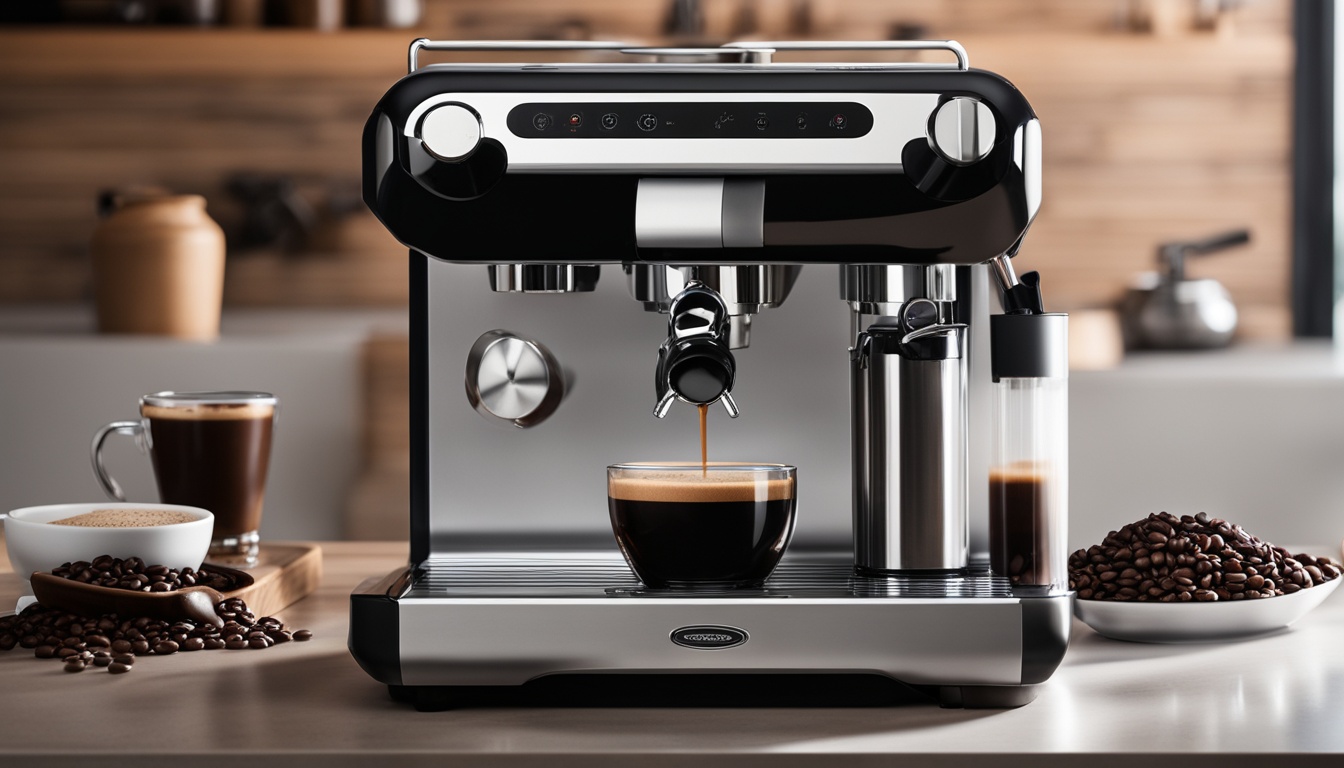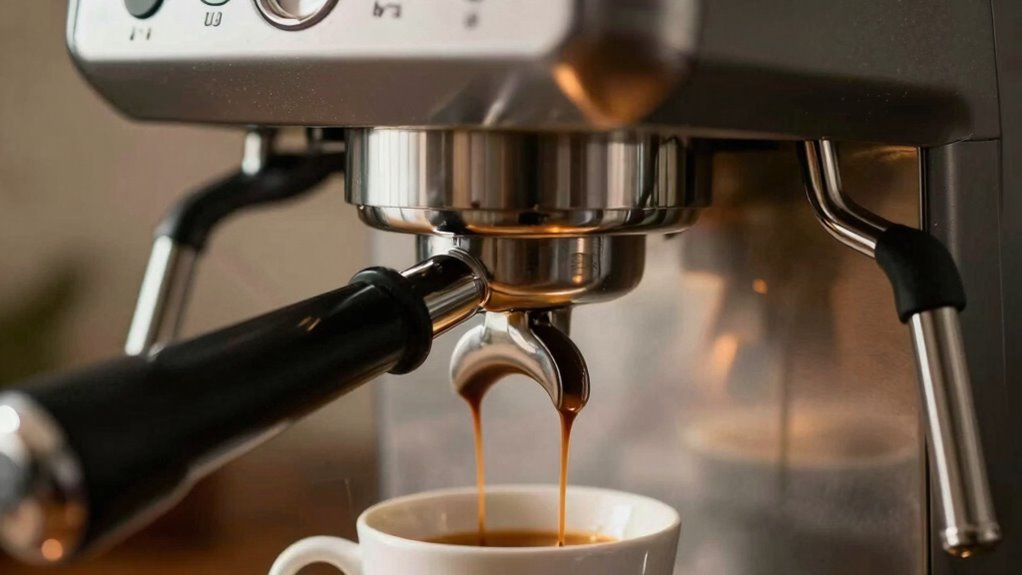
Adjusting flow control during your home espresso pulls changes how water interacts with coffee grounds, impacting extraction time and flavor. Slowing the flow increases contact and can make your shot richer and more balanced, while speeding it up brightens the taste and shortens extraction. Small changes can produce noticeable differences, giving you more control over shot quality. Keep exploring these adjustments, and you’ll discover how mastering flow can elevate your espresso technique.
Key Takeaways
- Adjusting flow rate alters contact time, impacting extraction and flavor intensity.
- Slower flow increases resistance, leading to richer, more developed flavors.
- Faster flow can brighten the shot and highlight different nuances.
- Small flow changes can significantly affect shot balance and overall taste.
- Proper flow control enables real-time tuning for consistent, high-quality espresso.
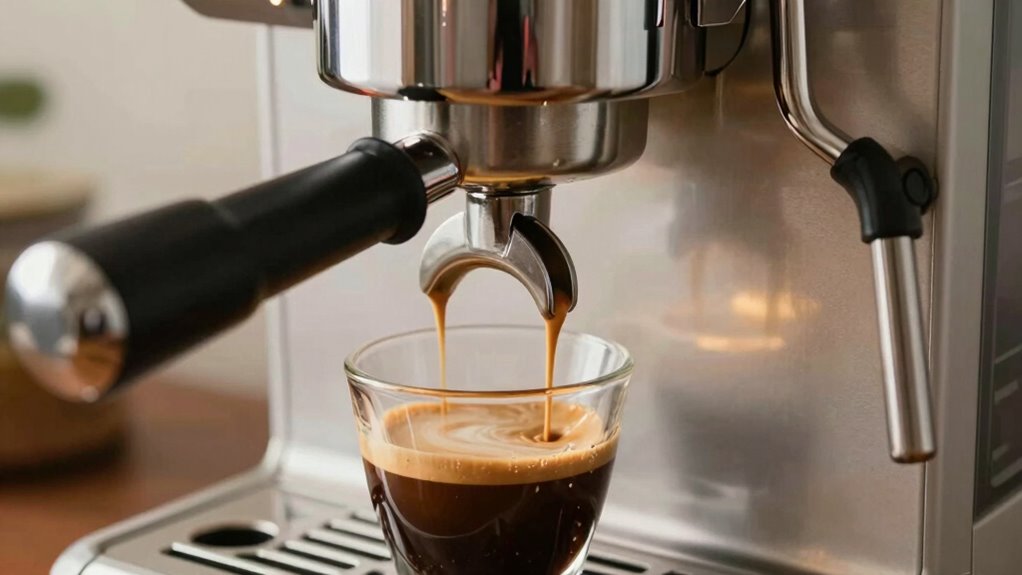
Have you ever struggled to get that perfect shot of espresso at home? If so, you’re not alone. Achieving a consistent and delicious espresso shot takes more than just a good machine; it requires attention to detail and understanding how small adjustments can make a big difference. One key element often overlooked is how flow control impacts your brewing process. When you manipulate flow, you’re actively controlling how water interacts with the coffee grounds, which influences extraction time, flavor, and overall shot quality.
The foundation of a great espresso starts with grind consistency. If your grind is too coarse, water flows through too quickly, resulting in a weak, under-extracted shot. Conversely, a grind that’s too fine can cause excessive resistance, leading to over-extraction and bitter flavors. Maintaining consistent grind size is vital because it ensures predictable flow rates, giving you better control during extraction. But even with a perfect grind, your machine needs to be properly calibrated. Machine calibration affects how water is delivered—if your machine isn’t calibrated correctly, flow rates can fluctuate, throwing off your shot’s balance. Regular calibration helps you maintain steady water pressure and flow, which in turn allows for more precise control when adjusting flow during extraction.
Flow control devices, such as flow restrictors or manual flow valves, give you the ability to fine-tune your shot in real-time. When you start experimenting with flow, you’re actively influencing the extraction process—slowing it down can increase contact time and intensify flavors, while speeding it up can brighten the shot and highlight different nuances. It’s a delicate balance, and small changes can produce noticeable differences in taste and texture. The accuracy of flow control is essential for consistent results and for tailoring each shot to your preferences. Additionally, understanding the impact of flow rate on extraction can help you optimize your brewing process for different coffee beans and roast levels. Being aware of how flow dynamics affect extraction allows you to better adapt your technique for a range of coffee styles. Developing a good understanding of brew ratio and how it interacts with flow adjustments can further refine your results. The key is to start with a well-calibrated machine and consistent grind, then gradually experiment with flow adjustments to find what best brings out your coffee’s character.

OWHGJTED Compatible for Mischief E61 Flow Control Device, Adjustable Stainless Steel Profil Valve Kit for Espresso Machine Upgrade(Black ball)
- Adjustable Water Flow Control: Customize espresso extraction flow
- Durable Stainless Steel Construction: Long-lasting for home and bar use
- Complete Installation Kit: Includes all necessary components
As an affiliate, we earn on qualifying purchases.
As an affiliate, we earn on qualifying purchases.
Frequently Asked Questions
How Does Flow Control Impact Shot Consistency Over Time?
Flow control helps you maintain shot consistency over time by allowing precise adjustments to espresso extraction. When you tweak flow, it compensates for variations in grind size and tamp pressure, which can otherwise cause inconsistent shots. By fine-tuning flow, you guarantee a steady extraction rate, leading to more uniform flavor and crema. This control lets you adapt to minor changes in your grind or tamp, keeping your espresso consistently excellent.
Can Flow Control Be Adjusted During the Brewing Process?
Think of flow control like steering a boat—you can adjust your course mid-journey. Yes, you can tweak flow control during brewing, especially with pressure profiling. By adjusting the flow, you influence shot extraction in real time. If you notice uneven extraction, you might change grind size or tweak the flow to refine the shot. These adjustments let you perfect your espresso without stopping the process, ensuring a better cup every time.
What Are the Best Flow Control Settings for Different Coffee Beans?
The best flow control settings depend on your grind size and dose amount, which influence extraction. For finer grinds and higher doses, set flow control to a slower rate to prevent over-extraction and bitterness. Conversely, for coarser grinds and lower doses, increase the flow rate for a balanced shot. Experiment with small adjustments, paying attention to flavor, crema, and extraction time to find your ideal setting.
Does Flow Control Affect the Espresso’s Crema Quality?
Flow control acts like a gentle conductor, shaping your espresso’s symphony. It can enhance the crema’s delicate structure and preserve rich flavors, making each shot a masterpiece. By adjusting flow, you control extraction speed, which influences crema quality—thicker, more velvety layers of crema often result from ideal flow settings. So, yes, flow control directly impacts your espresso’s crema enhancement and flavor preservation, giving you a more luxurious, balanced brew every time.
Are There Specific Machines Better Suited for Flow Control?
Some machines are better suited for flow control because they allow manual calibration and are compatible with flow modulation accessories. Look for espresso machines with built-in flow control features or those that support external flow regulators, ensuring you can customize shot extraction precisely. These machines give you greater control over brewing variables, helping you achieve consistent results and ideal crema quality. Choose models designed for easy calibration and versatile compatibility.
Conclusion
As you master flow control, imagine the espresso flowing like a smooth river, perfectly balanced and rich with flavor. With each adjustment, you become the conductor of this brewing symphony, guiding hot water through the grounds with precision. When you finally see that steady, glossy crema bloom like a sunrise on your cup, you’ll know you’ve revealed a deeper connection to your brew. It’s not just coffee; it’s a crafted moment, all in your hands.