If you want to keep your coffee fresh for the short term, vacuum canisters are a great choice because they remove air and control moisture effectively. For longer storage, freezing with airtight packaging can preserve flavor and texture over months. Both methods depend on preventing oxygen and moisture from reaching your beans. To discover which option suits your needs best and learn more about proper storage techniques, continue exploring and you’ll find helpful tips.
Key Takeaways
- Vacuum canisters effectively preserve coffee freshness for short-term storage (weeks to a couple of months) by preventing air and moisture ingress.
- Freezing extends coffee shelf life significantly, ideal for long-term storage, but requires airtight, moisture-proof packaging to prevent flavor loss.
- Proper packaging and sealing are critical in both methods to avoid freezer burn, moisture absorption, and flavor degradation.
- Vacuum canisters are more convenient for quick access and daily use, while freezing suits bulk storage and extended periods.
- Combining freezing with vacuum-sealed containers offers the best long-term preservation by controlling air, moisture, and temperature.
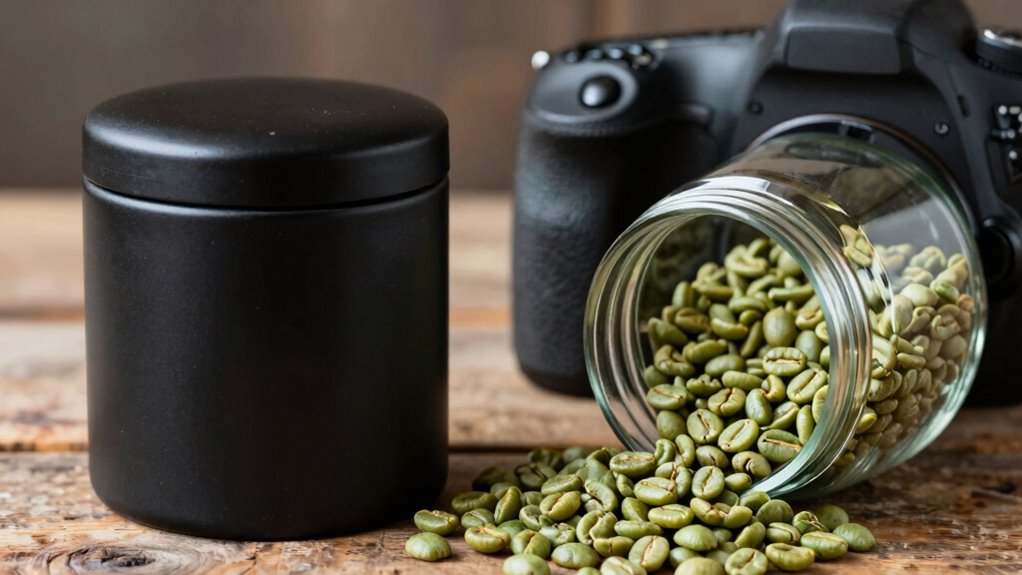
When it comes to preserving beans, choosing the right method can make a big difference in maintaining freshness and flavor. Two popular options are vacuum canisters and freezing, but understanding how each method handles air leakage and moisture control can help you decide which is best for your needs. Vacuum canisters are designed to remove air from the container, creating a tight seal that limits air leakage. This reduces oxidation, which is a primary cause of flavor degradation over time. By removing excess air, you slow down the staling process and keep your beans fresh longer, especially if you plan to use them within a few weeks. Additionally, these canisters often feature airtight lids that prevent moisture from entering, ensuring that humidity doesn’t compromise the beans’ quality. Moisture control is essential because excess humidity can cause beans to develop mold or lose their crispness, so a well-sealed vacuum container provides a stable environment that keeps moisture at bay. Moreover, the material and design of the canister can influence how well it maintains an air-tight seal, further protecting the beans from spoilage.
On the other hand, freezing beans is another effective method, particularly for long-term storage. Freezing slows down the natural deterioration process by considerably reducing the metabolic activity of the beans. However, when you freeze beans, air leakage becomes less of an issue—since the beans are stored in airtight, moisture-proof bags or containers designed for freezing. Proper packaging is essential here; if air gets in or if the packaging isn’t moisture-proof, your beans can suffer from freezer burn or absorb excess moisture, which affects flavor and texture. Moisture control is critical in freezing, as any moisture that enters the package can lead to ice crystals forming, which damages the beans’ cellular structure and leads to flavor loss when thawed. For ideal results, you should use vacuum-sealed bags or high-quality freezer-safe containers that prevent air and moisture from penetrating.
Ultimately, both methods have their advantages and limitations. Vacuum canisters excel at controlling air leakage and moisture in the short term, making them ideal if you plan to use your beans within a month or two. Freezing offers a longer-term solution, especially if you take care to use proper packaging that prevents air ingress and moisture exposure. If you prefer convenience and quick access, vacuum canisters are straightforward and effective. If you’re looking to store beans for an extended period, freezing combined with airtight, moisture-resistant packaging will serve you better. Whichever method you choose, paying attention to air leakage and moisture control will guarantee your beans stay fresh, flavorful, and ready whenever you need them.

KIVY Vacuum Coffee Canister – Push Lid Preserves Coffee Aroma & Oil
- Preserves Coffee Freshness: Keeps coffee fresh longer with airtight seal
- Locks in Coffee Aroma: Maintains rich aroma and flavor
- Durable Stainless Steel: Made from premium, long-lasting material
As an affiliate, we earn on qualifying purchases.
As an affiliate, we earn on qualifying purchases.
Frequently Asked Questions
How Long Does Coffee Stay Fresh in Vacuum Canisters?
Coffee stays fresh in vacuum canisters for about one to two weeks when stored properly. These storage containers use preservation techniques that remove air, slowing oxidation and staling. To maximize freshness, keep the canister in a cool, dark place away from sunlight and heat. Remember, the key is to maintain a tight seal and avoid frequent opening, ensuring your coffee remains flavorful for as long as possible.
Can Freezing Beans Affect Their Flavor or Aroma?
Freezing beans can impact their flavor and aroma if not done properly. When you store beans in airtight storage containers before freezing, you help preserve their aroma. However, fluctuations in temperature during freezing and thawing can cause moisture buildup and flavor loss. To keep your coffee fresh, always use airtight containers, minimize exposure to air and moisture, and only freeze beans in small portions to prevent repeated freezing and thawing.
Which Method Preserves Coffee’s Natural Oils Better?
Freezing beans generally better maintains coffee’s natural oils, thanks to cold temperatures that slow oxidation and moisture absorption. This helps with oil retention, keeping your coffee rich and flavorful over time. However, to maximize aroma preservation, you should store beans in airtight containers before freezing and avoid repeated thawing. Proper storage ensures your coffee maintains its vibrant aroma and oil content, delivering a fresh, aromatic brew every time.
Is It Safe to Refreeze Coffee Beans Multiple Times?
Refreezing coffee beans multiple times isn’t safe because it can cause moisture buildup and temperature fluctuations that harm bean quality preservation. Each freeze-thaw cycle may degrade flavor and aroma, diminishing freshness. To maintain ideal freshness and bean integrity, only freeze beans once and store them in an airtight container. If you need to repackage, do so quickly and minimize exposure to temperature changes to protect your coffee’s natural oils.
Do Different Types of Coffee React Differently to Storage Methods?
Yes, different types of coffee react differently to storage methods. Your choice of storage temperature impacts how well the beans stay fresh, especially considering bean type. For instance, whole beans generally tolerate room temperature better, while lighter roasts may benefit from cooler storage. You should adjust your storage approach based on bean type and how you plan to use the coffee, ensuring ideal freshness and flavor preservation.
Conclusion
Ultimately, vacuum canisters keep your beans fresh with convenience, while freezing offers long-term preservation but can risk flavor loss. Think of it this way: a vacuum canister is like a daily protector, maintaining freshness in your pantry, whereas freezing is a deep freeze, locking in flavor for months. Both methods have their merits, but if you want quick access and consistent freshness, vacuum canisters are the way to go. Choose what fits your coffee routine best.