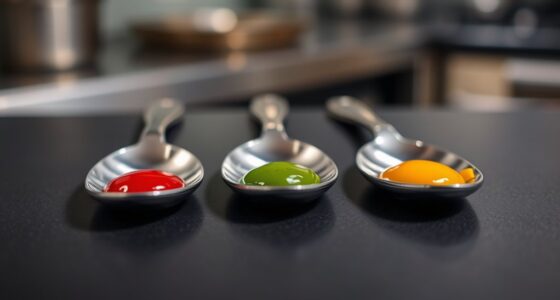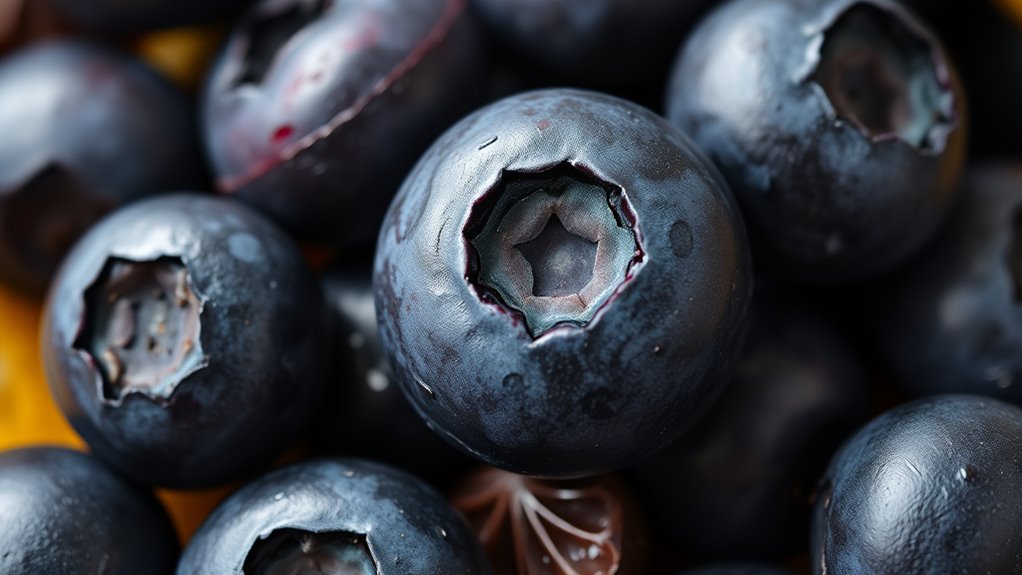

To describe flavors from blueberry to baker’s chocolate, focus on the nuances that make each unique. Think of blueberries as sweet with a hint of tartness and fresh, floral notes. Baker’s chocolate offers rich, deep bitterness with roasted cocoa undertones. Use sensory words to convey texture, aroma, and emotional impressions, creating vivid images that paint each flavor’s character. If you keep exploring, you’ll discover how to articulate even the most subtle taste details with clarity.
Key Takeaways
- Use specific descriptors like sweetness, tartness, floral, or earthy to characterize individual fruits and chocolates.
- Highlight textural and aromatic qualities, such as juiciness of blueberries or roasted notes in baker’s chocolate.
- Connect flavors with emotional or sensory responses to evoke a vivid tasting experience.
- Explain how fruit and chocolate pairings enhance or contrast flavor profiles for deeper understanding.
- Incorporate complex layers and nuances within each flavor to create precise, engaging descriptions.
Describing flavors can be a challenging yet rewarding task, as it requires you to convey tastes that are often subjective and difficult to pin down. When you taste something, your perception is influenced by personal experiences, memories, and even cultural backgrounds. To communicate these flavors effectively, you need to understand the nuances of flavor profiles and how different ingredients, like fruit pairings, enhance or contrast with each other. Recognizing the distinctive qualities of fruits, such as the sweet tang of a ripe strawberry or the tartness of a lemon, helps you craft more vivid descriptions. These characteristics are essential in building a vocabulary that captures the essence of what you’re tasting. Additionally, understanding how flavor profiles develop and interact can deepen your descriptive abilities and appreciation for complex tastes.
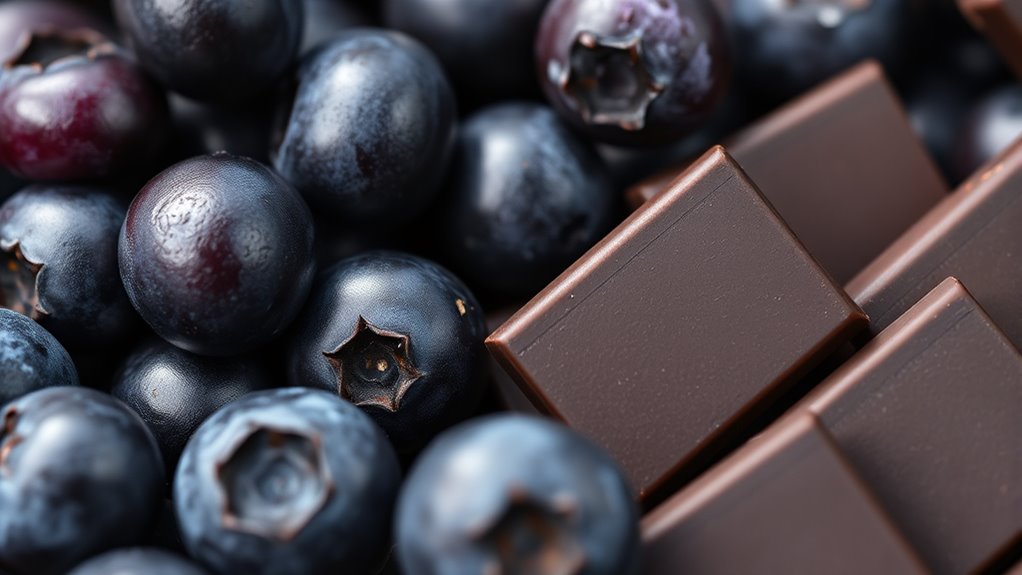
Understanding flavor profiles goes beyond simply identifying basic tastes like sweet, sour, bitter, salty, and umami. It involves recognizing the complex layers within each flavor, such as the floral notes in a peach or the earthy undertones in a plum. When you explore fruit pairings, you start to see how certain combinations amplify or mellow these profiles. For example, pairing blueberries with a hint of mint can highlight their subtle sweetness and add an invigorating note, while combining them with dark chocolate can bring out their natural tartness and deepen the overall flavor. These pairings help you articulate what makes each flavor unique and why they work well together.
To describe flavors effectively, you should develop a vocabulary that captures both the physical sensation and emotional response. Think about the texture, aroma, and aftertaste, and how these elements contribute to the overall experience. When you mention flavor profiles, you’re creating a mental map that guides others through the tasting journey. For instance, describing baker’s chocolate isn’t just about noting its bitterness; it’s about conveying the deep, roasted cocoa notes that evoke warmth and richness. Being precise helps your audience understand what to expect and how different flavors evoke certain feelings or memories.

Cigar Journal: Blank Cigar Tasting & Review Log Book With Flavor Wheel For Aficionados
As an affiliate, we earn on qualifying purchases.
As an affiliate, we earn on qualifying purchases.
Frequently Asked Questions
How Do Regional Differences Affect Flavor Perceptions?
Regional taste influences how you perceive flavors, as local cuisine and culture shape your preferences. You might associate certain flavors with comfort or novelty based on where you live, reinforcing flavor stereotypes. These differences affect your expectations and enjoyment, making some tastes seem familiar or exotic. Your regional environment molds your flavor perceptions, and understanding this helps you appreciate diverse culinary experiences beyond your usual palate.
Can Flavor Descriptions Vary Across Different Cultures?
Yes, flavor descriptions can vary across cultures due to cultural flavor lexicons and linguistic flavor variations. You might describe a flavor as sweet or spicy based on your cultural background, which influences how you perceive and communicate taste. Different cultures may have unique words and associations for flavors, making your perception and description of tastes subjective and diverse, reflecting the rich variety of global culinary traditions.
How Does Aging Influence Flavor Profiles?
Aging considerably influences flavor profiles through fermentation processes and flavor maturation. As you age, fermentation continues slowly, developing deeper, more complex tastes. You’ll notice smoother textures and richer aromas, often balancing acidity and sweetness. This process allows subtle flavors to emerge, transforming fresh ingredients into sophisticated profiles. Whether in wine, cheese, or spirits, aging enhances depth, complexity, and overall sensory experience, making each sip or bite uniquely refined.
What Role Do Genetic Factors Play in Taste Perception?
Genetic factors, like genetic taste markers, play a significant role in your taste perception. These markers influence how you experience flavors and contribute to your inherited flavor preferences. For example, if you have specific taste genes, you might find certain foods more or less appealing, shaping your overall palate. Recognizing these genetic influences helps you understand why you prefer some flavors over others and how your taste preferences are uniquely yours.
Are There Universal Standards for Describing Flavors?
You’ll find that there aren’t strict universal standards for describing flavors, but a shared sensory vocabulary helps. The flavor lexicon provides common terms to communicate taste experiences clearly, while descriptive language like fruity, bitter, or sweet guides your understanding. These tools aim to create consistency, but personal perception varies. So, while some standards exist, your individual sensory perception shapes how you describe and interpret flavors, making it a flexible, evolving language.

Chuao Chocolatier Share the Love Assorted Milk and Dark Mini Gourmet Chocolate Bars Gift Box | Sampler For Holiday, Birthday, Thank You, Corporate Gift Baskets | 36 Bars, 0.39 oz Each
HIT EVERY TASTE BUD: 36 chocolate bar flavors ranging from sweet to savory and salty provide smaller portions…
As an affiliate, we earn on qualifying purchases.
As an affiliate, we earn on qualifying purchases.
Conclusion
As you explore flavors from sweet blueberries to rich baker’s chocolate, you’re like an artist mixing vibrant paints on a palette. Each taste paints a new story on your palate, inviting you to savor the nuances and depths hidden within. Keep your senses sharp—every bite is a brushstroke, revealing the artistry behind every flavor. Embrace this flavorful journey; it’s an adventure that turns ordinary moments into a symphony of taste waiting to be discovered.

McCormick Strawberry Extract With Other Natural Flavors, 1 fl oz
Crafted with real strawberry for a ripe, strawberry flavor
As an affiliate, we earn on qualifying purchases.
As an affiliate, we earn on qualifying purchases.

Wine Folly Wine Aroma Wheel Chart – 1-Pack Double-Sided Wine Tasting Guide | Durable Glossy Reference Tool for Red, White, Rosé & Sparkling | Sommelier Study Aid
👃 Decode Every Wine Aroma 👃 This single, double-sided chart features expertly designed aroma wheels for red, white,…
As an affiliate, we earn on qualifying purchases.
As an affiliate, we earn on qualifying purchases.