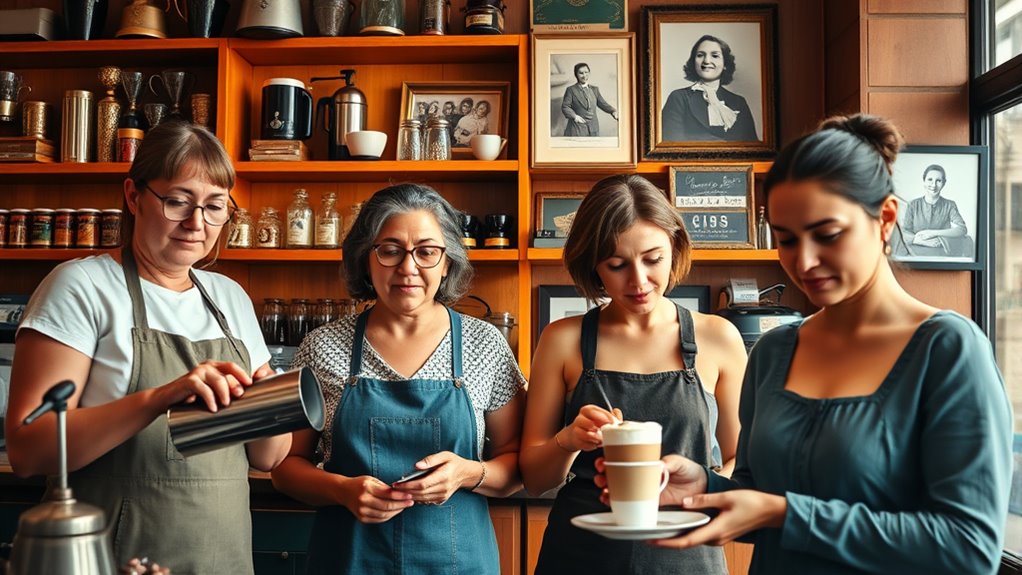

Women have played crucial roles in shaping coffee’s history as traders, owners, and baristas, often working behind the scenes to influence every aspect of the industry. They have managed farms, launched cafes, and pushed innovative brewing techniques—all while promoting sustainability and social responsibility. Their leadership helps transform the industry toward a more inclusive and eco-friendly future. If you’re curious about how women continue to impact coffee today, there’s more to discover below.
Key Takeaways
- Women have historically worked as traders, owners, and intermediaries within the coffee trade networks.
- Female entrepreneurs have launched cafes and roasteries, emphasizing ethically sourced and sustainable coffee.
- Women baristas bring skill, creativity, and innovation to brewing and flavor pairing.
- Throughout history, women’s leadership in coffee has shaped cultivation, sales, and consumption patterns.
- Their ongoing contributions continue to influence the industry’s sustainability, diversity, and future development.

Have you ever wondered about the essential role women have played in shaping coffee’s history? Women have long been integral to the evolution of coffee, often working behind the scenes as traders, owners, and baristas. Their contributions go beyond mere participation; they’ve driven important shifts in how coffee is grown, sold, and enjoyed. In recent years, women have become especially influential in promoting sustainable farming practices, ensuring that coffee cultivation respects both the environment and local communities. By adopting innovative approaches to farming, women are helping to protect crucial ecosystems and improve the livelihoods of farmers, fostering a more resilient and ethical coffee industry.
Throughout history, women have been pivotal in coffee trade networks, often acting as intermediaries or owners of small businesses. In many coffee-producing regions, women manage farms, oversee harvesting, and engage in local trading. Their involvement isn’t just about labor; it’s about leadership and decision-making that shapes the entire supply chain. As entrepreneurs, women have launched cafes and roasteries that emphasize ethically sourced beans and sustainable practices. These establishments often prioritize eco-friendly methods, supporting the shift towards a greener, more equitable coffee industry. Their initiatives not only elevate their communities but also influence global coffee trends, highlighting the importance of sustainable farming and innovation.
In the bustling world of cafes, women baristas bring skill, passion, and creativity to every cup they serve. Their expertise in brewing and flavor pairing often introduces new styles and techniques, pushing the boundaries of traditional coffee culture. Many women baristas are also advocates for sustainable practices within their establishments, pushing for environmentally friendly cups, fair-trade beans, and waste reduction. Their commitment to coffee innovation is evident in how they experiment with brewing methods, new blends, and presentation styles, making coffee more dynamic and accessible. This drive for innovation often aligns with broader sustainability goals, creating a more conscious and forward-thinking coffee scene.
Women’s roles in coffee history aren’t confined to the past; they continue to shape the industry today. From pioneering sustainable farming techniques to inspiring coffee innovation in cafes worldwide, women are transforming the way coffee is produced, marketed, and enjoyed. Their leadership and creativity serve as a reminder that the future of coffee depends on inclusive, innovative efforts that prioritize environmental and social responsibility. Recognizing the contribution of women in the industry highlights the importance of diversity and equity in fostering a more sustainable and resilient coffee culture. As you explore the diverse world of coffee, recognize the women whose dedication and ingenuity have helped craft the rich, complex beverage we cherish today.
Frequently Asked Questions
How Have Women Influenced Coffee Farming Techniques Historically?
Women have historically influenced coffee farming techniques through their roles in women’s harvesting and applying traditional techniques. You can see their impact in how they carefully select and handpick coffee cherries, maintaining quality and sustainability. Their knowledge of traditional methods helps preserve age-old practices, often passed down through generations. By actively participating in harvesting and farming, women shape the evolution of coffee cultivation, ensuring both tradition and innovation thrive in the industry.
What Challenges Did Women Face in Coffee Trading Markets?
You face significant challenges in coffee trading markets due to gender disparities and limited market access. These barriers often prevent women from gaining equal opportunities, fair pricing, or access to resources. You might struggle with recognition and influence within the industry, making it harder to expand your trade or secure better deals. Overcoming these obstacles requires advocating for gender equality and creating platforms that guarantee fair market access for women.
Are There Notable Women Coffee Entrepreneurs From the Past?
Imagine a bustling coffee shop, where female baristas craft each cup with skill—this reflects the resilience of women entrepreneurs. Historically, women like Melitta Bentz, who invented the coffee filter, made notable strides. Today, women-owned cafes thrive, showcasing their entrepreneurial spirit. You can find inspiring stories of women who’ve built coffee empires, proving that women continue to shape coffee’s rich history—one brew at a time.
How Has Women’s Participation in Coffee Competitions Evolved?
You’ll see that women’s participation in coffee competitions has considerably evolved, breaking traditional gender dynamics. Over the years, more women now compete, showcase their skills, and gain recognition, shifting the competition history toward greater inclusivity. Your involvement helps challenge stereotypes and encourages others to pursue their passion in the industry. This progress highlights how gender dynamics are changing, fostering a more diverse and equal environment for future coffee champions.
What Role Do Women Play in Sustainable Coffee Initiatives Today?
Women wield wonderful influence in sustainable coffee initiatives today, championing eco-friendly practices and leading change. You can see female leadership fostering fair trade, reducing waste, and promoting organic farming. Women’s passionate participation supports environmental efforts and social equity, empowering communities and protecting resources. By embracing these eco-conscious efforts, you help advance sustainability, ensuring coffee’s future is friendly to both the planet and its people.
Conclusion
Now that you’ve seen how women shaped coffee’s journey—from traders to baristas—doesn’t it make you wonder how many more stories are waiting to be uncovered? Their resilience and influence remind us that women’s contributions are essential to every sip of coffee we enjoy today. So next time you take a cup, consider the women behind the scenes—what legacy will you help continue? The future of coffee is in your hands.