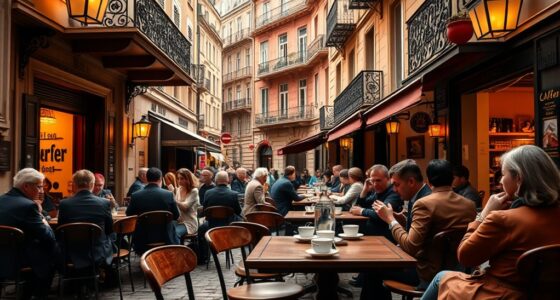
London’s coffeehouses, opening in the 17th century, became the foundation of modern business and finance. They served as lively hubs for merchants, thinkers, and traders to exchange ideas, shaping economic practices and fostering collaboration. These venues led to the development of the Stock Exchange and new financial instruments, transforming London into a global financial center. If you want to discover how these bustling cafés sparked economic and social change, keep exploring.

Get coffee and tea gear delivered free with Prime
- Fast, free delivery on millions of items
- Prime Video, Amazon Music and more included
- Member-only deals all year
Key Takeaways
- Originated in the 17th century as social hubs fostering open discussion and innovation.
- Served as the birthplace of the Stock Exchange and early financial practices.
- Facilitated the spread of market information, influencing economic development.
- Enabled entrepreneurs and investors to network, supporting business growth and risk-taking.
- Laid the foundation for modern capitalism and global financial markets.
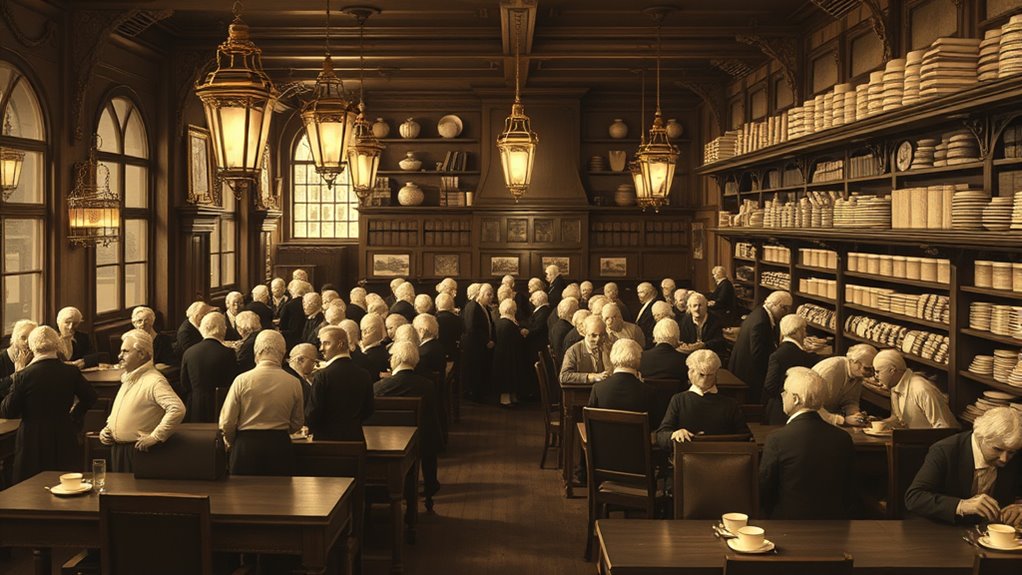
Have you ever wondered where London’s vibrant coffee culture began? It all started in the 17th century when the city’s first coffeehouses opened their doors. These establishments quickly became more than just places to sip a hot drink; they transformed into lively hubs of conversation, commerce, and innovation. As you step into a historic London coffeehouse, you’re walking into a space that helped shape the modern world. Back then, coffeehouses earned a reputation as “penny universities” because for just a penny, you could engage in stimulating debates, learn the latest news, or exchange ideas. These venues fostered an energetic coffeehouse culture that drew in merchants, politicians, writers, and thinkers. It was a melting pot of intellect and entrepreneurship, setting the stage for a profound social shift.
This buzz of activity didn’t just influence social life—it sparked a financial revolution. Coffeehouses became the nerve centers of London’s economy, where traders and businessmen gathered to discuss deals, share market insights, and make investments. The famous Stock Exchange, for example, traces its origins to these bustling venues. As you imagine the scene, picture rows of people sipping coffee, their conversations fueling economic growth and shaping financial practices still in use today. The informal yet vibrant atmosphere allowed for the rapid spread of information, giving rise to new financial instruments and practices. It was in these coffeehouses that stocks, bonds, and joint-stock companies gained traction, helping to fund exploration, trade, and expansion across the globe. Additionally, the early financial practices developed in these venues laid the groundwork for modern capitalism and global commerce.
The importance of these early coffeehouses extends beyond mere social interaction. They became the birthplace of modern business thinking, laying the groundwork for capitalism as we know it. Entrepreneurs and investors utilized these venues to network, share ideas, and take risks. Their interactions created an environment where commerce flourished, and new industries emerged. The coffeehouse culture encouraged open dialogue and collaboration, ideas that still underpin modern financial markets. As you reflect on this history, you realize that London’s coffeehouses weren’t just about caffeine—they were catalysts for economic and social transformation. They helped shift the city from a medieval economy to a thriving financial hub, setting the foundation for London’s reputation as a global financial center. Today, the legacy of those early coffeehouses lives on, reminding us how a simple cup of coffee can spark revolutionary change.
As an affiliate, we earn on qualifying purchases.
Frequently Asked Questions
When Did the London Coffeehouse First Open?
You’ll find that the London Coffeehouse first opened in 1652, marking a pivotal moment in the historical coffee trade. Its coffeehouse architecture featured large windows and a welcoming atmosphere, encouraging lively discussion and commerce. As you explore, you’ll see how these spaces became hubs for business, finance, and intellectual exchange, shaping modern commerce. The coffeehouse’s design and role in the trade laid the foundation for today’s bustling business environments.
Who Founded the Original London Coffeehouse?
You’ll find that the original London coffeehouse was founded by an individual deeply involved in the early coffee trade and merchant networks. This visionary merchant saw the potential of coffee as a social and commercial hub, which helped expand the early coffee trade across Europe. By establishing this coffeehouse, they created a space where merchants, traders, and businessmen could meet, exchange ideas, and build valuable connections that fueled modern commerce.
What Beverages Were Served at the Earliest Coffeehouses?
You’ll find that the earliest coffeehouses primarily served coffee brewed from roasted beans, offering a rich, stimulating drink. They also provided tea alternatives, such as infusions of herbs and spices, catering to diverse tastes. These beverages became popular for their energizing effects and social appeal. Coffee brewing techniques improved over time, making these establishments lively hubs for conversation, business, and exchanging news, shaping modern social and commercial practices.
How Did Coffeehouses Influence Social Classes in London?
Imagine stepping into a bustling coffeehouse as a bridge across social divides. Coffeehouses disrupted social stratification by offering spaces where merchants, writers, and aristocrats mingled, fostering class mobility. You see, they transformed London’s social scene, making ideas and networking accessible beyond traditional class boundaries. These venues broke down barriers, encouraging dialogue and collaboration, ultimately shaping a more interconnected society where social mobility became more attainable.
Are There Any Surviving Artifacts From the Original Coffeehouse?
You’ll find some historical artifacts from the original London Coffeehouse, though few remain intact. Preservation efforts have aimed to protect what’s left, like old coins, manuscripts, and architectural pieces. These artifacts offer a glimpse into its rich history and influence on commerce. If you visit museums or historical sites in London, you might see these remnants, helping to keep the coffeehouse’s legacy alive for future generations.
Conclusion
Today, London’s coffeehouses continue to shape global commerce. Did you know that in the 18th century, over 3,000 coffeehouses thrived in London, fueling ideas and business deals? These vibrant spaces sparked the birth of modern finance and networking. So, next time you grab a coffee, remember you’re part of a rich tradition that started here, where conversations over a cup led to world-changing innovations. The humble coffeehouse truly revolutionized how we do business.
Halloween Picks
halloween
As an affiliate, we earn on qualifying purchases.