
Choosing the right milk for your cappuccino can make a big difference in flavor, texture, and foam quality. Whole milk gives you a rich, creamy foam, while 2% offers a lighter experience with good froth. Plant-based options like oat, almond, or soy milk vary in frothing ability and taste, influencing your drink’s overall feel. If you want to perfect your latte art and flavor balance, understanding these differences can help you craft the perfect cup—keep going to learn more.

Get coffee and tea gear delivered free with Prime
- Fast, free delivery on millions of items
- Prime Video, Amazon Music and more included
- Member-only deals all year
Key Takeaways
- Whole milk creates dense, velvety foam with rich flavor; 2% offers a lighter, smooth foam with less fat.
- Dairy alternatives like oat and soy milk froth easily, producing creamy microfoam similar to dairy milk.
- Milk choice impacts cappuccino texture, flavor, and visual appeal, influencing overall drinking experience.
- Proper frothing technique varies by milk type; temperature and aeration are key for ideal microfoam.
- Experimenting with different milks can optimize taste, texture, and presentation of your cappuccino.

Have you ever wondered what makes a perfect cappuccino so creamy and flavorful? The secret often lies in the milk you choose and how you prepare it. The type of milk can dramatically influence the texture, taste, and overall experience of your drink. Whether you prefer whole milk, 2%, or dairy alternatives, understanding their differences and mastering frothing techniques is essential to achieving that ideal foam and rich flavor.
The milk you choose and how you froth it define your perfect cappuccino’s creaminess and flavor.
If you’re used to traditional dairy, whole milk is a popular choice because of its balanced fat content. It creates a velvety, dense foam that clings beautifully to the espresso, giving that characteristic creamy top. However, if you’re looking to cut calories or reduce fat, 2% milk offers a lighter alternative without sacrificing too much creaminess. It froths well and provides a slightly different mouthfeel, but it still produces a luscious foam that complements the espresso without overpowering it.
Dairy alternatives have gained popularity for various reasons, including lactose intolerance, vegan lifestyles, or simply experimenting with new flavors. Options like almond milk, soy milk, oat milk, and coconut milk each have unique properties that influence frothing. For instance, oat milk tends to froth easily and creates a creamy, stable foam similar to dairy milk, making it a favorite among baristas and home enthusiasts. Soy milk also froths well, offering a silky texture, but it may have a stronger flavor that can alter the overall profile of your cappuccino. Meanwhile, almond milk, especially the unsweetened kind, can be trickier to froth because of its lower protein content, but with practice and the right techniques, you can still achieve a satisfying foam.
Mastering frothing techniques is key regardless of the milk you choose. Proper steaming creates microfoam—tiny, uniform bubbles that give your cappuccino its signature smoothness and shine. You want to start with cold milk and steam it gently, positioning the steam wand just below the surface to introduce air gradually. As the milk heats, keep the wand near the side of the pitcher to incorporate air evenly and avoid large bubbles. Then, submerge the wand deeper to heat the milk uniformly, aiming for around 150°F (65°C). A good understanding of milk composition can improve your frothing results, ensuring your foam is silky and persistent, enhancing the overall flavor and presentation.
In the end, the best cappuccino depends on your preferences and dietary needs. Experiment with different types of milk, refine your frothing skills, and you’ll discover the perfect balance of creaminess and flavor that makes each cup special.
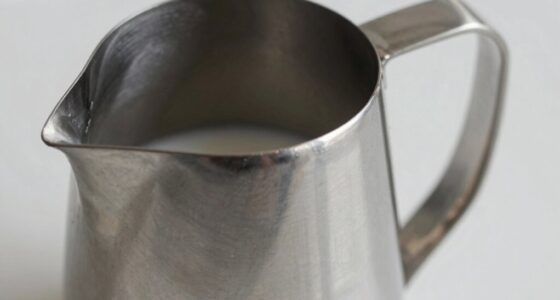
milk frothing pitcher for cappuccino
As an affiliate, we earn on qualifying purchases.
As an affiliate, we earn on qualifying purchases.
Frequently Asked Questions
How Does Milk Temperature Affect Foam Quality?
You’ll find that milk temperature considerably impacts your milk frothing and foam quality. When you control the temperature precisely, usually between 140-160°F, you create ideal conditions for smooth, glossy foam. Too hot, and the milk can scald, ruining froth; too cold, and it won’t froth well. Proper temperature control helps you achieve consistent, stable foam, making your cappuccinos look and taste perfect every time.
Can Plant-Based Milks Be Steamed Like Dairy Milk?
Like turning a blank canvas into art, you can steam plant-based milk using proper techniques. While it may not behave exactly like dairy, most plant-based milks—such as almond, soy, or oat—can be steamed successfully. Use gentle heat and steady steaming techniques to create a creamy foam. Keep in mind, some plant milks foam better than others, so experiment to find your perfect texture.
What Are the Best Milk Options for Lactose Intolerance?
If you’re lactose intolerant, you should choose lactose-free options or dairy-free alternatives like almond, soy, oat, or coconut milk. These options are naturally free of lactose and often work well for steaming and frothing, making them perfect for cappuccinos. Experiment with different plant-based milks to find the one that best suits your taste and texture preferences, ensuring a delicious coffee experience without discomfort.
How Does Milk Fat Content Influence Cappuccino Flavor?
Milk fat content considerably influences cappuccino flavor by enhancing creaminess and overall richness. Higher fat levels, like in whole milk, create a smoother, more indulgent taste, boosting flavor enhancement and mouthfeel. Lower fat options, such as skim milk, produce a lighter drink with less creaminess, which can diminish the depth of flavor. Choose your milk based on your preference for creaminess and desired flavor intensity in your cappuccino.
Are There Health Benefits to Choosing Certain Milk Types?
Imagine holding a warm mug of steaming milk, its creamy surface inviting you to sip. Choosing certain milk types offers nutritional benefits like calcium, vitamin D, and protein, supporting your bones and immune system. If you have allergies or sensitivities, plant-based alternatives like almond or soy milk may reduce allergen concerns. Opting wisely helps you enjoy your cappuccino while nourishing your body and avoiding potential health issues.
Conclusion
Remember, milk choice shapes your cappuccino experience. Whether you prefer the richness of whole milk, the lighter touch of 2%, or plant-based alternatives, each brings its own flavor and texture. As the saying goes, “You are what you eat,” so choose what makes you happy and suits your taste. Ultimately, it’s about savoring your perfect cup—because the right milk can turn a simple coffee into a delightful moment.
Halloween Picks
halloween
As an affiliate, we earn on qualifying purchases.