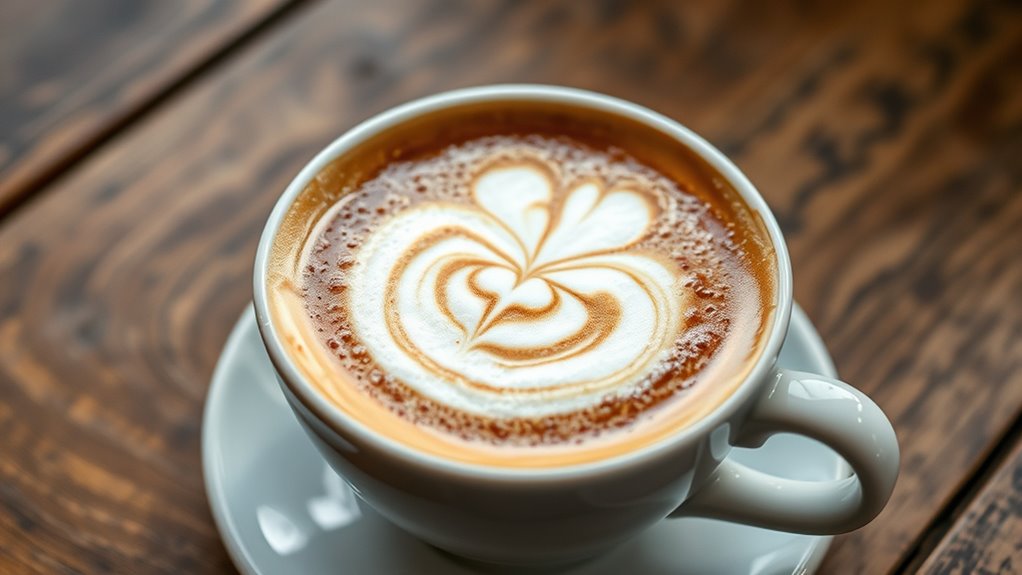

The history of cappuccino starts in Vienna’s coffee houses in the 17th and 18th centuries, where early versions like the “Kapuziner” made with cream and spices appeared. Italians later refined the drink by blending espresso with frothy milk, naming it after the Capuchin friars because of the color resemblance. Over time, technological advances and cultural influences shaped what we now enjoy as the iconic cappuccino. To learn more about this journey from Vienna to Italy, continue exploring its fascinating story.
Key Takeaways
- The cappuccino’s origins trace back to Vienna’s 17th-18th century coffee houses, where early versions like the Kapuziner resembled the modern drink.
- Italian cafes refined the beverage by blending espresso with thick, frothy milk, popularizing the name “cappuccino” linked to Capuchin friars.
- Technological advances in espresso machines improved the drink’s quality and accessibility, boosting its global popularity.
- The evolution of coffee culture from Vienna to Italy showcases cultural exchange, innovation, and social significance over centuries.
- Today, the cappuccino symbolizes worldwide coffee culture, reflecting centuries of adaptation and technological progress.

Have you ever wondered where the beloved cappuccino originated? This rich, frothy beverage has a fascinating history that reflects the evolution of coffee culture over centuries. The story begins in a time when coffee was just starting to make its way across Europe, and the beverage itself was undergoing a significant evolution. Originally, coffee was a simple, black brew enjoyed in taverns, but as it gained popularity, people began experimenting with different ways to prepare and serve it. The cappuccino, in particular, emerged from this period of experimentation, blending various techniques and traditions to create a distinctive drink.
The cappuccino’s origins trace back to Europe’s early coffee experimentation and Viennese coffee houses.
The roots of the cappuccino can be traced back to Vienna, where coffee houses became central to social life in the 17th and 18th centuries. It was in these bustling cafés that the initial ideas for combining espresso with frothy milk took shape. These early versions of the beverage were more akin to the Austrian “Kapuziner,” a coffee mixed with cream and spices, which served as an early precursor to the modern cappuccino. The coffee culture in Vienna heavily influenced the beverage’s development, emphasizing not just flavor but also presentation and social experience. The Viennese coffee house scene fostered a sense of community, and drinks like the Kapuziner set the stage for future innovations.
As the beverage evolved, Italy began to refine and popularize it, turning the cappuccino into the iconic drink we recognize today. Italian baristas adopted the concept of blending espresso with frothy milk, but it was the addition of a thick layer of foam that truly defined the drink. By the early 20th century, cafes in Italy were serving what they called “cappuccino,” a nod to the Capuchin friars, whose brown robes resembled the color of the beverage’s foam and coffee mixture. This connection also highlights the influence of cultural and religious symbolism on the beverage’s naming and presentation. The development of specialized espresso machines greatly contributed to the consistency and quality of the drink, making it more accessible and popular worldwide.
Today, the cappuccino is more than just a popular coffee order; it’s a symbol of coffee culture worldwide. Its journey from Vienna’s coffee houses to Italy’s cafés showcases how the beverage has evolved alongside technological advances, societal trends, and global tastes. The modern cappuccino continues to adapt, with baristas experimenting with latte art and flavor variations, yet its core remains rooted in centuries of beverage evolution. So, every time you enjoy a cappuccino, you’re partaking in a rich history that spans centuries and continents, reflecting a continuous journey of innovation and cultural exchange.
As an affiliate, we earn on qualifying purchases.
Frequently Asked Questions
When Was Cappuccino First Invented?
You might find it interesting that cappuccino was first invented in the early 1900s, around the 1900s to be precise. Its origins trace back to the coffee brewing techniques developed in Vienna, where baristas experimented with different methods. When Italian baristas adopted these techniques, they created a rich, frothy coffee beverage. This fusion of Vienna’s coffee origins and Italian brewing techniques led to the beloved cappuccino we enjoy today.
Who Popularized Cappuccino Outside Austria and Italy?
You can thank American tourists and the rise of coffee culture in the United States for popularizing cappuccino outside Austria and Italy. Baristas in trendy cafes, inspired by Italian traditions, began crafting these drinks with artistic foam designs, making cappuccino a fashionable choice worldwide. Their influence helped spread the drink’s popularity, turning it into a staple of global coffee culture and inspiring many to enjoy this creamy, rich beverage.
What Are the Original Ingredients of Traditional Cappuccino?
Imagine a tiny artful masterpiece in your cup. The original cappuccino combines a rich espresso shot, which acts as the vibrant heart, with a cloud-like layer of milk foam that gently crowns it. These simple ingredients create a harmonious blend, balancing boldness and creaminess. When you sip, you experience the perfect marriage of strong coffee and velvety foam, a timeless duo that started it all.
How Has the Recipe for Cappuccino Evolved Over Time?
You see, over time, the recipe for cappuccino has evolved by refining the balance of milk foam and coffee beans. Originally, baristas used simple, strong coffee and thick milk foam, but now, you often find variations with different coffee beans and textured milk. Modern recipes emphasize creamy, velvety milk foam paired with freshly brewed espresso, making each sip a perfect harmony of rich coffee and airy foam.
Are There Regional Variations of Cappuccino Worldwide?
You’ll find regional variations of cappuccino worldwide, each shaped by local tastes and customs. For example, in Australia, you might enjoy a flat white, while in Italy, a traditional cappuccino features a perfect balance of espresso, steamed milk, and foam. These global adaptations reflect regional preferences, making each cappuccino unique. It’s fascinating how this beloved drink adapts, blending history with local flavor, creating a rich tapestry of coffee culture worldwide.
Conclusion
Now that you know the rich history of cappuccino, you can almost taste its journey from Vienna’s elegant cafes to Italy’s bustling bars. It’s more than just a coffee; it’s a cultural masterpiece that has shaped breakfast tables worldwide. So next time you sip your cappuccino, remember you’re partaking in a tradition older than most empires—an exquisite blend of history and flavor that’s truly legendary. Cheers to the timeless magic in every cup!