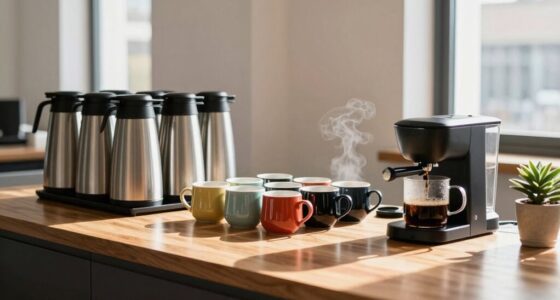
If you notice coffee triggers your anxiety or makes you feel jittery, consider cutting back or switching to lower-caffeine options like decaf or herbal teas. Tolerance varies based on your genetics, body weight, and health, so paying attention to how your body reacts is key. Try pairing coffee with a snack and avoid caffeine later in the day to improve sleep and reduce symptoms. Keep exploring tips and strategies to find what works best for you.

Get coffee and tea gear delivered free with Prime
- Fast, free delivery on millions of items
- Prime Video, Amazon Music and more included
- Member-only deals all year
Key Takeaways
- Caffeine can trigger or worsen anxiety symptoms like jitters, tension, and racing thoughts, especially in sensitive individuals.
- Reducing caffeine intake or choosing lower-caffeine options can help manage anxiety and improve tolerance.
- Consuming coffee with food, avoiding late-day caffeine, and practicing relaxation techniques can minimize anxiety effects.
- Recognizing personal caffeine sensitivity aids in tailoring intake to prevent anxiety spikes.
- Alternatives like herbal teas or decaffeinated beverages can promote calmness and reduce anxiety triggers.

Many people rely on coffee to start their day, but for some, that morning boost can come with an unwanted side effect: increased anxiety. If you find yourself feeling jittery, tense, or overwhelmed after a cup or two, caffeine sensitivity might be playing a role. Caffeine sensitivity varies from person to person, influenced by genetics, body weight, and overall health. When you’re more sensitive, even small amounts of caffeine can trigger or worsen anxiety symptoms. Recognizing this is the first step toward managing your response to coffee.
To better handle this, you should explore anxiety management techniques that help you stay balanced. Deep breathing exercises, meditation, or mindfulness practices can be effective in calming your mind and body, especially if caffeine spikes your anxiety levels. When you notice your heart racing or your thoughts spiraling, taking slow, deliberate breaths can bring immediate relief. Incorporating regular physical activity into your routine also helps regulate your nervous system, making you less reactive to caffeine’s effects over time.
Adjusting your caffeine intake is essential if you’re sensitive. You don’t have to give up coffee altogether, but consider reducing your dose or choosing lower-caffeine options like half-caff or decaffeinated brews. Pay attention to how different types of coffee affect you, as darker roasts typically have slightly less caffeine than lighter roasts. Also, avoid drinking coffee on an empty stomach, as this can amplify its stimulant effects and lead to heightened anxiety. Instead, pair your coffee with a balanced meal or snack to slow caffeine absorption and lessen its impact.
Timing your caffeine consumption wisely can make a difference. Limit your coffee intake to earlier in the day so that it doesn’t interfere with your sleep, as poor sleep can compound anxiety symptoms. If you notice that caffeine makes you more anxious, try substituting your morning cup with herbal teas or other non-caffeinated beverages. These can provide a comforting ritual without the stimulant effects, helping you start your day calmly. Additionally, understanding personal caffeine sensitivity can guide you in customizing your intake and minimizing adverse effects.
As an affiliate, we earn on qualifying purchases.
Frequently Asked Questions
Can Decaffeinated Coffee Still Cause Anxiety Symptoms?
Decaffeinated coffee can still cause anxiety symptoms because of its decaffeinated effects, which may vary from person to person. Even small amounts of caffeine or other compounds in decaf can trigger anxiety reactions in sensitive individuals. If you notice anxiety symptoms after drinking decaf, it’s wise to reduce your intake or switch to herbal alternatives. Pay attention to your body’s responses to better manage your anxiety.
How Much Coffee Is Safe for Someone With Anxiety?
You should limit your coffee consumption based on your caffeine sensitivity, typically staying under 200 mg daily, which is about two cups. Pay attention to how your body reacts, as anxiety symptoms can worsen with higher intake. Follow personalized coffee consumption recommendations and consider reducing or switching to decaf if you notice increased anxiety. Always listen to your body’s signals and consult a healthcare professional for tailored advice.
Do Different Coffee Brewing Methods Affect Anxiety Levels?
Yes, different coffee brewing methods can affect your anxiety levels. For example, brewing strength influences caffeine concentration; a stronger brew may increase anxiety symptoms. Brewing temperature also matters—hotter methods like French press or espresso extract more caffeine quickly, potentially triggering anxiety. If you’re sensitive, opt for milder methods like drip or cold brew, which generally have lower caffeine intensity. Adjusting brew strength and temperature helps you manage your anxiety better.
Can Herbal or Alternative Coffees Reduce Anxiety?
You might find that herbal infusions and caffeine substitutes can help reduce anxiety, especially when you notice how a coincidental craving for comfort often aligns with feeling overwhelmed. Switching to herbal infusions like chamomile or lavender can provide calming effects without the jitters. These alternatives offer a gentle boost, allowing you to enjoy a warm beverage without triggering anxiety, making them a thoughtful choice for managing your stress levels.
How Long Does Caffeine Stay in Your System and Affect Anxiety?
Caffeine typically stays in your system for about 3 to 7 hours, depending on your caffeine metabolism. This means its effects on anxiety can last for several hours, sometimes intensifying feelings of unease or jitters. If you’re sensitive, the anxiety duration may extend beyond this window. To manage this, limit caffeine intake earlier in the day and monitor how your body responds to avoid prolonged anxiety symptoms.
Conclusion
So, next time you reach for that extra cup of coffee to calm your nerves, remember—it might just be the caffeine culprit causing your anxiety. Ironically, what’s supposed to boost your mood could be fueling your stress instead. Maybe it’s time to swap that java for a calming tea, and find peace without the jitters. After all, sometimes the best way to chill out is to quit chasing that perfect caffeine buzz.
Halloween Picks
halloween
As an affiliate, we earn on qualifying purchases.