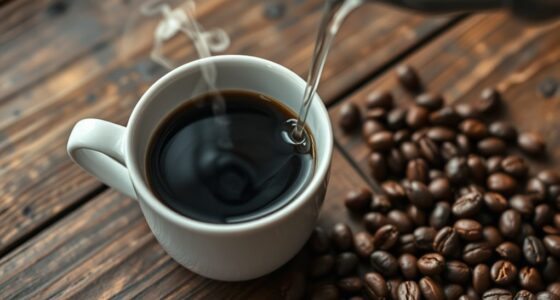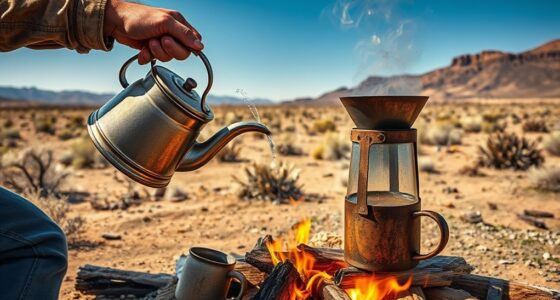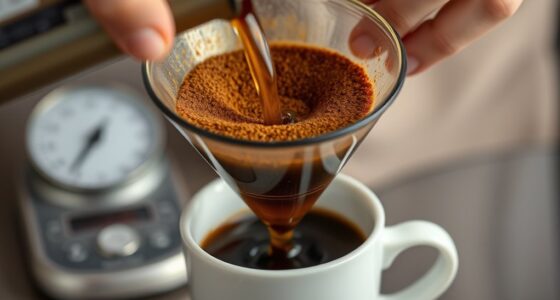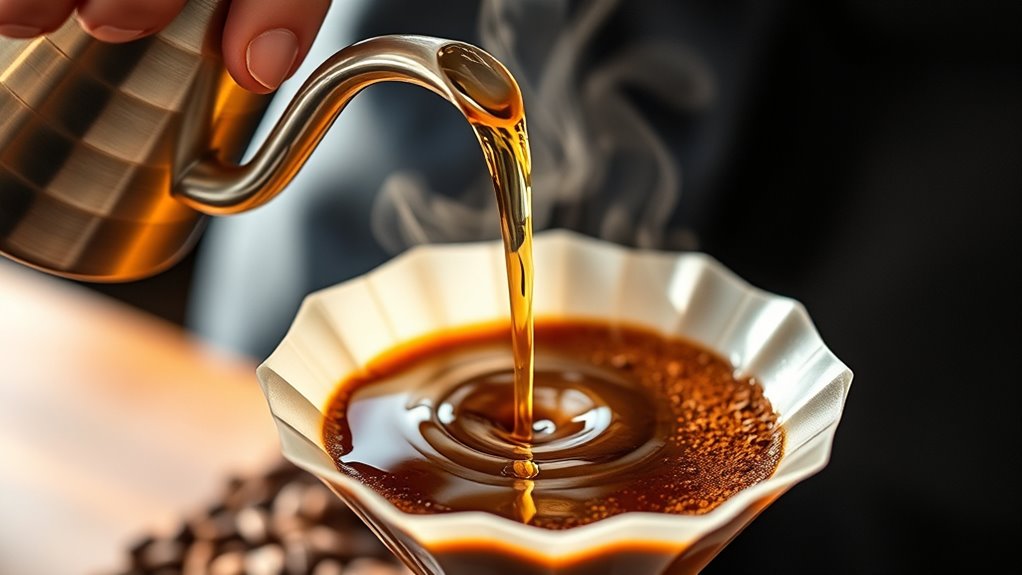

To boost yield in pour-overs without causing astringency, focus on controlling your extraction process carefully. Use a slightly finer grind to increase surface area, but avoid going too fine to prevent clogging. Keep your water temperature around 195-205°F for ideal extraction, and pour steadily with even saturation. Extend your brew time slowly to enhance flavor without overdoing it. Mastering these tweaks helps you push flavor and yield while minimizing bitterness—keep exploring for more insights.
Key Takeaways
- Use a slightly finer grind to increase surface area without clogging filters, enhancing extraction and yield.
- Maintain water temperature around 195-205°F to optimize extraction while minimizing bitterness.
- Employ a steady, controlled pour with a spiral motion for uniform saturation and balanced extraction.
- Extend brew time carefully to increase yield without over-extracting and causing astringency.
- Adjust variables incrementally, monitoring flavor to find the optimal balance between richness and smoothness.
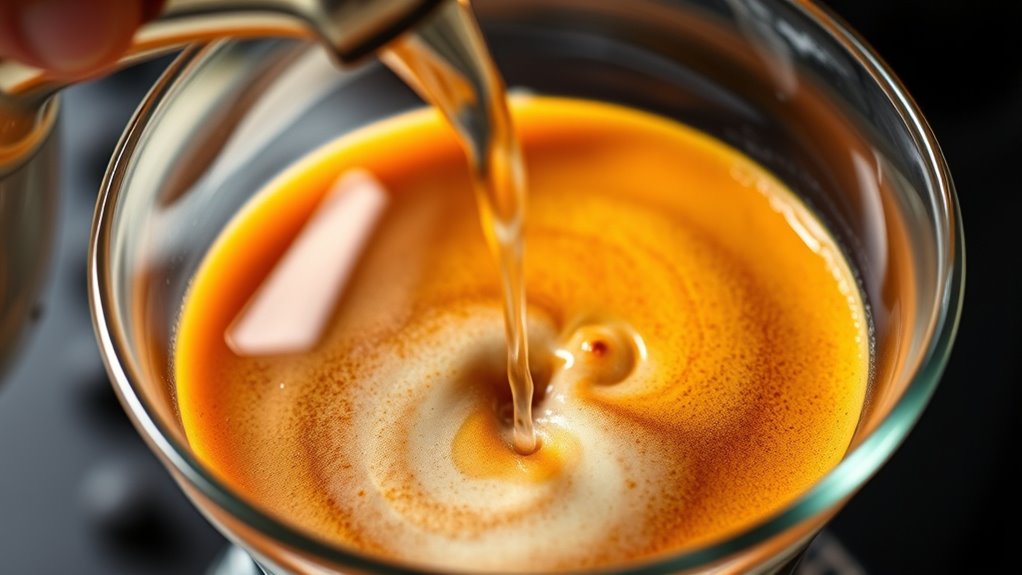
Have you ever wondered how to maximize the flavor and richness of your coffee? Achieving a high-extraction pour-over is about more than just pouring hot water over grounds; it’s about mastering the delicate balance between extracting enough solubles to boost yield while avoiding the bitter, astringent qualities that come with over-extraction. To reach this goal, focusing on flavor balance and refining your brewing techniques is essential. The key lies in understanding how extraction influences taste and how to control variables to push your brew’s potential without crossing into undesirable territory.
Maximize coffee flavor by balancing extraction and refining brewing techniques for a richer, smoother cup.
When you aim for high extraction, you want to pull out as much flavor from the coffee grounds as possible, but you don’t want to do so at the expense of clarity or smoothness. That’s where precise brewing techniques come into play. Adjusting your grind size, for instance, becomes critical. A slightly finer grind increases surface area, allowing water to extract more flavors during the pour. However, if it’s too fine, you risk clogging the filter and over-extracting, which can lead to bitterness. Experimenting with a grind that’s just a touch finer than usual can help you push the yield upward without sacrificing flavor quality.
Water temperature is another essential factor. Hotter water speeds up extraction, but if it’s too hot, it can pull out unwanted bitter compounds, upsetting your flavor balance. Maintaining water around 195-205°F allows for efficient extraction while preserving the coffee’s nuanced notes. The pour rate and pattern also matter: a steady, controlled pour ensures even saturation, preventing channels that lead to uneven extraction. Using a spiral or continuous pour can help distribute water uniformly across the grounds, maximizing yield without over-saturating any particular area.
Timing plays a role, too. Extending the brew time slightly can increase total extraction, but watch for signs of over-extraction, like a dull or overly harsh taste. Tuning your pour intervals—adding a brief pause before completing the pour—can help optimize flavor balance, giving the grounds time to release their full spectrum of flavors without becoming over-extracted. It’s about finding that sweet spot where you’re pulling maximum flavor with minimal bitterness. Additionally, understanding the impact of water temperature on extraction efficiency can help you fine-tune your process for optimal results.
In the end, achieving high extraction in a pour-over isn’t just about pushing for more coffee yield; it’s about controlling your brewing process with precision. By tweaking grind size, temperature, pour technique, and timing, you can greatly enhance the flavor profile of your brew. The result is a richer, more complex cup that showcases the coffee’s full potential, all while keeping unwanted astringency at bay. Master these techniques, and you’ll find yourself consistently brewing a perfectly balanced, high-yield pour-over every time.
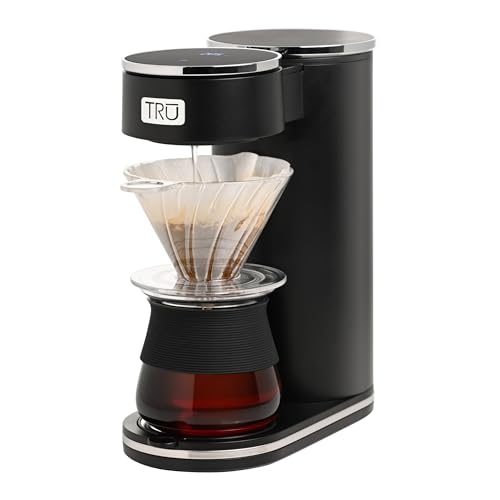
Tru Automatic Pour Over Coffee Maker with Digital Controls – Auto Coffee Maker with Plastic Cone Dripper – Coffee Brewer for Household Use
Automatic Pour Over Coffee Maker: This coffee maker is designed to deliver rich taste and robust aroma with…
As an affiliate, we earn on qualifying purchases.
As an affiliate, we earn on qualifying purchases.
Frequently Asked Questions
How Does Grind Size Affect High-Extraction Pour-Over Results?
You should use a consistent, medium grind size to optimize high-extraction pour-over results. Fine grinds increase extraction but risk over-extraction and astringency, while coarse grinds can lead to under-extraction. Ensuring grind uniformity promotes extraction consistency, allowing you to push yield without bitterness. Adjusting grind size carefully balances flavor and extraction, helping you achieve a smooth, well-rounded cup with high yield and minimal astringency.
What Specific Beans Are Best Suited for High-Extraction Brewing?
You should choose bean varietals like washed Arabicas or lightly roasted beans, which excel in high-extraction brewing. Their bright flavor profiles and clean cup qualities balance the potential for increased yield without adding astringency. While bold, dark roasts may seem tempting, they risk bitterness. Opt for beans with vibrant, nuanced flavor profiles that shine even at higher extractions, ensuring your pour-over remains smooth and flavorful.
How Can I Control Over-Extraction During Pour-Over?
To control over-extraction during pour-over, you should focus on refining your brewing techniques. Use a consistent, medium grind size and pour slowly in circular motions to guarantee even extraction. Adjust your brew time to avoid over-extracting the coffee, which can lead to bitterness. This helps maintain a balanced flavor profile, preventing astringency while maximizing yield. Experimenting with pour rate and timing allows you to fine-tune your process for ideal flavor balance.
Does Water Temperature Influence Flavor in High-Extraction Methods?
Ever wonder how water temperature shapes your high-extraction brew? It definitely influences flavor by affecting water chemistry and mineral influence, which in turn impacts extraction levels. Higher temperatures can enhance solubility, boosting yield, but risk over-extraction and astringency. Conversely, cooler water preserves delicate flavors. Adjusting temperature allows you to control extraction precisely, optimizing flavor without bitterness. So, yes, water temperature is a key factor in balancing high-yield pour-overs.
Are There Health Considerations With Higher Extraction Levels?
Higher extraction levels can pose health risks, especially if you consume excessive caffeine. You might experience increased heart rate, anxiety, or trouble sleeping. Be mindful of your intake, as too much caffeine can also cause dehydration or stomach discomfort. To enjoy your coffee without negative effects, consider balancing your brew strength and monitoring how your body responds. Moderation is key to avoiding adverse health effects.

KRUPS Precision Burr Coffee Grinder: 12 Settings, 8 oz Capacity for Drip, French Press, Espresso, Pour Over, Cold Brew – Stainless Steel, 110W, Auto-Stop, Easy Clean – Coffee Grinders for Home Use
12 CUSTOM SETTINGS: The adjustable coffee grinder allows you to choose from coarse to fine for brewing styles…
As an affiliate, we earn on qualifying purchases.
As an affiliate, we earn on qualifying purchases.
Conclusion
By mastering high-extraction pour-overs, you can boost your coffee yield without sacrificing clarity or balance. Studies show that brewing at higher extraction levels can increase your coffee’s solubles by up to 10%, enhancing flavor complexity. With careful control, you’ll enjoy richer, more vibrant cups while avoiding unwanted astringency. So, experiment confidently—your perfect balance of strength and smoothness is within reach, transforming your daily brew into a truly elevated experience.

Gooseneck Kettle for Manual Drip Coffee & Tea 40oz Stainless Steel Pour Over Coffee Kettle with Thermometer Tea Kettle for Stovetop,1200ml,6 Cup,Silver,1Pack
ENJOY BETTER COFFEE AT HOME: The coffee pot is designed with a gooseneck spout. This kind of gooseneck…
As an affiliate, we earn on qualifying purchases.
As an affiliate, we earn on qualifying purchases.

Maestri House S2 Espresso Coffee Scale with Timer, USB-C Rechargeable 2kg/0.1g Precision Shot Scale, Digital Scale for Espresso Brewing(Black & Silver)
【Ultra Small, Yet Professional】The Espresso Scale is small enough to fit in your palm. It measures 4.13*4.13*0.78 inches…
As an affiliate, we earn on qualifying purchases.
As an affiliate, we earn on qualifying purchases.