To create an inclusive café with a welcoming atmosphere, focus on sensory-friendly features, adaptable furniture, and physical accessibility. Use adjustable lighting and sound-absorbing materials to support diverse sensory needs, and offer a mix of seating options including wheelchair-accessible tables. Incorporate visual cues and quiet zones to help patrons self-regulate and feel comfortable. Paying attention to these elements guarantees your space fosters safety, comfort, and a sense of belonging—discover more ways to enhance inclusivity as you continue.

Get coffee and tea gear delivered free with Prime
- Fast, free delivery on millions of items
- Prime Video, Amazon Music and more included
- Member-only deals all year
Key Takeaways
- Incorporate sensory-friendly features like adjustable lighting and sound absorption to create a calming, welcoming atmosphere.
- Use adaptable furniture, such as height-adjustable tables and supportive seating, to ensure physical accessibility for all patrons.
- Design designated quiet zones to support self-regulation and reduce sensory overload.
- Implement visual cues, clear signage, and color-coded zones for easy navigation and orientation.
- Balance sensory stimuli with varied seating options and acoustic treatments to foster comfort, inclusion, and community engagement.
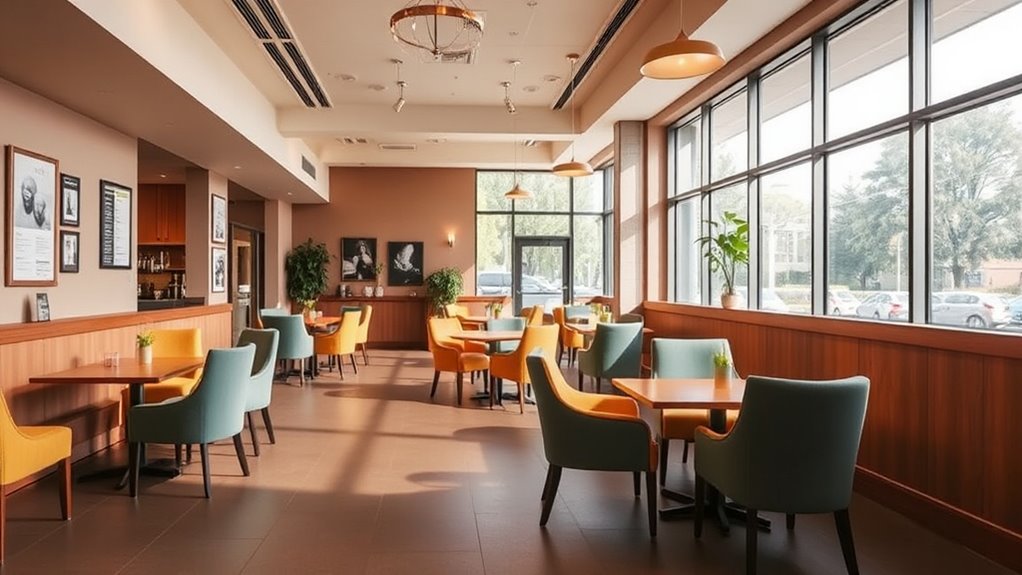
Designing an inclusive café means creating a space where everyone feels welcome and comfortable, regardless of their physical abilities or sensory needs. To achieve this, you need to focus on sensory integration, guaranteeing the environment supports diverse sensory processing styles. Sensory integration involves designing spaces that manage sensory input effectively, helping patrons feel calm and engaged without becoming overwhelmed. Incorporating adaptive furniture plays a vital role here. For example, adjustable chairs and tables allow individuals with mobility challenges or sensory sensitivities to find comfortable seating options. Soft, textured upholstery can provide tactile comfort, while varied seating arrangements can cater to different sensory preferences. By offering a mix of cozy booths, open tables, and quiet corners, you create zones where patrons can self-regulate, whether they seek stimulation or tranquility.
Creating an inclusive café with adaptive furniture and sensory-friendly features fosters comfort and belonging for all patrons.
Adaptive furniture also helps in accommodating those with physical disabilities. Installing height-adjustable tables makes it easier for wheelchair users to dine comfortably without feeling excluded or strained. Armrests and supportive backrests can offer additional comfort and stability. When selecting furniture, consider materials that minimize noise and vibrations, reducing unnecessary sensory input that could cause discomfort. This thoughtful combination of sensory-friendly features encourages a more inclusive atmosphere where everyone can relax and enjoy their experience. Additionally, incorporating a variety of sensory stimuli**** thoughtfully into the design can enhance comfort and engagement for diverse patrons.
Beyond furniture, the environment itself should support sensory integration. Use lighting that can be adjusted to avoid harsh glare and create a soothing ambiance. Incorporate sound-absorbing materials like acoustic panels or soft furnishings to control noise levels, making conversations clearer and reducing sensory overload. Visual cues, such as clear signage and color-coded zones, help patrons navigate the space with ease, especially those with sensory processing differences. Creating a balanced environment that considers these sensory aspects ensures your café feels accessible and inviting for all.
In essence, designing with sensory integration and adaptive furniture in mind transforms your café into a truly inclusive space. You’re not just providing physical access but fostering an environment where everyone can feel comfortable, safe, and engaged. Whether it’s offering adjustable furniture options, controlling sensory stimuli through thoughtful lighting and acoustics, or creating designated quiet zones, your efforts make a significant difference. When you prioritize sensory needs and adaptive features, you encourage a sense of belonging and community, making your café a welcoming haven for all.
Frequently Asked Questions
How Can I Ensure My Café Is Welcoming to All Disabilities?
You can make your café welcoming by installing clear visual signage with large, high-contrast text and symbols, ensuring everyone can navigate easily. Incorporate tactile pathways and floor markings to guide guests with visual impairments. Keep pathways wide and free of obstructions, and train staff to assist respectfully. These steps create an inclusive atmosphere where all customers feel comfortable and accommodated, regardless of their disabilities.
What Are Cost-Effective Accessibility Improvements for Small Cafés?
You can make your small café more accessible with affordable upgrades like installing ramps, widening doorways, and adding tactile signs. Partner with local community organizations to access resources, volunteer help, or grants aimed at improving accessibility. These efforts not only reduce costs but also foster community support. By implementing these simple, budget-friendly changes, you create a welcoming environment that shows your commitment to inclusivity for all customers.
How Does Café Atmosphere Influence Customer Inclusivity?
Your café’s atmosphere is the warm glow that invites everyone in, shaping a space where inclusivity blossoms like a garden in full bloom. A welcoming ambiance and cozy comfort encourage diverse customers to engage and feel at home. Implementing customer engagement strategies, like friendly staff and inviting decor, further fosters inclusivity. When your café radiates openness, it naturally draws in diverse patrons, making everyone feel valued and comfortable.
Are There Specific Design Guidelines for Sensory-Friendly Cafés?
Yes, there are specific design guidelines for sensory-friendly cafés. You should incorporate sensory lighting that’s soft and adjustable to reduce overstimulation, creating a calming environment. Acoustic comfort is also vital; use sound-absorbing materials like soft furnishings and partitions to minimize noise. Make certain pathways are clear, and seating options are varied to accommodate sensory sensitivities. These strategies help create an inclusive space where everyone feels comfortable and welcome.
How Can Staff Be Trained to Enhance Inclusivity and Accessibility?
Think of staff as the welcoming front porch of your café; their sensitivity sets the tone. To enhance inclusivity, train your staff in inclusive communication and raise awareness of diverse needs. Use role-playing scenarios and sensitivity workshops to build empathy. Regularly update training to keep staff informed. When your team listens and responds thoughtfully, you create a warm, accessible environment where everyone feels valued and comfortable.
Conclusion
By designing your café with accessibility and atmosphere in mind, you create a welcoming space for everyone. Did you know that 1 in 4 adults in the U.S. has a disability, yet many public spaces still fall short in accessibility? By embracing inclusive design, you not only expand your customer base but also foster a sense of community. Your efforts can make a real difference—turning your café into a vibrant, accessible hub for all to enjoy.
Halloween Picks
halloween
As an affiliate, we earn on qualifying purchases.