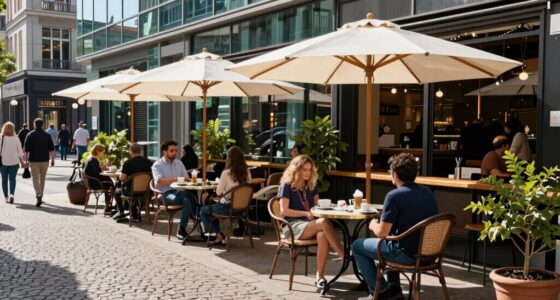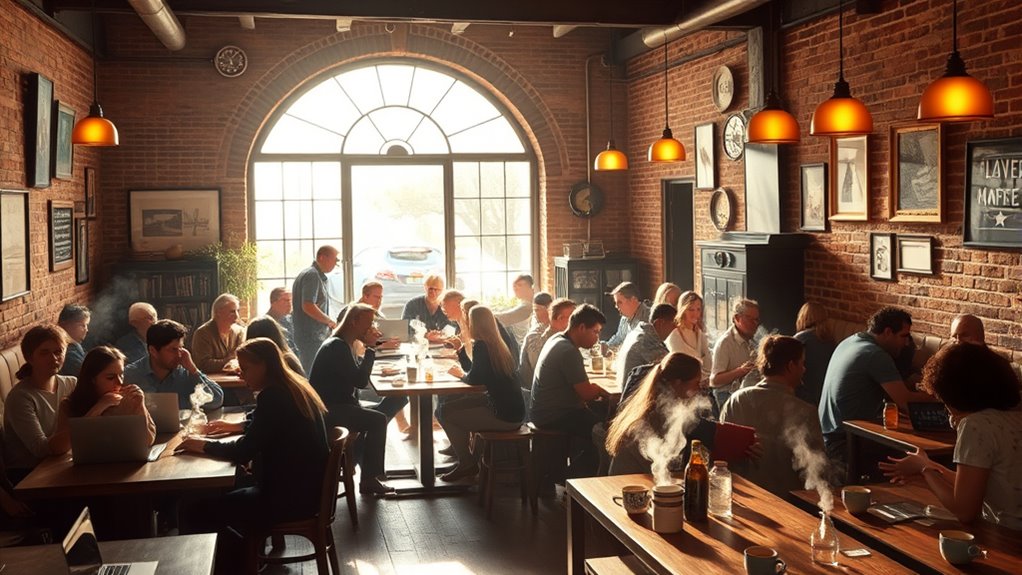

Cafés act as essential third places where you can connect with your community, share ideas, and enjoy cultural experiences beyond home and work. They host events, showcase local art, and foster social bonds that make neighborhoods vibrant and inclusive. These spaces encourage conversations, support local artists, and strengthen community pride. Want to discover how cafés become central hubs for community life? Keep exploring to find out more.

Get coffee and tea gear delivered free with Prime
- Fast, free delivery on millions of items
- Prime Video, Amazon Music and more included
- Member-only deals all year
Key Takeaways
- Cafés serve as informal gathering spaces that foster social interactions beyond home and work.
- They incorporate art, cultural events, and community activities, transforming into vibrant cultural hubs.
- Cafés promote community engagement by hosting workshops, local art displays, and neighborhood initiatives.
- They strengthen community identity and pride through regional talent showcases and shared cultural experiences.
- These spaces facilitate diverse connections, learning opportunities, and a sense of belonging within neighborhoods.
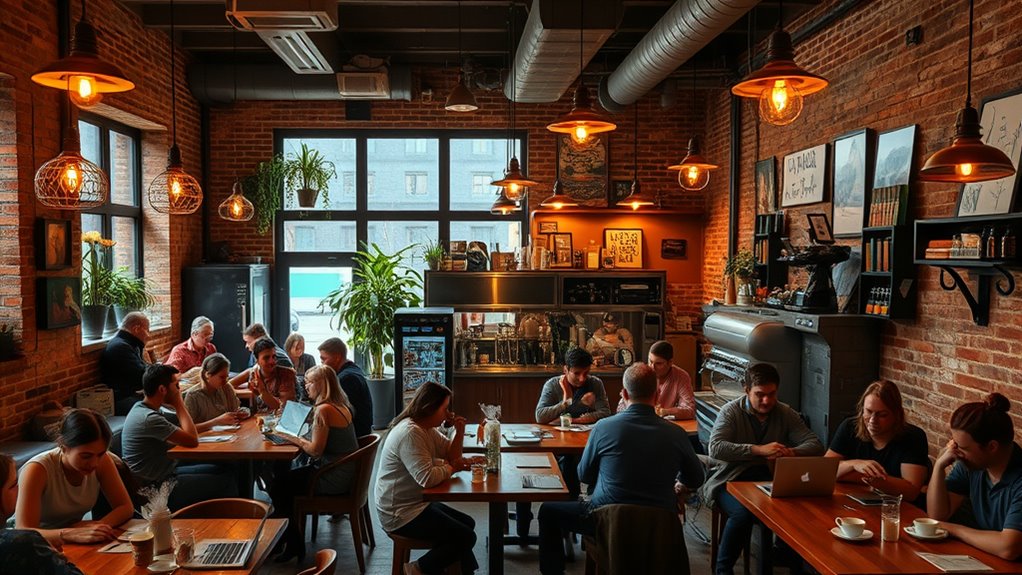
Cafés have long been places to enjoy a cup of coffee, but in many communities, they’ve become much more than that. They’re now vibrant hubs where locals gather, connect, and share experiences. One of the key ways they foster community spirit is through showcasing local art. When you step into these cafés, you often find walls adorned with works by local artists, giving you a chance to appreciate regional talent without venturing far. These displays create an inviting atmosphere, encouraging conversations about the art and supporting local creatives. It’s a mutually beneficial relationship—artists gain exposure, and you get to enjoy unique, often affordable, pieces that add character to the space. This focus on local art transforms the café from just a place to grab coffee into a cultural center, reinforcing a sense of community identity and pride.
Cafés showcase local art, creating inviting spaces that celebrate regional talent and foster community pride.
Beyond visual art, cafés also serve as venues for social events that bring people together. Whether it’s open mic nights, book clubs, or themed gatherings, these events provide opportunities for you to meet neighbors, share ideas, and build relationships. Many cafés actively promote these activities, creating a lively environment that extends beyond the usual quick coffee run. Participating in social events at your local café can help you develop a stronger sense of belonging, especially if you’re new to the area. These gatherings often foster diverse conversations and connections, breaking down social barriers and encouraging inclusivity. The friendly, relaxed setting makes it easy to engage with others, whether you’re a regular or visiting for the first time. Additionally, the integration of community initiatives can further enhance the sense of community involvement within these spaces.
Moreover, cafés as community hubs often become spaces for collaboration and support. Local artists may host workshops or art shows, giving you chances to learn new skills or simply enjoy the creative process. Social events can also serve as platforms for community causes or initiatives, rallying people around shared interests or concerns. You might even find yourself volunteering or participating in efforts that strengthen neighborhood bonds. In this way, cafés act as catalysts for community development, making them essential parts of local life.
In essence, your neighborhood café isn’t just about coffee; it’s a lively gathering spot that nurtures local art, encourages social interaction, and builds community resilience. It’s where you can discover new talents, meet interesting people, and feel more connected to the place you call home. These spaces remind you that a simple coffee break can evolve into meaningful experiences that enrich your sense of belonging and community pride.
As an affiliate, we earn on qualifying purchases.
Frequently Asked Questions
Cafés foster social interactions among diverse groups through community engagement and cultural exchange. You’re encouraged to share tables, join conversations, and participate in events that bring different backgrounds together. These spaces create a welcoming atmosphere where people feel comfortable connecting, learning from one another, and celebrating their unique traditions. By promoting openness and inclusivity, cafés become vibrant hubs that strengthen community bonds and encourage ongoing cultural exchange.
What Design Elements Make a Café Feel More Welcoming?
Did you know that well-designed cafés can increase customer satisfaction by 30%? To make your café more welcoming, focus on warm interior lighting that creates a cozy atmosphere and inviting seating arrangements that promote comfort and conversation. Use varied seating options to accommodate different group sizes, and arrange tables to foster interaction without feeling crowded. These elements help guests feel at home and encourage them to linger longer.
How Do Cafés Support Local Arts and Culture?
You support local arts and culture by attending art gallery collaborations and live music events hosted at cafés. These activities create vibrant spaces where artists and musicians can showcase their work, fostering community engagement. When you participate, you help sustain local talent and enrich the cultural landscape, making cafés more than just places to grab coffee. Your involvement strengthens community bonds and encourages a thriving, creative environment.
What Are the Economic Benefits of Community-Focused Cafés?
You benefit from community-focused cafés because they boost local employment and support small business growth. When you visit these cafés, you help create jobs for residents and encourage local entrepreneurs to thrive. These venues attract foot traffic, increasing sales for nearby businesses, which further stimulates the local economy. By choosing to support such cafés, you contribute to a vibrant, sustainable community that sustains itself economically and socially.
How Do Cafés Adapt to Changing Community Needs Over Time?
You know what they say, “change is the only constant.” Cafés adapt to community needs through their historical evolution by embracing technological integration, such as offering free Wi-Fi or digital payments. They stay relevant by listening to customers, introducing new menu items, hosting events, or upgrading ambiance. This proactive approach helps cafés remain essential community hubs, ensuring they meet evolving social, cultural, and technological demands over time.
Conclusion
Imagine visiting a local café that’s more than just a place to grab coffee—it’s where neighbors connect, ideas spark, and support grows. For example, a café hosting weekly book clubs or community meetings can strengthen bonds and foster belonging. When you see cafés as community hubs, you realize they’re essential spaces that nurture relationships and create a sense of home. So, next time you visit, remember—you’re helping build a stronger, more connected neighborhood.
Halloween Picks
halloween
As an affiliate, we earn on qualifying purchases.