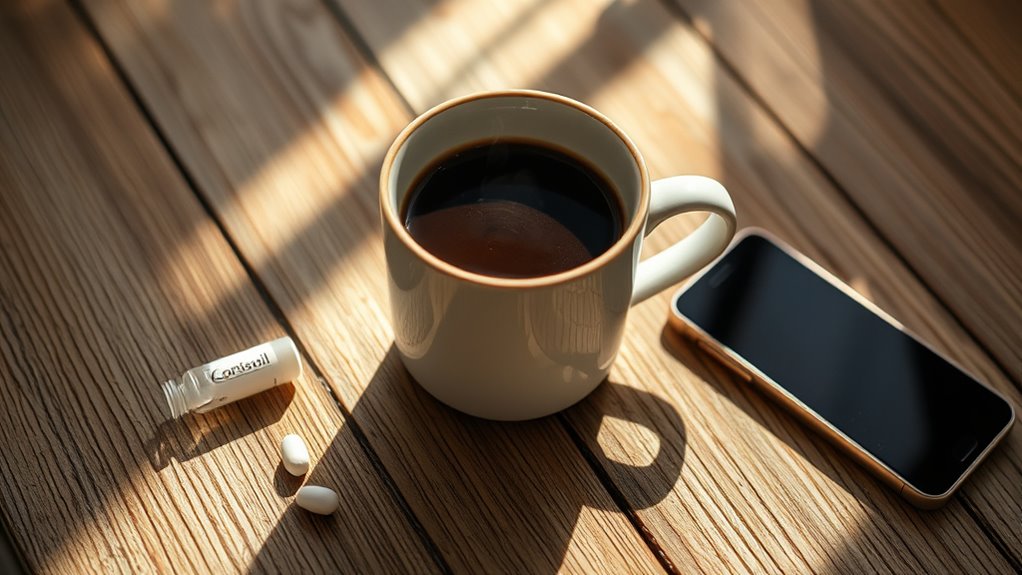

To optimize your morning routine, timing your coffee right is key. Since cortisol peaks between 8-9 a.m., drinking coffee too early can interfere with this natural boost and blunt cortisol’s effect. It’s best to wait until cortisol levels start to decline—usually late morning—for your coffee. This supports your body’s rhythm and keeps energy steady. Want to discover more ways to fine-tune your mornings? Keep exploring for practical tips that can make a difference.
Key Takeaways
- Cortisol peaks between 8-9 a.m., so delaying coffee until mid-morning optimizes its natural wakefulness effects.
- Drinking coffee during cortisol peak can blunt hormone response, reducing caffeine’s energizing benefits.
- Consuming coffee after cortisol levels decline supports hormonal balance and prevents adrenal fatigue.
- Prioritizing good sleep and hydration enhances morning alertness, reducing reliance on caffeine.
- Thoughtful timing of coffee intake helps maintain natural cortisol rhythms and promotes sustained energy throughout the day.

Have you ever wondered how a well-structured morning routine can set the tone for the entire day? It’s more than just waking up early or grabbing a quick breakfast; it’s about establishing habits that support your body’s natural rhythms and boost your energy. One essential aspect often overlooked is how your sleep quality impacts your morning readiness. When you get enough restorative sleep, your body’s cortisol levels are balanced, helping you wake up feeling alert rather than groggy. Poor sleep, on the other hand, can cause cortisol spikes at odd times, leading to a sluggish start and making it harder to focus. Prioritizing good sleep hygiene—like maintaining a consistent bedtime and avoiding screens before sleep—can dramatically improve your morning alertness.
Once you’re awake, hydration strategies become indispensable. After hours of sleep, your body is naturally dehydrated, which can sap your energy and impair cognitive function. Drinking water soon after waking helps replenish lost fluids, kickstarts your metabolism, and supports overall alertness. This simple act can also influence your sleep quality; staying well-hydrated during the day reduces nighttime dehydration, leading to more restful sleep. Incorporating a glass of water into your morning routine costs nothing but offers significant benefits, including better digestion and improved mood. Additionally, understanding how cortisol levels fluctuate throughout the day can help you optimize your morning activities for maximum energy.
Hydrate after waking to boost energy, improve mood, and support restful sleep.
When it comes to coffee, many believe it’s the key to jolting themselves into consciousness, but timing matters. Consuming coffee too early, especially before your cortisol levels naturally peak, can interfere with your body’s hormone balance. Your body releases cortisol naturally in the early morning—usually between 8 to 9 a.m.—which helps wake you up. Drinking coffee during this window may blunt your cortisol response, leading to increased dependence on caffeine and potential adrenal fatigue over time. Instead, it’s better to wait until your cortisol levels start to decline, around mid-morning, to maximize coffee’s energizing effects without disrupting your hormonal balance.
Balancing your morning routine with attention to sleep quality and hydration strategies sets a solid foundation for a productive day. When you prioritize restorative sleep, you wake up feeling refreshed and ready to tackle your goals. Hydrating early replenishes your body and improves mental clarity. By timing your coffee intake thoughtfully, you support your natural cortisol rhythm instead of working against it. Small adjustments in these areas can make a noticeable difference, transforming your mornings from a rush to a calm, energized start. Ultimately, a mindful approach to your morning habits ensures you enter each day with focus, vitality, and resilience.

IRON °FLASK Camping & Hiking Hydration Flask with Straw, Wide Mouth Insulated Stainless Steel Sports Water Bottle – 40 oz Midnight Black
Insulated Sports Water Bottle: Goodbye sweat! The double wall insulation makes the Iron Flask sweat-free! It keeps your…
As an affiliate, we earn on qualifying purchases.
As an affiliate, we earn on qualifying purchases.
Frequently Asked Questions
Can Drinking Coffee Late in the Morning Affect Cortisol Levels?
Yes, drinking coffee late in the morning can affect your cortisol levels. Caffeine timing plays a role in your adrenal response, as it may interfere with your body’s natural cortisol rhythm. If you consume coffee too late, it can suppress cortisol production when it’s naturally supposed to be high, potentially leading to increased fatigue later. To optimize your adrenal response, consider drinking coffee earlier in the morning and avoiding it during peak cortisol times.
How Does Hydration Influence Morning Cortisol and Energy?
Starting your day with proper hydration sets the stage for better energy and cortisol regulation. When you’re well-hydrated, hydration effects help stabilize your cortisol levels, preventing dips that leave you sluggish. Think of it as giving your body the fuel it needs to function most effectively. Drinking water soon after waking up can boost your alertness and support a balanced cortisol rhythm, making it easier to tackle the day ahead.
Are Decaffeinated Coffees Better for Cortisol Balance?
Decaffeinated coffees are better for cortisol regulation because they contain less caffeine, which can spike cortisol levels. The decaffeinated benefits include enjoying the taste of coffee without the cortisol fluctuation that caffeine causes. If you’re sensitive to cortisol spikes, switching to decaf helps maintain a more stable stress hormone balance in the morning, supporting your energy levels without disrupting your natural cortisol rhythm.
Does the Type of Coffee (Brew Method) Impact Cortisol Secretion?
Yes, the brew method impacts cortisol secretion because it influences caffeine concentration. For example, espresso has a higher caffeine content per ounce, leading to a stronger cortisol response, while drip coffee usually has a lower concentration. If you want to manage cortisol levels, opt for brewing methods that produce less caffeine per serving, like pour-over or cold brew, and consume coffee mindfully throughout the morning.
Should I Avoid Coffee if I Have High Cortisol Levels?
If you have high cortisol levels, it’s wise to cut back on coffee, as caffeine can act like a wildfire fueling your stress. Think of your adrenal health as a delicate garden—too much coffee might scorch your balance. Prioritize stress management by choosing calming alternatives, and listen to your body’s signals. Protect your adrenal health by moderating coffee intake, allowing your body’s natural rhythm to flourish instead of being overshadowed by caffeine’s storm.

travel mugs for coffee,14 oz Stainless Steel Coffee Mug,Vacuum Insulated Tumbler with temperature display,Coffee Thermos Outdoor,Camping Mug with Leak-Proof Lid,Portable Cups for Keep Hot/Ice
【LEAK PROOF】The travel coffee mug with silicone seal on the lid provides a good leak-proof effect. The Coffee…
As an affiliate, we earn on qualifying purchases.
As an affiliate, we earn on qualifying purchases.
Conclusion
Now that you know how coffee and cortisol interact, you can optimize your morning routine. Remember, over 50% of adults drink coffee daily, often in the morning, which can boost alertness but also spike cortisol levels. By timing your coffee just after your cortisol peaks, you support your energy without disrupting your stress hormones. Small adjustments like this can make a big difference in starting your day energized and balanced.

Fygrip 3D Eye Mask Sleep Mask for Men & Women, 100% Pressure-Free & Light Block-Out Eye Mask for Sleep with Easy Adjustable Strap, Night Eye Cover for Travel, Black
【100% Pressure-Free】: Patented 3D contour design with deep & wide eye pockets provides large space for your eyes…
As an affiliate, we earn on qualifying purchases.
As an affiliate, we earn on qualifying purchases.
cortisol monitoring device
As an affiliate, we earn on qualifying purchases.
As an affiliate, we earn on qualifying purchases.