Turning coffee pulp and husks into compost is a smart way to transform waste into a valuable resource. You can enrich your soil with organic nutrients, improve its structure, and reduce pollution caused by disposal or burning. Proper management involves balancing coffee waste with dry materials, maintaining moisture, and turning the pile regularly. This eco-friendly practice supports sustainable farming and healthier crops. Keep exploring to discover more tips on turning coffee waste into a reliable fertilizer.
Key Takeaways
- Compost coffee pulp and husks to transform waste into nutrient-rich organic fertilizer.
- Balance coffee waste with dry materials like leaves or straw to maintain proper decomposition.
- Regularly turn and moisten the compost to promote aeration and faster microbial activity.
- Use composted coffee waste to enrich soil, improve water retention, and reduce chemical fertilizer dependence.
- Proper management prevents soil acidity issues and ensures sustainable, eco-friendly waste recycling.
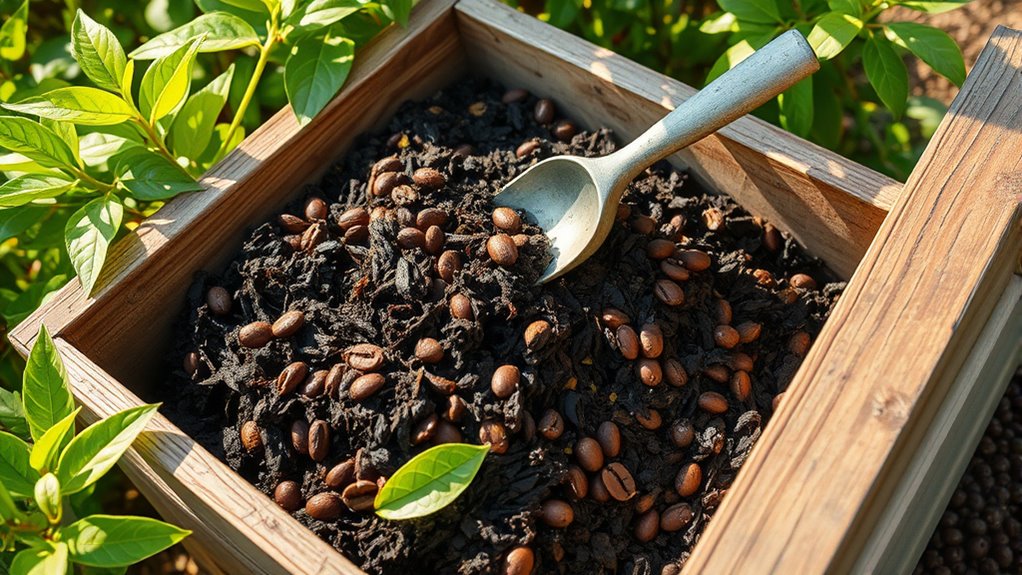
Have you ever wondered how to turn coffee pulp and husks into valuable compost? If you’re involved in farming or gardening, you probably know that coffee waste is often discarded or burned, contributing to pollution and waste. But instead of throwing it away, you can transform this byproduct into nutrient-rich compost that benefits your soil and promotes sustainable farming practices. Coffee waste, which includes the pulp and husks left after processing coffee beans, is packed with organic matter and nutrients like nitrogen, potassium, and phosphorus. These nutrients are essential for healthy plant growth, making coffee waste an excellent resource for composting.
Transform coffee waste into nutrient-rich compost to enrich soil and support sustainable farming.
When you start composting coffee pulp and husks, you’re not only reducing waste but also creating a natural fertilizer that lessens your dependence on chemical inputs. Coffee waste decomposes relatively quickly if managed properly, turning into a dark, crumbly compost that can improve soil structure and fertility. To do this effectively, you should balance coffee waste with other compost ingredients such as dry leaves, straw, or shredded paper to maintain the right carbon-to-nitrogen ratio. This balance ensures microbial activity thrives, breaking down the coffee waste efficiently.
It’s important to note that coffee husks can sometimes be acidic, so mixing them with more neutral or alkaline materials helps prevent soil imbalances. Incorporating coffee waste into your compost pile also promotes sustainable farming by recycling what would otherwise be considered trash. It reduces your environmental footprint, cuts costs on synthetic fertilizers, and supports healthier, more resilient crops. Plus, using compost made from coffee waste can improve water retention in your soil, reducing irrigation needs and further supporting eco-friendly farming practices.
To make the most of coffee pulp and husks, keep the compost pile moist and aerated. Turning it regularly ensures oxygen reaches all parts of the pile, speeding up decomposition. If you’re working on a larger scale, consider compost bins or windrows designed for efficient waste management. Patience is key; within a few months, you’ll have rich compost ready to nourish your plants. As you incorporate coffee waste into your composting routine, you’ll notice improved soil vitality and healthier harvests, all while contributing to a more sustainable farming system. Proper compost management and understanding the decomposition process will help you achieve the best results.

Utopia Kitchen Countertop Compost Bin Kitchen with Charcoal Filter -1.3gallon Stainless Steel Kitchen Compost Bin Countertop – Ideal Kitchen Essentials or Small Composter for Under The Sink Trash
This Counter Compost Bin With Lid Having Capacity Of 1.3 Gallon Is Manufactured With Stainless Steel For Optimal…
As an affiliate, we earn on qualifying purchases.
As an affiliate, we earn on qualifying purchases.
Frequently Asked Questions
Can Coffee Pulp and Husks Be Used Directly as Animal Feed?
You shouldn’t use coffee pulp and husks directly as animal feed because, for animal nutrition, they may contain compounds that could be harmful or reduce feed safety. These materials often need proper processing to eliminate potential toxins and improve digestibility. Before feeding coffee pulp and husks to animals, verify they’re tested and treated accordingly, so you protect your animals’ health and maintain safe, nutritious feed.
What Are the Environmental Benefits of Composting Coffee Waste?
Imagine turning coffee waste into a lush garden—composting offers real environmental benefits. You help with carbon sequestration, trapping CO₂ in the soil, and enrich the soil naturally. This process reduces landfill waste, cuts down on methane emissions, and supports sustainable farming. By composting coffee pulp and husks, you transform waste into a valuable resource, fostering healthier ecosystems and combating climate change through improved soil health.
How Long Does It Take for Coffee Pulp to Decompose Fully?
You can expect coffee pulp to decompose fully within about 2 to 4 months, depending on your decomposition timeline and environmental conditions. Active microbial activity accelerates this process, especially if you maintain proper moisture, aeration, and temperature. Turning the compost regularly helps boost microbial activity, ensuring faster breakdown. Keep an eye on the compost’s texture and smell, and you’ll know it’s ready when it’s dark, crumbly, and earthy-smelling.
Are There Any Pests Attracted to Coffee Waste Compost?
They say “an ounce of prevention is worth a pound of cure,” and that’s true for composting coffee waste. Pests can be attracted to coffee pulp and husks if not managed properly. To prevent pest attraction, keep your compost moist but not soggy, turn it regularly, and cover it to deter pests. Pest management involves monitoring your compost and addressing issues early to keep pests at bay and ensure healthy decomposition.
What Equipment Is Needed for Small-Scale Composting of Coffee Husks?
For small-scale composting of coffee husks, you’ll need basic composting equipment like a compost bin or pile, a pitchfork for turning, and a moisture meter to maintain proper conditions. Small-scale methods work best with a layered approach, adding coffee husks with nitrogen-rich materials. Keep the compost moist and aerate regularly. This simple setup helps you turn waste into valuable soil amendment efficiently.

Jobe's Organics Fast Acting Granular Fertilizer Compost Starter, Easy Plant Care Compost Accelerator, 4 lbs Bag
Organic compost starter speeds up the composting process and is ideal for outdoor compost piles
As an affiliate, we earn on qualifying purchases.
As an affiliate, we earn on qualifying purchases.
Conclusion
By composting coffee pulp and husks, you turn waste into valuable soil enrichers, reducing environmental impact. Did you know that coffee pulp compost can increase soil fertility by up to 30%? This simple practice not only minimizes waste but also promotes sustainable farming. So, next time you handle coffee waste, remember you’re helping the planet and boosting your garden’s health—making a real difference, one compost pile at a time.

EPICA Countertop Compost Bin Kitchen | 1.3 Gallon | Odorless Composting Bin with Carbon Filters | Indoor Compost Bin with Lid | Stainless Steel Kitchen Composter for Food Scraps & Waste Recycling
FEATURED IN BON APPETIT & FORBES: Recognized by renowned magazines, EPICA’s compost bin is a perfectly sized marvel…
As an affiliate, we earn on qualifying purchases.
As an affiliate, we earn on qualifying purchases.

Compost Turning Tool,Compost Stirring Tool,Compost Aerator Tool Turner and Mixing Tool for Outdoor Compost Tumbler Bins Bags
Compost Turning Tool: Standing 33.4 inches tall with a 5.9-inch wide spiral, this tool is resistant to rust…
As an affiliate, we earn on qualifying purchases.
As an affiliate, we earn on qualifying purchases.