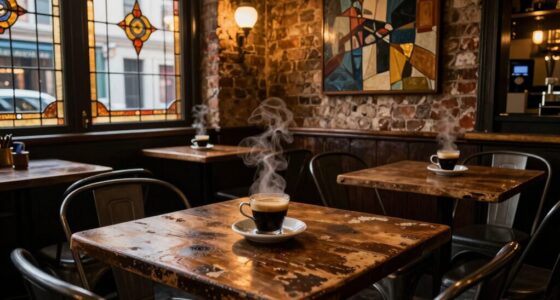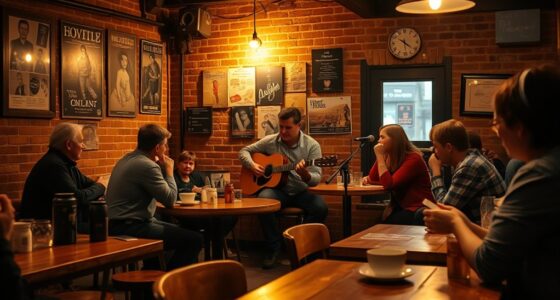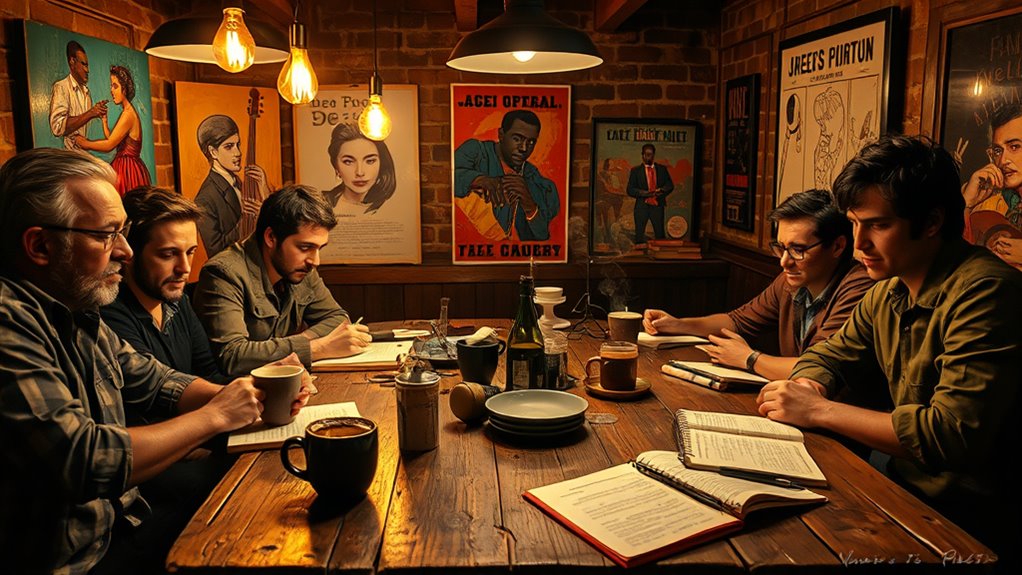

You’ll see that Beat poets found coffeehouses essential for fostering spontaneous, experimental art. These lively spaces combined poetry, jazz, and communal energy, encouraging raw emotion and innovation. They served as modern literary salons where poets, musicians, and thinkers connected and shared ideas freely. This vibrant environment helped shape the American cultural revolution, inspiring new forms of expression. Keep exploring how these coffeehouses became legendary centers for cultural and artistic growth.

Get coffee and tea gear delivered free — and shop member deals
- Fast, free delivery on millions of items
- Access to Prime Big Deal Days deals on October 6–7
- Prime Video, Amazon Music and more included
Key Takeaways
- Coffeehouses in the 1950s served as vibrant hubs for poets like Ginsberg and Kerouac to perform, share ideas, and inspire each other.
- Jazz and improvisation influenced the poetic style of Beat poets, encouraging spontaneity and experimental forms.
- Literary salons in coffeehouses fostered community, debate, and the exchange of avant-garde ideas among artists and writers.
- These venues evolved into cultural centers that nurtured American poetic innovation and connected poets directly with audiences.
- The coffeehouse scene played a crucial role in launching the Beat movement and shaping a distinct American literary and cultural identity.
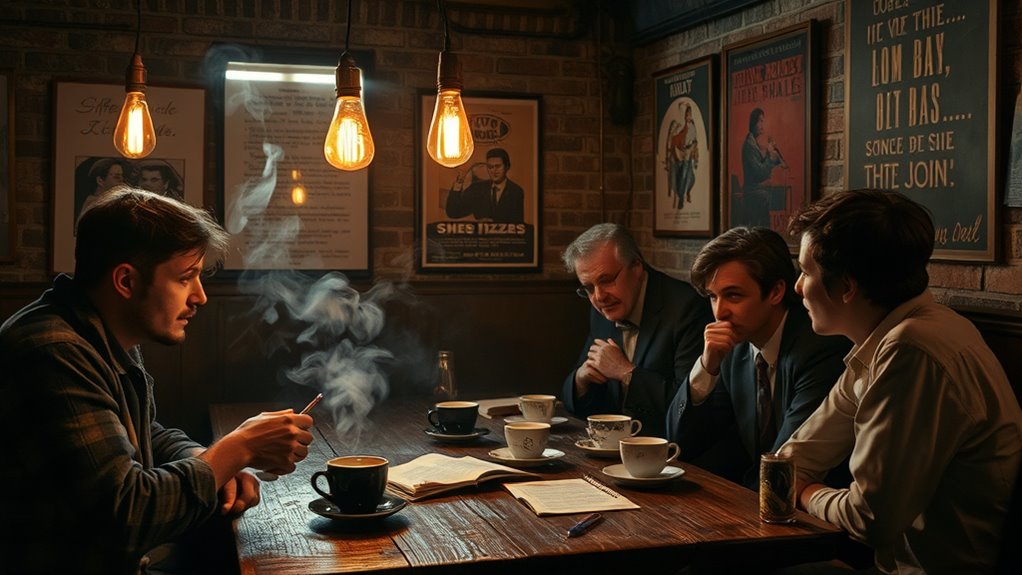
American coffeehouse culture has long served as a vibrant hub for poets to share their work, exchange ideas, and find inspiration. During the rise of the Beat Generation in the 1950s, these venues became more than just places to sip coffee—they transformed into cultural incubators. Poets like Allen Ginsberg and Jack Kerouac gathered in coffeehouses to perform their poetry, often blending literary salons with a sense of communal energy. These gatherings weren’t formal; they thrived on spontaneity, raw emotion, and a desire to challenge traditional literary norms. The intimacy of these spaces allowed poets to connect directly with audiences, fostering a sense of immediacy that fueled their creative impulses.
Coffeehouses fueled the Beat movement, blending poetry, spontaneity, and community into a vibrant cultural incubator.
Jazz influences permeated the scene, creating an atmosphere rooted in improvisation and free expression. Music and poetry intertwined, with live jazz performances adding a dynamic backdrop to open-mic nights and poetry readings. The rhythm of jazz, with its syncopation and improvisational spirit, inspired poets to experiment with cadence and form. This synergy between spoken word and jazz helped shape the voice of the Beat poets, encouraging a break from conventional structures and embracing a more spontaneous, visceral style. Coffeehouses became the perfect setting for this fusion, where the smoky, lively ambiance complemented the raw energy of their work.
The concept of literary salons—historically gatherings of writers, artists, and intellectuals—found a new home in these American coffeehouses. These salons weren’t formal or exclusive; instead, they were open forums for anyone interested in art and ideas. Poets, musicians, and thinkers gathered to exchange their work, debate, and inspire one another. The casual environment fostered a sense of community that was essential for the development of the Beat movement. It was in these spaces that poets found encouragement, validation, and a platform to push boundaries. The coffeehouse’s relaxed atmosphere made it easier for avant-garde ideas to flourish, setting the stage for a cultural revolution in American literature.
You can see how these coffeehouses became more than just places to drink coffee—they evolved into indispensable cultural centers. The blend of literary salons and jazz influences created a fertile ground for innovation, where poets could experiment freely and connect deeply with their audience. The intimacy of these spaces nurtured the raw, unfiltered voice of the Beat poets, shaping a distinctly American poetic movement that still reverberates today. Their legacy demonstrates how a simple coffeehouse can serve as the birthplace of a cultural shift, driven by community, creativity, and the power of shared expression. Recognizing the cultural significance of these venues highlights their role in fostering artistic experimentation and community.
As an affiliate, we earn on qualifying purchases.
Frequently Asked Questions
How Did Beat Poets Influence Modern Coffeehouse Aesthetics?
You see, beat poets influenced modern coffeehouse aesthetics by emphasizing a relaxed, creative atmosphere that encourages poetic improvisation and jazz-inspired vibes. You might notice how contemporary coffeehouses embrace live coffeehouse jazz and spontaneous performances, echoing the spontaneous spirit of beat poetry. This blend of artistic expression and cozy ambiance invites you to relax, get inspired, and connect with the improvisational, free-flowing energy that the beat poets helped popularize.
What Specific Poets Were Central to Early American Coffeehouse Scenes?
You’ll find that poets like Allen Ginsberg, Jack Kerouac, and Lawrence Ferlinghetti played key roles in early American coffeehouse scenes. They often hosted poetry workshops and performed their works amid jazz performances, creating lively, creative atmospheres. These poets helped shape the culture, blending spontaneous poetry with jazz, which became a defining feature of the coffeehouse experience and influenced future artistic movements.
Were There Any Notable Controversies Linked to Coffeehouses and Beat Poets?
You might think coffeehouses are just cozy spots, but they often symbolized rebellion. Controversies linked to beat poets included censorship debates, where authorities tried to silence their provocative words. These venues became battlegrounds for political activism, reflecting the tension between free expression and societal control. As you sip your coffee, remember how these spaces challenged norms, turning caffeine into a catalyst for cultural change and outspoken dissent.
How Did Coffeehouse Culture Impact Beat Poets’ Writing Styles?
You’ll notice that coffeehouse culture greatly influenced beat poets’ writing styles by fostering jazz influences and spontaneous improvisation. As you observe their work, you see how they adopted jazz’s free-flowing rhythms and improvisational spirit, which encouraged them to write more spontaneously and intuitively. This environment pushed them to break conventional rules, creating raw, energetic poetry that mirrors jazz’s improvisational essence, making their work more dynamic and authentic.
Did Other American Subcultures Adopt Coffeehouse Venues During This Era?
Like moths drawn to a flame, other American subcultures embraced coffeehouse venues during this era. You’ll find countercultural movements and social activism groups using these spaces to connect, share ideas, and challenge norms. Coffeehouses became hubs for activism, fostering community and revolutionizing how people engaged with social issues. They weren’t just places for coffee—they became the heartbeat of change for many movements across America.
Conclusion
As you step into today’s coffeehouses, remember they’re like the Beat poets’ jazzed-up stage—full of improvisation and raw emotion. Just as Ginsberg once recited “Howl” to a captivated crowd, these spaces invite you to find your voice amid the aromatic buzz. Coffeehouses became the heartbeat of a cultural revolution, where words and caffeine intertwined, creating a rhythm that still pulses through our society. Embrace their legacy, and let your own voice ripple out.
Fall Picks
fall essentials
As an affiliate, we earn on qualifying purchases.